

 iscover
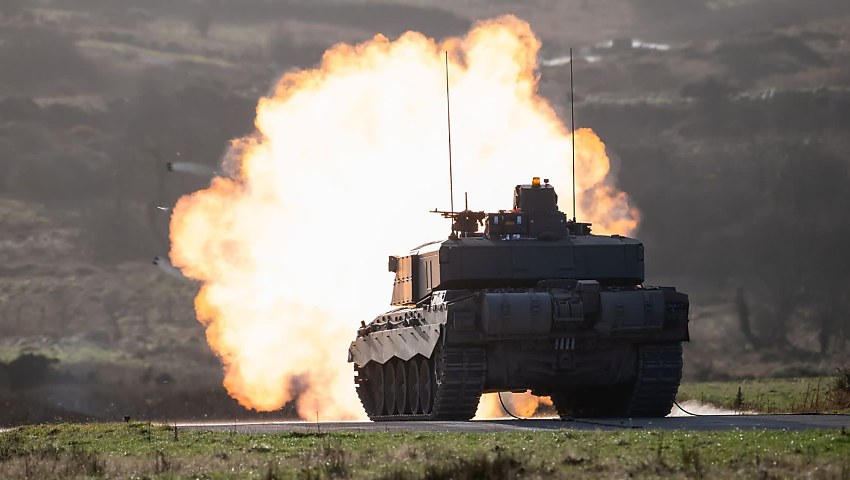
The British Army’s next-generation Challenger 3 main battle tank has conducted its first-ever crewed live-firing trials, in a key military milestone.
The latest trials, conducted with Rheinmetall BAE Systems Land (RBSL) at a MOD Training Centre, marked the first United Kingdom firing of a newly developed main battle tank (MBT) in more than 30 years. The Challenger 3 is envisioned to provide enhanced lethality, survivability and digital integration, with 148 modernised tanks to be delivered to the British Army.
Part of the progressive assurance of the tank’s capabilities and systems before it enters service, the trial followed a carefully phased program, beginning with remote operation before progressing to crewed firing by Rheinmetall BAE Systems Land personnel.
Challenger 3 is equipped with the 120mm smoothbore L55A1 cannon manufactured by Rheinmetall and firing the latest kinetic energy anti-tank rounds and programmable multipurpose ammunition.
“This is a hugely significant achievement for the Challenger 3 programme and a testament to the skill and dedication of the teams delivering it,” said Rheinmetall BAE Systems Land managing director Rebecca Richards.
“Firing the vehicle first remotely and then with a crew in the turret reflects the enormous amount of work that has gone into ensuring the design is safe, robust and ready.
“This shows just how far the programme has progressed and marks a proud moment for UK armoured vehicle development.”
The Challenger 3 MBT, designed and produced by RBSL from its Telford factory, will now undergo further trials as it moves towards operational service as the centrepiece of the British Army’s modernisation program.

“This milestone reflects the benefits of the close collaboration between the Ministry of Defence and industry,” said Army Senior Responsible Owner, Mark Colley.
“The successful crewed firing of Challenger 3 demonstrates tangible progress in delivering the modernised, main battle tank the British Army needs.”
The Challenger 3 is being produced by Rheinmetall BAE Systems Land under a £800 million contract. The contract attracted a £40 million inward investment in Rheinmetall BAE Systems Land’s Telford facility, utilising a European supply chain, the majority being skilled UK-based SMEs spread throughout the UK, from the West Midlands, Glasgow, Newcastle upon Tyne to the Isle of Wight.

Want to see more stories from trusted news sources?
Make Defence Connect a preferred news source on Google.
Click here to add Defence Connect as a preferred news source.