iscover
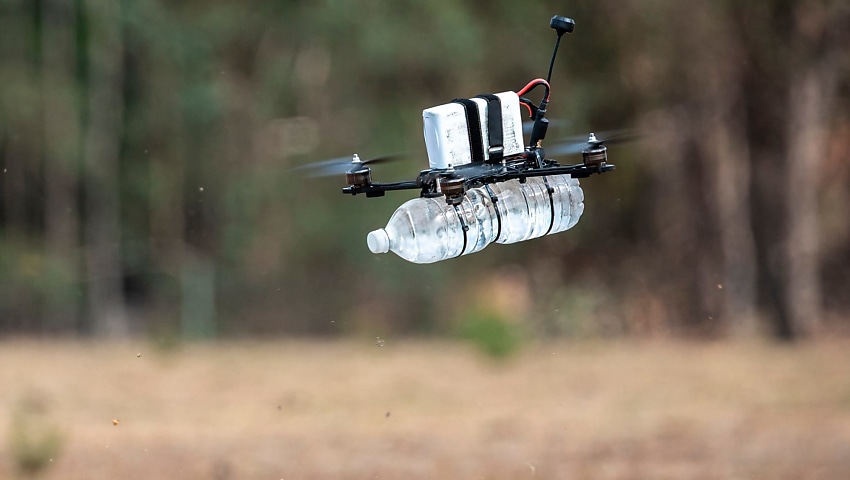
Australian Defence Force personnel have operated first-person-view (FPV) drones with simulated lethal payloads under new small uncrewed air system training targeted for integration across the Australian Army.
The comprehensive training continuum is reportedly designed to get soldiers ready to take the capability back to their home units and across the wider Australian Army.
Soldiers operated UAS through first-person view goggles at Puckapunyal Military Area field range in Victoria.
“This training today is part of a suite of training on small uncrewed air systems (SUAS) or drones,” said Captain Andrew Dunn-Lobban of Army’s Land Combat College and senior instructor for the course.
“The first course we conducted was ‘Employ Multi-Role Drones’ where trainees are taught to employ stabilised drones predominantly as a reconnaissance platform but also as a platform to drop munitions or for carrying other payloads,” CAPT Dunn-Lobban said.
“The next course we conducted is ‘Modify and Operate Attack Drones (FPV)’ where trainees produce, modify and fly attack drones, getting them to the point where they can employ these in the field at range to strike targets.
“The instructors are almost all from 2RAR (2nd Battalion, the Royal Australian Regiment), which reflects that they have made some great strides with their drone capability. They recently came off Operation Kudu where they were directly mentored by Armed Forces of Ukraine drone specialists and we are leveraging that battlefield experience to give the best possible instruction to trainees.
“We will refine what works and does not work and rapidly scale these courses across Army. For example, the trainees from 5/7RAR (5th/7th Battalion, the Royal Australian Regiment) will take this capability back to their unit, and within weeks, test this on a combined arms exercise.”

One of the trainees on the course, Corporal Samuel De Koning, said the courses were important and relevant.
“I was panelled on this course with no previous experience with flying drones either inside or outside Defence. For trainees, there is a massive learning curve, but now I am aware of the capability and the effects that SUAS can deliver,” CPL De Koning said.
“It is quite obvious from observing other conflicts going on around the world that drones are not just the future of warfare, it is present warfare and we need to adapt quickly.”