

 iscover
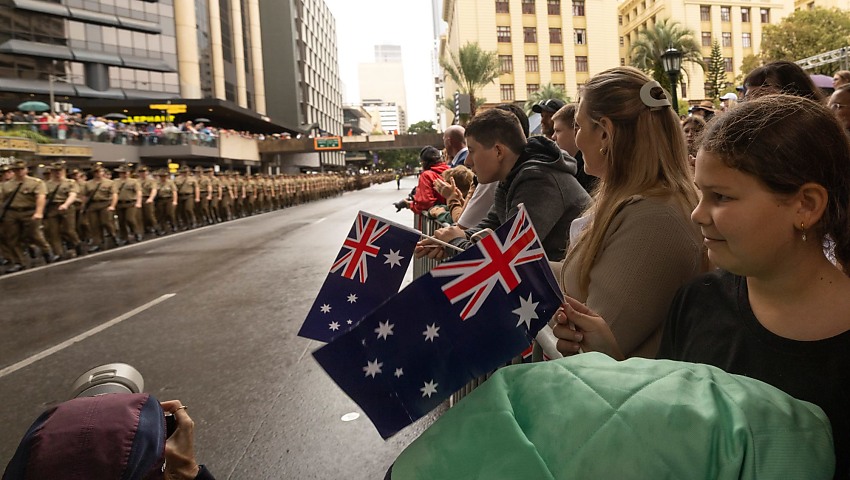
Opinion: As the nation tentatively watches ongoing conflict in the Middle East, the weight of service – past, current and potential – is felt most acutely at the kitchen tables of Australian Defence and veteran families.
We know firsthand that one person joins the Australian Defence Force but the whole family sacrifices for this service. But veteran families continue to be seen as extensions of the veteran in policy, entitlements and service delivery, rather than real people whose health, wellbeing and livelihood is heavily impacted as they support their loved ones.
They are expected to absorb career setbacks, ill mental health, support children heavily affected by the instability and trauma of military life, and costly access to treatment, all while being a lifeline and source of stability for their veteran.
The government recently committed historic funding to hardware like submarines and missiles, but there hasn’t been a substantive policy update for veteran families since 1986. Enough is enough. It’s time to acknowledge that a high-tech force cannot be built on the backs of families who are quietly breaking.
Our research shows that veteran families are twice as likely to experience mental health challenges and three times more likely to be unemployed or underemployed compared to the general public. Yet currently, nearly 90 per cent of veteran family members sit outside the formal support system.
Our purpose as the Families of Veterans Guild is to support and advocate for this chronically underserved community. Ahead of this year’s federal budget, we have asked the government for a modest $5.17 million investment over four years to fund four integrated initiatives:
- Social work and wellbeing: Specialist trauma-informed crisis support and the delivery of 90+ wellbeing activities annually to reduce isolation, improve mental health and increase access to services.
- The Rise Together Initiative: Career and leadership development for veteran partners, predominantly women, whose employment has been disrupted by the impact of Defence service.
- The Veteran Family Resource Hub: A national, centralised digital platform to help families navigate complex systems and empower informed decision making.
- War Widows Program: Ongoing vital social connection and peer support for our widows, helping to reduce isolation and delaying the need for higher cost aged care services.
Final thoughts
At an average cost of $233 per veteran family member per year, this proposal presents a low-cost, high-impact solution to close longstanding gaps in family support to deliver on government priorities.

In these dangerous times, there is no deterrence without retention, and there is no retention without family support.
We are hopeful that this federal budget will recognise this, acknowledging that veteran families are a core pillar of our national security.
Renee Wilson is the chief executive officer of the Families of Veterans Guild.
Want to see more stories from trusted news sources?
Make Defence Connect a preferred news source on Google.
Click here to add Defence Connect as a preferred news source.