

 iscover
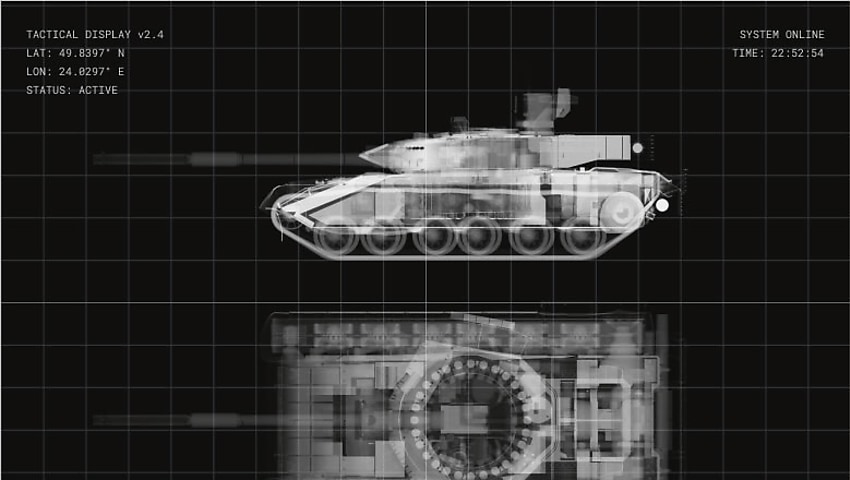
The Ukrainian government has again shown innovation in the face of adversity, with its new TrophyLab experimental system providing a globally accessible window into captured Russian military equipment.
The online catalogue, launched earlier this year, reportedly contains more than 115 samples of captured Russian equipment, 79 categories and 225 pieces of research.
The portal, approved by Ukrainian Cabinet of Ministers, was designed to unify captured research, technologies and expertise from different institutions into a single place for the benefit of creating modern up-to-date countermeasures across the Western world. There is, of course, an ulterior motive of leading that counter-research back to benefit the Armed Forces of Ukraine, not a bad side effect in itself.
The vision
“We are building an ecosystem where no trophy is lost, no research is hidden, and every engineering idea can quickly become a technological advantage on the battlefield,” according to the platform’s vision statement.
“We see a future where all captured samples are available for online research, foreign partners develop solutions together with Ukraine without fear of pressure from Russia, counter-technologies are created faster than the enemy can update theirs.
“This is the way to stop threats from spreading, and to contain them with technologies created together; for Ukraine’s security and the stability of the democratic world.”
Secret advantage becomes open knowledge

The system is designed to provide engineers, scientists and defence technology manufacturers with secure access to captured Russian equipment samples, research, component analysis and technical data.
“Every piece of Russian military equipment captured on the battlefield is not only a trophy. It also includes knowledge of how the enemy’s weapons operate,” Minister of Defense of Ukraine Mykhailo Fedorov said.
“Since the beginning of the full-scale war, Ukrainian military personnel, scientific institutions and research centres have been analysing captured equipment. They study components, technological solutions and vulnerabilities to develop effective countermeasures more quickly.
“That knowledge is now being made available to those working to strengthen defence capabilities … (TrophyLab is) a secure space that provides verified users with access to information on modern Russian weapon systems.
“Ukraine will open access to Russian technologies for its partners. Companies, research institutions and governments of the free world will be able to conduct in-depth studies of Russian missiles and other types of weaponry. This will help accelerate the development of effective countermeasures and strengthen joint efforts in support of Ukraine’s victory.
“We are convinced that knowledge about an adversary’s technologies should not remain restricted. It must be used by those building defence systems. The platform provides access to the results of captured-equipment research for Ukrainian defence technology manufacturers, military units, scientific institutions and international partners supporting Ukraine.
“Users will have access to technical documentation, research findings and analytical reports on modern Russian weapons. In addition, the platform allows users to submit requests for physical examination of captured systems.
“Several modes of sample analysis are available, from non-destructive inspection to testing that involves full disassembly or destruction of the system.
“This enables engineers to test their solutions on real enemy equipment and significantly shorten the development cycle for countermeasures.
“Russia uses its full arsenal against Ukraine. We are not only resisting these strikes; we are dismantling this weaponry piece by piece. What was meant to be their secret advantage is being turned into open knowledge for those defending democracy. The more Russia deploys its weapons, the more the world learns how to stop them.”
Collaboration across international boundaries
Beyond the technical information itself, TrophyLab demonstrates a new international model for defence innovation, collaboration and openness available to the Australian defence industry.
The immediate benefits to industry are more than access to Russian military technology, instead providing a blueprint for how allied nations can pool battlefield intelligence, scientific expertise, reduce development time and industrial capability.
A valuable treasure trove of data regarding how Russian technology operates, exploitable vulnerabilities and validate new solutions using real-world data rather than simulations or assumptions while potentially reducing the time and cost associated with independent research and development.
Australian defence companies have a chance to match their own solutions against modern Russian battlefield tactics and technology, such as electronic warfare, counter-drone systems, jamming, drone detection, missile defence, sensors and artificial intelligence – all without trudging through traditional classified intelligence channels or “optimistic” Russian operational data.
An inevitable expansion
Even under larger collaborations like the AUKUS trilateral security pact, the new Ukrainian shared knowledge base enables allies to respond more quickly to evolving threats and, theoretically, can be expanded to include Iranian and Chinese military equipment for the benefit of allied countries.
There is significant usage of Russian-designed military equipment in the Indo-Pacific region, such as tanks, air defence systems, drones and missiles. In addition, it’s no secret that many older and current Russian designs have closely related “cousins” in the militaries of other nearby aligned countries, such as the People’s Republic of China and North Korea. What could be more valuable than a database of America’s pacing rival and their buddies?

Want to see more stories from trusted news sources?
Make Defence Connect a preferred news source on Google.
Click here to add Defence Connect as a preferred news source.