

 iscover
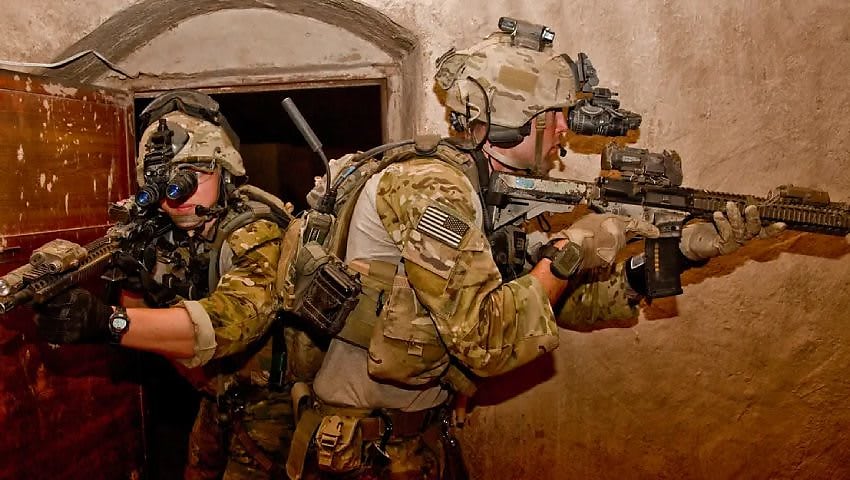
L3Harris has demonstrated an integrated mission networking capability during US Army Lightning Surge exercises, showcasing how resilient communications can connect dispersed forces, accelerate battlefield decision making and support multi-domain operations in contested environments.
The ability to rapidly collect, distribute and act on information is becoming one of the defining advantages of modern military forces, with L3Harris demonstrating an integrated mission networking capability during a series of US Army exercises designed to test operations in an increasingly contested battlespace.
The defence technology company used the Army’s Lightning Surge exercise series to demonstrate how its communications systems can connect dispersed formations, rapidly share battlefield information and help commanders coordinate responses across the joint force.
The demonstration comes as the US Army moves towards a more distributed model of operations, in which forces are expected to operate across increasingly dispersed positions while maintaining the ability to communicate and coordinate despite electronic warfare, cyber threats and contested electromagnetic spectrum.
Rather than treating communications as a supporting function, the exercise highlights the growing importance of resilient networks as an essential component of combat power.
L3Harris said its systems enabled soldiers to rapidly collect, share and act upon critical battlefield information, supporting a faster transition from sensing and detection through to decision making and action.
Chris Aebli, president of communications and spectrum dominance at L3Harris, said modern battlefields require more than simply reliable communications.
“Today’s battlefield demands more than reliable communications – it requires the ability to transform information into actionable decisions at the speed of relevance,” Aebli said.

The company’s approach is closely aligned with the Army’s emerging requirements for distributed, data-driven command and control.
L3Harris has been selected as a transport layer provider for the Army’s Next Generation Command and Control architecture, with the company continuing to develop communications systems designed to operate under rapidly changing battlefield conditions.
A key element of that effort is the company’s Wraith Shield software enhancement, which is intended to provide greater adaptability as operational and network conditions change.
The underlying challenge is becoming increasingly significant as military forces prepare for high-intensity conflict against technologically sophisticated adversaries.
In a contested battlespace, communications networks can be deliberately targeted through electronic attack, cyber operations, jamming and physical strikes. Forces that depend upon a small number of vulnerable communications pathways risk losing the ability to coordinate their operations precisely when connectivity is most important.
The US Army is consequently pursuing networks capable of operating across dispersed formations and adapting to changing conditions while maintaining the flow of information between commanders, sensors and combat units.
The Lightning Surge demonstrations provide an indication of how that concept could translate into practical battlefield operations.
For L3Harris, the objective is not simply to provide soldiers with better radios. It is to create an integrated communications architecture capable of connecting the increasingly complex web of sensors, command systems and combat platforms operating across the land, air, maritime, space and cyber domains.
That reflects a fundamental change in the character of military communications.
As forces become more distributed and increasingly reliant on real-time information, the network itself is becoming a critical battlespace capability, one that must remain operational even when an adversary is actively attempting to disrupt it.
The Lightning Surge demonstrations therefore offer a glimpse of the communications architecture the US Army is seeking to build for future multi-domain operations: distributed, adaptable and resilient enough to keep information moving when the battlefield becomes contested.
For Australia and other US allies pursuing similar concepts, the development is also significant. The ability to maintain command and control across dispersed forces while operating under persistent electronic and cyber pressure is likely to become a defining requirement for modern military operations.
In that environment, the advantage may ultimately belong not to the force with the most information, but to the one capable of turning information into decisions and decisions into action fastest.

Want to see more stories from trusted news sources?
Make Defence Connect a preferred news source on Google.
Click here to add Defence Connect as a preferred news source.