

 iscover

The Australian Defence Force Cyber Reserve Force has reportedly found a crucial solution to bring cyber experts into the military network without limiting their civilian careers or adding to the ADF’s overall employed staff.
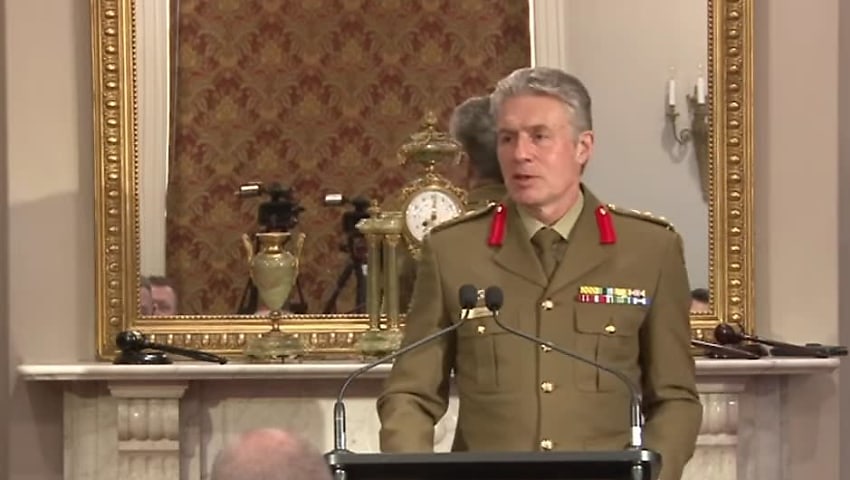
Colonel John Molnar made the comments during a presentation discussing the ADF Cyber Reserve Force at the 2026 Defence Reserves Association National Conference earlier this year.
Defence had previously established the Cyber Reserve Force following the 2023 Defence Strategic Review as a specialist workforce designed to strengthen Australia’s cyber security capabilities by sourcing experienced professionals from industry, government and academia into military service.
It’s understood that the initiative is intended to give Defence the flexibility to access up-to-date civilian cyber expertise without relying exclusively on its permanent workforce and allowing it additional capacity to respond to national security threats.
COL Molnar, speaking at the 2026 conference, confirmed that Defence had approved the establishment of the Cyber Reserve Force and that funding is in place and acceptance secured from all three service chiefs, while cyber reservists have allegedly been undertaking tasks since October last year.
“What if the Cyber Reserve Force is not really a story about cyber? What if it is actually a glimpse of what a specialist reserve could look like across the Australian Defence Force? This will be a reserve designed not simply around additional numbers but around access to expertise, people whose value to Defence comes partly from the fact that they do not work for defence full-time,” COL Molnar said.
“People who remain at the leading edge of their professions in industry, academia and the broader national enterprise but who can put that expertise in uniform when Defence needs it.
“Over the past few years, cyber has given us that opportunity to test the proposition, and now we know it can work.”

COL Molnar detailed that the task was challenging with the new proposition requiring significant workforce design, recruiting, security, ICT access, medical pathways, credentialling, risk management and acceptance across all three services.
“Cyber is a logical place to test this model because some of the expertise Defence needs is extraordinarily difficult to generate and maintain entirely within a traditional military career,” he said.
“Much of the most contemporary cyber expertise is being developed every day outside of defence. It resides with people responding to sophisticated compromises, defending major companies, building artificial intelligence systems, protecting critical infrastructure, conducting threat intelligence and working with technologies that are changing at an extraordinary rate.
“Their civilian employment is not something we need to leave behind. It’s precisely what makes them valuable to Defence. So that creates something potentially very powerful, integrated human networks spanning civil and military employment.
“Cyber Reserve members remain connected to industry, academia, and technology while also becoming part of Defence. Knowledge moves through those networks, experience and relationships move through them. Rather than asking Defence to reproduce every specialist capability internally, we can also ask how can Defence access expertise that already exists across Australia.
“It’s augmentation, not substitution. The permanent force remains fundamental, so does the Australian Signals Directorate, and so does the existing cyber workforce.”
COL Molnar confirmed that there had been specialist recruitment pathways set up to secure key personnel from the civilian world, however, these had not impacted recruitment numbers at all.
“The Cyber Reserve adds depth, specialist expertise and the ability to scale when needed … Our expedited mid-career entry pathway is deliberately designed around experienced practitioners. This is not an entry-level cyber program,” he said.
“At the operator level, we want demonstrated technical competence and contemporary experience.
“At the senior level, we want people capable of bringing strategic expertise, industry knowledge and judgement into Defence. And we are becoming intentionally selective in recruiting only the best.
“Interesting, it has not been a problem to find people. We’ve not had to put one ad in the paper for us to be inundated with expressions of interest. So, there’s a significant community of highly capable Australians who want to contribute to Defence without abandoning their civilian careers. It’s all about how do we embrace that and make it easy for them.
“Our task is to identify the exceptional people amongst them and offer them mutually beneficial pathway to serve. So it really is a matter of quality over quantity.
“We’ve developed a task-to-team model. A requirement emerges, we understand the problem, we identify the skills, we find the appropriate people and we assemble a team. So that’s customised solution to each problem.”
Defence has reportedly developed a task-to-team model that involves identifying an emerging Defence requirement, understanding the technical or strategic problem, identifying the specialist skills required and selecting appropriate reservists to assemble a team to address the requirement.
COL Molnar also discussed the Joint Cyber Advisory Team, providing Defence with access to senior industry practitioners such as C-suite-level expertise from Amazon, Google and Microsoft to help Defence understand emerging technologies, future threats and opportunities.
Final thoughts
Australia should not simply copy another nation’s mode for a cyber reserve capability, COL Molnar argued, but should learn from their experience and adapt those lessons to the Australian circumstances.
“Perhaps the most important thing we have built here is not the Cyber Reserves … but the model behind it. A way of identifying exceptional Australians, bringing them into service without unnecessarily separating them from the civilian careers that maintain their expertise and connecting that expertise to defence problems,” he said.
“There are specialist skills throughout the Australian economy that defence may need during competition, crisis, mobilisation or conflict, but which may neither need nor be able to be maintained permanently within the full-time force.
“The specialist reserve offers Defence a different proposition, not simply additional people, but access to national expertise.
“That changes how we might measure reserve capability. The question is not simply how many reservists do we have. The better question might be what capability can they generate, how quickly can we access it, and does it give Defence something it could not otherwise readily generate?
“Cyber has allowed us to test those questions in practice by delivering the ADF Cyber Reserve Force. The pathways are operating, the people are joining, the teams are undertaking tasks and the capability is being delivered.
“We are creating human networks that exist simultaneously across civilian military employment where knowledge can travel in both directions.”

Want to see more stories from trusted news sources?
Make Defence Connect a preferred news source on Google.
Click here to add Defence Connect as a preferred news source.