

 iscover

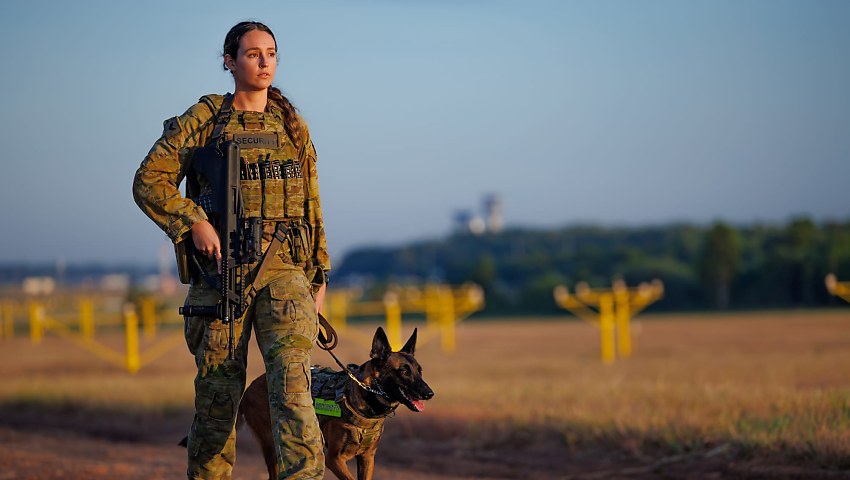
Questions have been raised around new ‘Defence security zones’ listed to be established under the Defence Legislation Amendment (Accelerating Capability and Protecting Bases) Bill 2026.
Australian Government introduced the Defence Legislation Amendment in late October this year, designed to deliver critical reforms to Australia’s Defence legislation so that Defence can build capability faster and protect it more effectively.
The bill puts forward two key reforms with a new Defence Capability Framework to support capability development, testing, evaluation and preparedness activities; as well as a new Defence Security Zone Framework to protect Defence people, facilities, information, activities and capability.
The bill also provides for independent oversight of the new frameworks by the Inspector-General of the Australian Defence Force.
Of particular debate, are new powers enabling the ability to establish Defence Security Zones wherever necessary and provide powers available to law enforcement officers and Defence personnel, in these zones, sufficient to protect Defence’s people, information and capabilities.
Washed Through
Strategic Analysis Australia founder and director Michael Shoebridge, commenting publicly about the new powers, said there has been little to no public debate on the bill.
“There's been no public debate, or even awareness, about extraordinary expansion of Defence bureaucrats’ authority over Australians on Australian territory,” he said.

“The Government pushed the Bill through the lower house and senate in days and wants it signed into law as quickly as it can get the Governor-General a pen.
“It’s not often you get a flat out lie in rolled gold Government talking points, but here’s one on this proposed new law which allows the Government to create 'Defence Security Zones' anywhere in Australia by Ministerial decision.
“These ‘security zones’ can be permanent, temporary or mobile and be on any property, on the land, in the sea or in the air, not just not on Defence bases administered by Defence bureaucrats. Penalties include 2 years in jail and other penalties for Australians breaching them, and penalties for disobeying an official's instructions.”
Reading The Fine Print
Shoebridge argues that the Australian government has been misleading in the operation of the new defence security zones, highlighting that they can be established at the Minister’s discretion.
“Even before Defence bureaucrats get this proposed intrusive power inside Australia, they are showing why they shouldn't have it,” he said.
“Defence bases have very loose security measures in place and Defence absolutely needs to lift its game in how it protects those bases.
“But the idea they can set up bubbles of territory across Australia as 'Defence Security Zones' where officials from the Defence organisation have extraordinary powers to direct the rest of us - and bring charges resulting in jail time for disobeying them - is extraordinary overreach.
“We have police forces for ensuring compliance with Australian law and administering security inside Australia - that is not a role for the military. It's also not a role for Defence bureaucrats at the whim of whoever the current Minister is.
“A bureaucracy that can't be honest with the public about the powers it's proposing cannot be trusted to exercise these extraordinarily intrusive powers.”
Legal Process Concerns
The Law Council of Australia has also raised concerns about the rushed scrutiny and passage of the Defence Legislation Amendment.
“All Australians have an interest in ensuring that Australia’s defence legislation is fit for purpose, proportionate to the threats our nation confronts, and reflects the values of our democracy, including the rule of law. These are matters of national importance and they deserve careful consideration,” Law Council of Australia President-Elect, Elizabeth Shearer said.
“Proper parliamentary processes are vitally important where national security and defence matters are involved. Substantive opportunities for scrutiny bolster democratic support for legislation, improve public understanding of changes in policy, and boost confidence in the integrity of government processes.
“An initial reading of the Bill raises concerns about the implications of the Bill, that indicate that further scrutiny is warranted before this Bill is passed by the Parliament. A public consultation period of three business days is insufficient to provide civil society with enough time to comprehensively review this Bill’s 231 pages. A rushed process increases the risk of unintended consequences and poorly understood frameworks with less social licence.
“For example, the Bill establishes a framework to regulate ‘defence security zones’. This includes bases and traditional military spaces, but can also be expanded to cover privately owned facilities. The implications of this characterisation require careful consideration.
“In its current form, the Bill provides limited transparency as many of the powers it seeks to confer can be expanded by declaration by the Minister, the Secretary of the Department of Defence, and the Chief of the Defence Force.
“The definition of defence security officials is broad, and the Bill seemingly could make it possible to extend the same responsibilities to non-ADF personnel, including Australian Federal Police Officers, industry partners, and members of foreign military forces.
“The Bill includes criminal offences where people fail to comply with orders issued by ‘defence security officials’ and ‘area managers’.
“It also contains provisions for declarations of emergency and mobile defence security zones which would expand coverage often without adequate public knowledge or forewarning.”
Further Public Consultation Required
The Bill was introduced on 27 October and referred to Committee inquiry on 29 October. The only public hearing was 30 October, at which only government departments and representatives from the defence industry were present, before submissions closed on 3 November 2026.
“This allowed a mere three business days for public scrutiny – two for Victorians, considering the Melbourne Cup public holiday,” Ms Shearer said.
“The speed of this process does not reflect good law making and prevents many voices being heard.
“Considering the difficult questions this Bill raises and the potential for misuse or overreach of the proposed powers, we call on the Parliament to provide more time for proper scrutiny and feedback in the Senate.”

Want to see more stories from trusted news sources?
Make Defence Connect a preferred news source on Google.
Click here to add Defence Connect as a preferred news source.