

 iscover
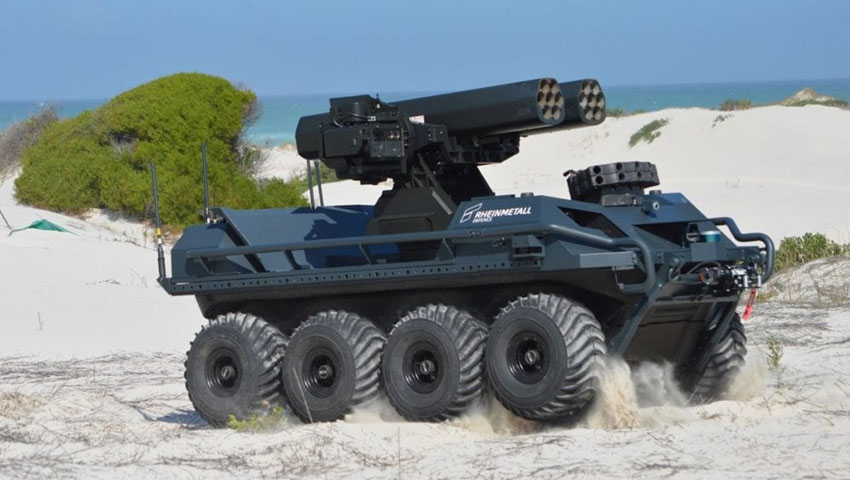
DARPA’s Robotic Autonomy in Complex Environments with Resiliency – Simulation (RACER-Sim) project is seeking innovations in technologies that bridge the gap from simulation to the real world and significantly reduce the cost of off-road autonomy development.
DARPA invites proposals for promising solutions that support these goals. While the past decade has seen increased use of simulation in developing field robotics, the military off-road environment is especially challenging and complex.
Dr Stuart Young, RACER program manager, explained, “Because these challenges haven’t been effectively met, the practical use of current virtual models to advance off-road field robotics capabilities is limited and doesn’t yet allow a demonstrable simulation-to-real world capability.”
Computers need to re-create three-dimensional surfaces, compliant soils and vegetation, and hundreds of obstacle classes. Software also needs to take into account lower fidelity or limited mapping data, unique platform-surface interactions, continuous motion planning, and no defined road networks or driving rules.
“The large reality gap of current software models and complexities of their use discourage developers and prevent them from leveraging the full benefits of simulation,” Dr Young added.
In addition, modelling high speed off-road performance of sensors/modalities, sensor-to-terrain representations, autonomous platforms, and autonomous control remains a software and processing challenge.
Over a four-year timeline, RACER-Sim will investigate technologies that are applicable to the off-road environment in the areas of algorithm development, simulation element technologies, and simulator content generation.
Want to see more stories from trusted news sources?
Make Defence Connect a preferred news source on Google.
Click here to add Defence Connect as a preferred news source.