

 iscover


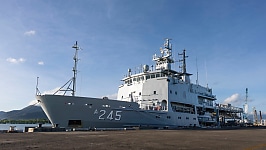



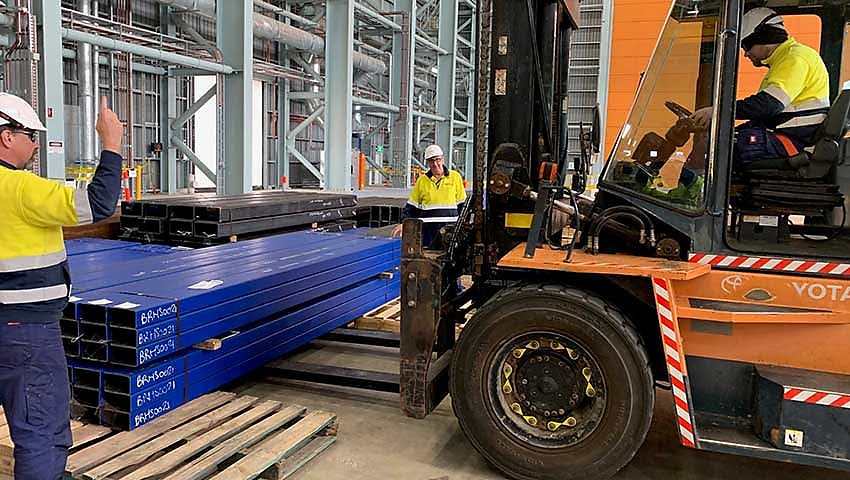
Defence Minister Linda Reynolds and Defence Industry Minister Melissa Price have announced that ASC Shipbuilding has signed a contract with South Australian company Infrabuild Steel Centre to support the manufacturing of the frigates at the Osborne South shipyard – as the prototyping phase of the program approaches.
The prime contractor for the program, ASC Shipbuilding, has signed a contract with South Australian company Infrabuild Steel Centre to support the manufacturing of the frigates at the Osborne South shipyard.
The contract is for the supply of around 120 tonnes of Australian steel that will be used to support the manufacturing of the Hunter Class frigates.
Minister for Defence Linda Reynolds said the contract was a testament to the continued progress that was being made in the program.
“This contract follows my earlier announcement this year of a contract with Bluescope Steel to provide steel for the prototyping blocks. Both contracts are prime examples of growing our national naval shipbuilding enterprise with the support of Australian steel,” Minister Reynolds said.
“The steel from Infrabuild’s Port Adelaide facility will be used to make an initial six jig wagons, which will hold and support the movement of ship parts around the state-of-the-art Osborne shipyard.”
Defence Industry Minister Melissa Price added that ASC Shipbuilding would continue to increase Australian industry content in the program in the lead up to prototyping.
“This is all about Aussie jobs and creating a skilled Australian workforce to deliver nine frigates for our Navy. It is important, now more than ever, to back Australian businesses and create more Australian jobs. That’s why we’re building Australian ships with Australian steel by Australian workers,” Minister Price explained.
In June 2018, the Commonwealth government announced BAE Systems Australia as the successful tender for the $35 billion SEA 5000 Future Frigate program.
The nine Hunter Class frigates will be based on the BAE Systems Type 26 Global Combat Ship currently under construction for the Royal Navy and will replace the eight Anzac Class frigates when they enter service beginning in the late 2020s.
The Hunter Class is billed as an anti-submarine warfare (ASW) centric vessel delivering an advanced ASW capability to the Royal Australian Navy at a time when 50 per cent of the world’s submarines will be operating in the Indo-Pacific region.
BAE Systems Australia announced that it had selected Lockheed Martin Australia and Saab Australia as combat systems integration industry partners, responsible for delivering the Australian designed CEAFAR 2 Active Phased Array Radar, Lockheed Martin designed Aegis combat management system and Saab Australia 9LV tactical interface.
The $35 billion program sees ASC Shipbuilding become a subsidiary of BAE Systems throughout the build process beginning in 2020 at the Osborne Shipyard in South Australia, creating more than 4,000 jobs.
BAE Systems expects the Australian industry content (AIC) for the Hunter Class build will be 65-70 per cent, which will create and secure thousands of jobs for decades.
At the end of the program the Commonwealth will resume complete ownership of ASC Shipbuilding, thereby ensuring the retention in Australia of intellectual property, a highly skilled workforce and the associated equipment.
SEA 5000 is expected to support over 500 Australian businesses who have been pre-qualified to be part of the Hunter Class supply chain, with the Australian steel industry in particular benefiting from the 48,000 tonnes of steel required to build the ships.

Want to see more stories from trusted news sources?
Make Defence Connect a preferred news source on Google.
Click here to add Defence Connect as a preferred news source.