

 iscover





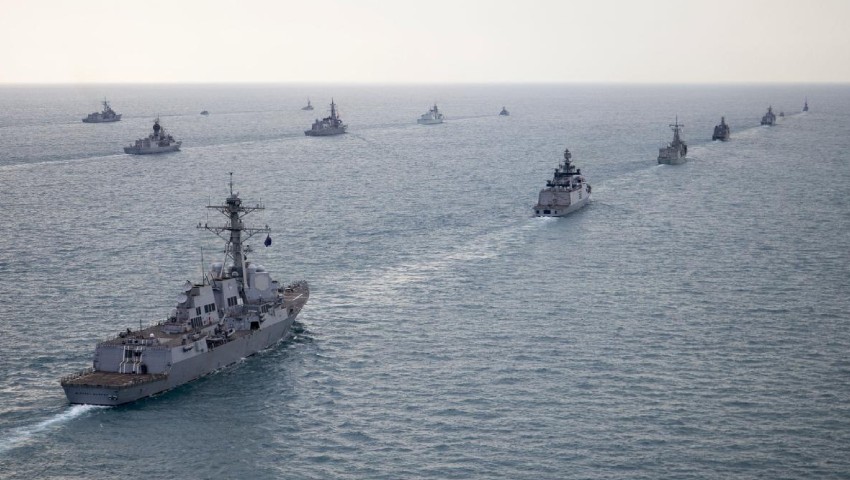
The Navy is set to take part in what has been touted as the largest international maritime engagement activity hosted by Australia.
The Royal Australian Navy is gearing up for Exercise Kakadu – a major multinational exercise involving a host of personnel and platforms from nations across the Indo-Pacific.
Throughout the 30-year history of the exercise, participants have included the United States, Japan, New Zealand, Singapore, India, Pakistan, Malaysia, Vietnam, Indonesia and Thailand.
The first iteration in 1993 involved four navies, 15 ships and submarines, and approximately 2,000 personnel.
The launch of the Kakadu Conference was hosted by Director General Digital Capability, Commodore Andrew Willis, who noted the importance of investing in Australia’s international relationships.
“Exercise Kakadu was being conceptualised in the early nineties, when geopolitics and natural disasters presented complex challenges, as they continue to do today,” CDRE Willis said.
“Kakadu was conceptualised in the spirit of constructive diplomacy, with a genuine need for developing naval forces capable of cooperating and responding to our respective national needs.”
Deputy Director, Policy and Strategy Division at the Naval Operations Department, Royal Thai Navy Captain Chalermwut Boonchan, noted the importance of the collaboration for Thailand.
“Kakadu has paved the way for us, as a Navy, for our growth, capability and our partnerships,” Captain Boonchan said.
“It enables us to operate at a high level of readiness.
“The training and knowledge gained from Kakadu provides lessons we can incorporate into our exercises, such as Cobra Gold.”
Captain Ivan Mario, from the Royal Malaysian Navy, added: “Our participation in Kakadu provides a unity of purpose and provides a strong message of deterrence to non-traditional threats.”
This is set to be the latest of a number of international engagements.
Last month, an Indian Navy P-8I aircraft conducted coordinated exercises alongside Royal Australian Air Force P-8A Poseidon aircraft off the coast of Darwin.
The combined training, which marked the first time an Indian P-8I deployed to Australia outside of a routine military exercise, aimed to further strengthen bilateral defence ties between the Quad partners.
Activities included surveillance, anti-submarine warfare and interoperability drills.
[Related: Indian Navy deploys P-8I Poseidon to Top End ]

Want to see more stories from trusted news sources?
Make Defence Connect a preferred news source on Google.
Click here to add Defence Connect as a preferred news source.