

 iscover
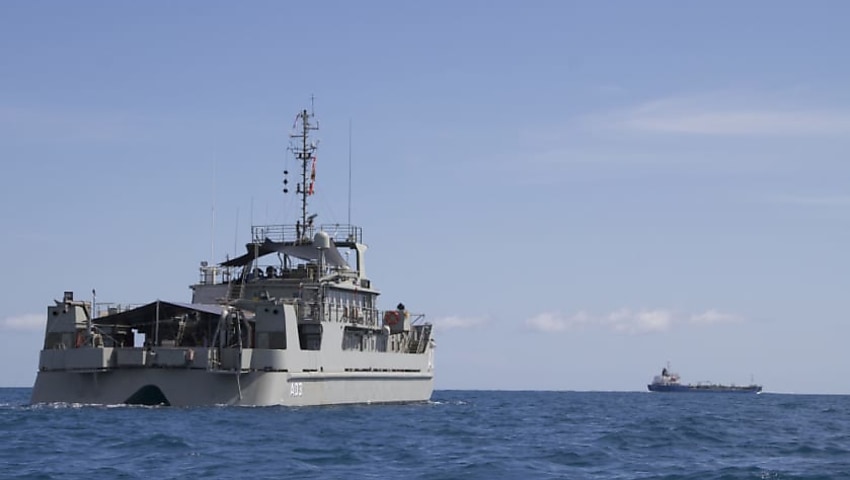
Following a single continuous survey of the Under Keel Clearance Management (UKCM) area of the Torres Strait, Defence’s Australian Hydrographic Office has updated three navigational charts to improve the precision and safety of vessels travelling through the Torres Strait.
Under keel clearance refers to the distance between the lowest part of a vessel and the seabed. The UKCM system was developed by the Australian Maritime Safety Authority as a way to help large ships navigate the Torres Strait without getting stuck or damaged.
The updates to the navigational charts come as part of the $150 million four-year Hydrographic Industry Partnership Program. The program conducts hydrographic survey activities in an efficient, effective and sustainable way.
The three electronic charts that benefited from the survey data are AU5TIS01, AU411141 and AU411142. Updates to relevant paper charts will follow.
“The Torres Strait is a critical shipping trade route for the Australian economy, but its complex tides, strong tidal streams and highly mobile seafloor can pose significant risks to mariners,” said Australian hydrographer, Commodore Stewart Dunne.
“With these updates to the electronic navigational charts, the position accuracy is now 1.0m and the depth accuracy is 0.35m, which are major improvements.
“Mariners transiting through the Torres Strait now have access to the most accurate data, increasing mariner confidence and overall vessel safety.
“This new, better quality data decreases the risk of grounding incidents and therefore enhances protection of the marine environment.”

The Australian Hydrographic Office, under the Australian Navigation Act and the International Convention for the Safety of Life at Sea, is responsible for providing hydrographic and nautical charting services to Australia, of which it is the leading authority in the country.

Want to see more stories from trusted news sources?
Make Defence Connect a preferred news source on Google.
Click here to add Defence Connect as a preferred news source.