

 iscover
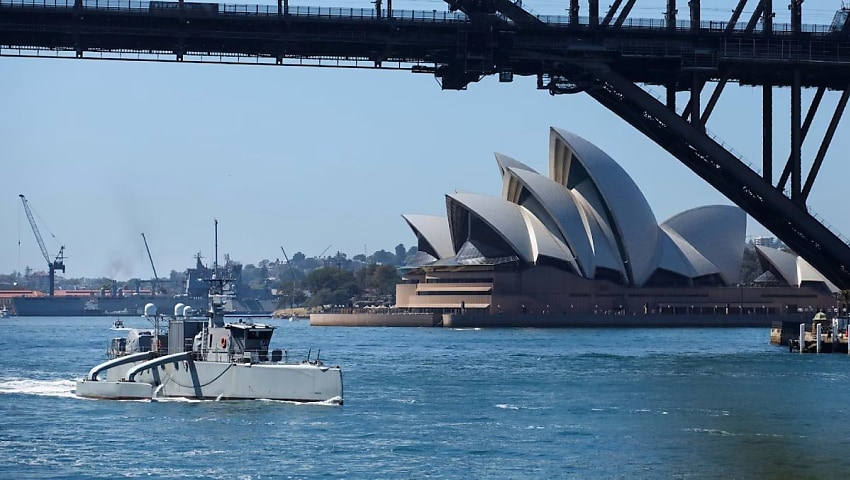
Several unmanned surface vessels – Ranger, Mariner, Seahawk, and Sea Hunter – made their way to Sydney ahead of bilateral exercises with the Royal Australian Navy.
USVs Ranger, Mariner, Seahawk, and Sea Hunter from Unmanned Surface Vessel Division One (USVDIV-1) arrived in Australia and travelled underneath the Sydney Harbour Bridge for a scheduled port visit on 24 October.
It’s understood an ongoing Pacific Fleet exercise will test, develop, and evaluate the integration of unmanned platforms into fleet operations to create warfighting advantages.
During the exercises, USVDIV-1 will collaborate with the RAN on testing unmanned systems in concert with industry partners to advance a shared understanding of these capabilities to meet strategic requirements.
“I look forward to furthering the strong relationship our navies have worked hard to create,” according to US Navy Commander Jeremiah Daley, commanding officer of USVDIV-1.
“Our shared vision of a free and open Indo-Pacific relies upon developing these advanced capabilities that will create the asymmetric warfighting advantages to deter aggression in contested environments.”
The Independence-variant littoral combat ship USS Oakland has also arrived in Sydney alongside the USVs and all five US Navy vessels are being employed in the ongoing US Pacific Fleet exercise Integrated Battle Problem 23.2.
It’s hoped the exercise will develop concepts of operations for future unmanned programs of record and further integrated USVs into routine operations alongside manned surface combatants.

“In order to develop a program as different and disruptive as small, medium, and large USVs, integrating with allies and partners early and consistently in its development is key to our success,” said CDR Daley.
“Through exercises like IBP 23.2 and Autonomous Warrior, we continue to learn from experience in an operational theatre and deepen our interoperable strength.”
USVDIV-1’s mission is to test, evaluate, and operate in support of integrating USVs into fleet operations and provide recommendations to Navy leadership on the development of unmanned systems.
It’s understood the USV vessels are manned while conducting harbour operations, however, they are 100 per cent autonomous with no crew aboard at sea under normal operation.
The US 7th Fleet is the US Navy’s largest forward-deployed numbered fleet and routinely interacts and operates with allies and partners in the Indo-Pacific to preserve a free and open Indo-Pacific region.
The Australian Defence Force has previously partnered with defence industry companies in the development of autonomous vehicles, including autonomous underwater vehicles for the Royal Australian Navy.

Want to see more stories from trusted news sources?
Make Defence Connect a preferred news source on Google.
Click here to add Defence Connect as a preferred news source.