

 iscover
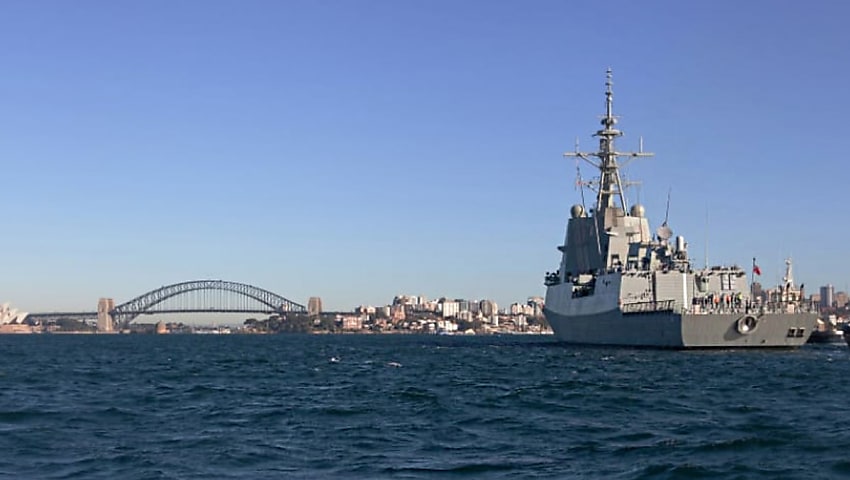
Researchers at the University of South Australia (UniSA) have unveiled a new planning formula designed to optimise the life cycle value of Australia’s warships amid growing geopolitical instability.
Based on the Real Options Approach (ROA) – a model long used in financial decision making and now adapted to the unique demands of naval asset management – the formula could revolutionise how the Royal Australian Navy oversees its fleet.
Lead researcher Ben Petersen, a recent UniSA graduate, says that with shrinking budgets, rapid technological advances and emerging threats, it has never been more important to adopt a flexible, cost‑effective naval framework.
“Our model enables defence planners to factor in uncertainties over a warship’s roughly 30‑year service life. Traditional life cycle planning for naval vessels is too rigid to accommodate major upgrades every seven to 10 years, often resulting in cost and schedule blowouts,” Petersen said.
Alongside UniSA systems engineer Dr Mahmoud Efatmaneshnik, Petersen presented the proposed model at the International Symposium on Systems Engineering in Italy late last year.
Efatmaneshnik highlighted the pressure on military assets to maintain high readiness despite constrained funding, saying, “By adapting ROA, naval forces can assess multiple future scenarios, reducing the risk of over-investment in obsolete technology or premature commissioning of vessels.”
Their paper identifies four core benefits of adopting a Real Options Approach:
- Operational readiness – ensures warships remain technologically cutting‑edge and mission‑capable throughout their service.
- Cost efficiency – allows more targeted budgeting, prioritising upgrades and maintenance that deliver the greatest value.
- Risk mitigation – lowers the financial and strategic risks associated with sunk costs in ageing systems.
- Sovereign capability – supports Australia’s long‑term shipbuilding plans and strengthens the national defence industry.
Australia’s substantial investments in maritime defence – from the Hunter Class frigates and AUKUS nuclear‑powered submarines to upgrades across its existing fleet – make the study particularly timely.

“Applying financial risk‑management principles to warship design, acquisition and sustainment offers a clear pathway to sustaining naval superiority in an era of uncertainty,” Efatmaneshnik said.
Petersen added that the next stage of research will refine the formula to capture additional nuances in different warship designs, ensuring the model remains both robust and practical for defence planners.
Want to see more stories from trusted news sources?
Make Defence Connect a preferred news source on Google.
Click here to add Defence Connect as a preferred news source.