

 iscover
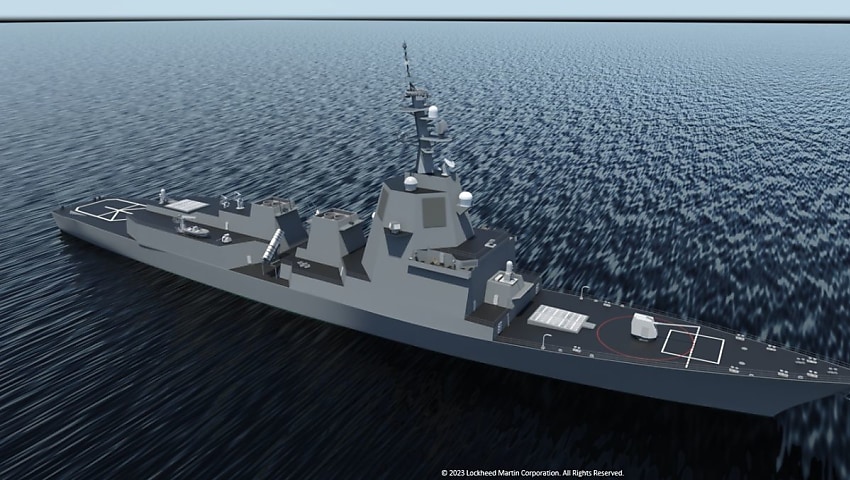
Lockheed Martin and Fujitsu Limited have signed a memorandum of understanding to establish Fujitsu as a manufacturer for the SPY-7 Subarray Suite Power Supply Line Replaceable Unit (PS LRU).
The agreement paves the way for purchase orders supporting Japan’s Aegis System Equipped Vessel (ASEV) program, expected to be issued later in 2025. The ASEV program, led by the Japan Maritime Self-Defense Force (JMSDF), is a cornerstone of Japan’s maritime defence strategy.
ASEVs are planned as new-generation, large-displacement ships equipped with the Aegis Weapon System featuring advanced SPY-7 solid-state radar. This program was initiated in response to regional security challenges, including North Korea’s missile development and increased military activity in the Asia-Pacific, replacing Japan’s cancelled land-based Aegis Ashore missile defence system.
Paul Lemmo, vice president and general manager at Lockheed Martin, said, “By locally manufacturing critical components for the SPY-7 radar, Japan can have complete confidence that this system will be fully supported and sustained for decades to come.”
Lockheed Martin’s SPY-7 radar will form the heart of the ASEV’s surveillance and missile defence capability, providing enhanced detection, tracking and engagement against a range of modern threats. The decision to integrate the SPY-7 was made due to its proven performance in complex maritime environments and its ability to engage multiple targets simultaneously.
“We are honoured to play a role in shaping the future of Japan’s defence industry and proud to contribute to the growth of the defence employment landscape in the country,” Lemmo added.
Tsuneo Hayashi, corporate executive officer, SEVP, Fujitsu Limited, expanded on Lemmo’s comments, saying, “Fujitsu is honoured to contribute to the manufacturing of the SPY-7 radar, particularly in the production of the PS LRU, a vital component of the system.”
In 2024, the two companies signed an earlier MOU aimed at expanding Lockheed Martin’s industrial cooperation goals for increasing solid-state radar production and sustainment within Japan. This latest agreement underscores Lockheed Martin’s long-term commitment to growing the defence workforce and developing the capabilities needed to support Japan’s ASEV program.

“Fujitsu will further expand its collaboration with Lockheed Martin on the SPY-7 radar, contributing to its sustainment in Japan and helping to strengthen national security,” Hayashi added.
For over 30 years, Lockheed Martin has been a key contributor to Japan’s maritime defence, providing advanced systems and sensors for the JMSDF’s Kongo, Atago and Maya Class destroyers. The new ASEVs are expected to play a pivotal role in bolstering Japan’s ballistic missile defence network and extending its maritime surveillance and response capabilities.
Lockheed Martin’s SPY-7 solid-state radar technology promises a leap forward in naval radar performance, the system is designed to detect and track complex threats in real time. SPY-7 offers advanced multi-target engagement capabilities and rapid response to evolving challenges. The radar’s modular architecture ensures adaptability and long-term sustainment, aligning with the JMSDF’s operational requirements.
The ASEV program’s integration of SPY-7 technology, combined with Fujitsu’s local manufacturing contribution, highlights Japan’s strategy to secure a self-reliant and resilient maritime defence capability in partnership with trusted industry leaders.
Want to see more stories from trusted news sources?
Make Defence Connect a preferred news source on Google.
Click here to add Defence Connect as a preferred news source.