

 iscover
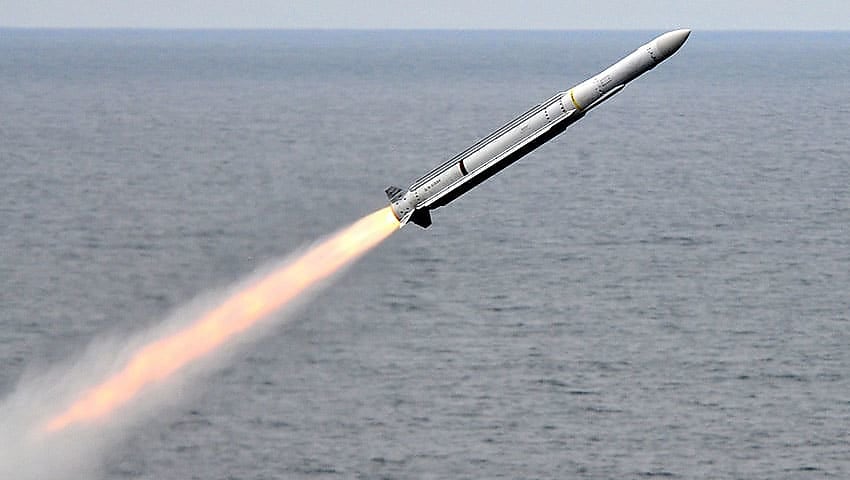
Raytheon has been awarded a US$250 million (approximately AU$375 million) contract by Japan’s Mitsubishi Electric Corporation to support licensed production of the Evolved SeaSparrow Missile Block 2 in Japan, reinforcing long-standing defence ties between the United States and Japan.
Under the direct commercial sale agreement, Raytheon will supply missile kits, components and technical assistance to support local missile assembly at Mitsubishi Electric Corporation’s (MELCO) facilities in Japan. This marks a significant step in deepening Japan’s sovereign defence manufacturing capabilities while enhancing bilateral interoperability in maritime defence.
“This innovative licensed production arrangement is the culmination of decades of partnership,” said Barbara Borgonovi, president of naval power at Raytheon. “As Japan invests in this critical weapon system, it will strengthen their defence capabilities while reinforcing the vital security alliance between our nations.”
Raytheon and MELCO share a 50-year history of collaboration on key defence programs, including radar and missile technologies. This latest contract continues that legacy, reflecting Japan’s broader defence industrial reforms and push for greater self-reliance in defence production, particularly as regional security concerns intensify in the Indo-Pacific.
The Evolved SeaSparrow Missile (ESSM) Block 2 is a highly agile, medium-range, ship-launched missile designed to counter modern aerial threats, including advanced anti-ship cruise missiles and aircraft.
Compared to its predecessor, Block 1, the Block 2 variant features a dual-mode active radar seeker, enhanced manoeuvrability and greater digital processing power, allowing improved performance against sophisticated, high-speed threats in contested maritime environments.
A key attribute of Block 2 is its ability to operate with reduced reliance on shipboard radar illumination, making it suitable for a broader array of modern naval combat systems and launch platforms, including vertical launch systems. The missile’s upgradability via software allows it to remain adaptive to emerging threats.
Japan is one of the 12 member nations of the NATO SeaSparrow Consortium, which jointly manages the ESSM program. Other members include Australia, Canada, Germany, and the Netherlands. The consortium model facilitates cooperative development, production and sustainment of the ESSM family of missiles.

For Australia, a founding member of the consortium, this development underscores the increasing emphasis on allied industrial collaboration to maintain capability edge in the Indo-Pacific.
The Royal Australian Navy employs the ESSM across its Hobart Class destroyers and Anzac Class frigates, with Block 2 integration currently underway as part of fleet modernisation efforts.
Japan’s licensed production of ESSM Block 2 is expected to support broader supply chain resilience within the Indo-Pacific and provide MELCO with critical knowledge transfer and sustainment expertise, further embedding it as a key player in regional defence manufacturing.
The first Japanese-assembled missiles under this agreement are expected to roll off production lines later this decade.
Want to see more stories from trusted news sources?
Make Defence Connect a preferred news source on Google.
Click here to add Defence Connect as a preferred news source.