

 iscover
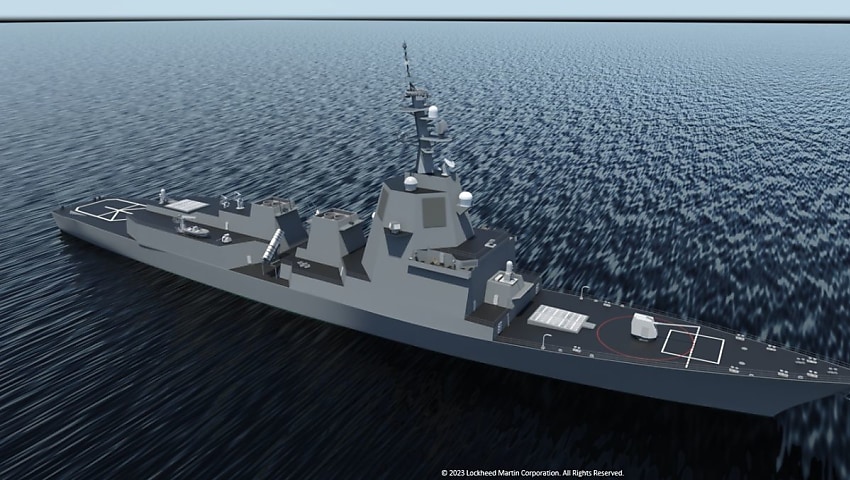
Lockheed Martin has successfully delivered the first set of four AN/SPY-7(V)1 radar antennas for Japan’s Aegis System Equipped Vessel program, marking a major milestone in the nation’s maritime defence modernisation.
The radar shipset was handed over to Japan’s Ministry of Defense via Mitsubishi Corporation under a direct commercial sale agreement, following extensive acceptance testing.
“This on-schedule delivery of all four antennas for the first ASEV highlights the maturity, scalability and production capacity of the SPY-7 radar, while also underscoring Lockheed Martin’s deep expertise in system integration,” said Chandra Marshall, vice president of multi-domain combat solutions at Lockheed Martin.
Japan is acquiring two Aegis System Equipped Vessels (ASEV), both of which are progressing towards commissioning in Japanese fiscal years 2027 and 2028. Marshall added, “We’ll continue full system integration and testing with all four antennas at our production test centre in Moorestown, New Jersey this year. This approach significantly reduces integration risk and supports on-time delivery to Japan.”
The SPY-7 radar is a state-of-the-art, software-defined digital radar offering advanced detection, tracking and engagement capabilities. It is designed to handle complex and evolving threats, enabling the simultaneous engagement of multiple targets – a crucial capability for modern naval forces operating in dynamic and uncertain strategic environments.
Beyond Japan’s ASEVs, the SPY-7 radar has been selected for several international defence programs, including Canada’s River Class destroyers and Spain’s F-110 frigates. A land-based version known as TPY-6 is also being used by the US Missile Defense Agency as part of the Guam Defence System and the Long Range Discrimination Radar program.
The SPY-7 system has already demonstrated its operational credibility: in December 2024, the land-based TPY-6 version successfully intercepted a mid-range ballistic missile during a live-fire trial as part of the Aegis Guam System’s Flight Experiment Mission-02.
Representing a generational leap in radar technology, SPY-7 delivers performance that is three times greater than legacy systems. As a software-defined platform, it is designed for rapid upgrades, allowing for seamless integration of new technologies and capabilities over time.

This future-proofed design ensures SPY-7 remains at the leading edge of global radar performance providing allied forces with a decisive advantage.
The successful delivery of the radar antennas marks a key step forward in the ASEV program, reinforcing the growing partnership between Japan and the United States in regional missile defence and naval capability development.

Want to see more stories from trusted news sources?
Make Defence Connect a preferred news source on Google.
Click here to add Defence Connect as a preferred news source.