

 iscover
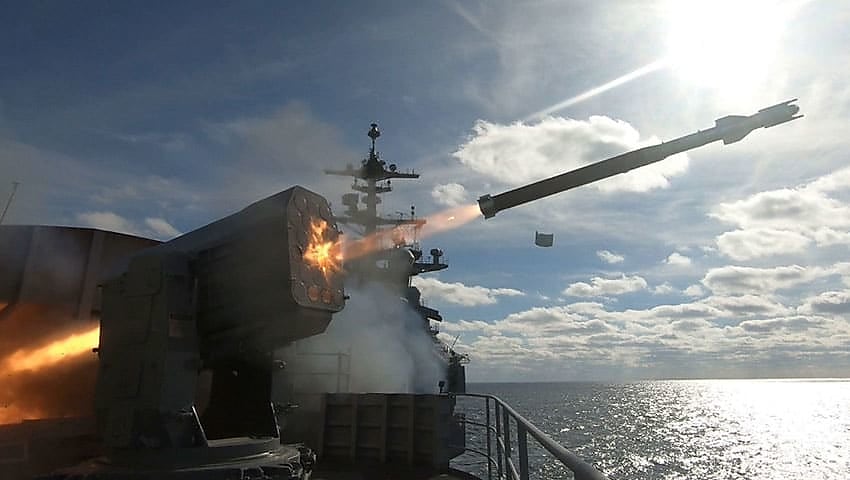
Raytheon has been awarded a US$74 million (approximately AU$111 million) contract to deliver and upgrade multiple Rolling Airframe Missile (RAM) Guided Missile Launching Systems for the United States Navy.
This order marks the single largest US RAM launcher order in over 20 years. Under the agreement, Raytheon will supply newly built launcher systems, refurbish existing units, and provide critical hardware and spare components to support system upgrades.
The work will primarily be carried out at the company’s production facility in Louisville, Kentucky, with deliveries expected to continue through to 2028.
“This contract marks the largest single order of US RAM launchers in over two decades and will ensure our naval assets remain well-protected against anti-ship threats,” said Barbara Borgonovi, president of Naval Power at Raytheon. “Our continued investment in modernising production capacity enables us to meet the growing global demand for the world’s most modern short-range ship self-defence weapon system.”
The RAM system is a cooperative development between the United States and Germany and celebrates its 50th anniversary in 2026. A joint effort led by Raytheon and Germany’s Diehl Defence, the RAM program represents one of the most successful international defence partnerships in modern naval history.
It delivers a critical capability to defend surface ships against a wide range of threats, including anti-ship missiles, helicopters and small surface vessels.
The RAM system is currently in service with 11 navies worldwide, including those of the United States, Germany, Japan, South Korea and the United Arab Emirates. It is deployed on more than 165 vessels globally, ranging from 500-tonne fast patrol boats to 95,000-tonne aircraft carriers. It is also being integrated into several new classes of US Navy ships, including the latest iterations of the Arleigh Burke Class guided-missile destroyers.
At the heart of the system is the supersonic, fire-and-forget RAM missile, which uses a combination of passive radio frequency and infrared guidance to engage incoming threats without the need for further shipboard direction after launch. This design allows the system to rapidly engage multiple targets simultaneously with high accuracy, even in high-intensity environments.

The missile is continuously upgraded to keep pace with evolving threats and is deployable via both the MK49 RAM Guided Missile Launching Systems and the MK15 Mod 32 SeaRAM Close-In Weapon System (CIWS).
The SeaRAM variant, which combines the RAM missile with the radar and infrared tracking systems from the Phalanx CIWS, is particularly valued for its stand-alone capability. It enables high-speed threat detection and engagement with minimal reliance on a ship’s combat system, making it especially suitable for integration into both large and small surface combatants.
From an Australian perspective, the RAM system is of growing relevance. The Royal Australian Navy has deployed the SeaRAM system aboard its Hobart Class destroyers and is likely to continue expanding its use as Australia modernises its naval fleet and enhances its close-in defensive capabilities under the AUKUS security partnership and the updated Defence Strategic Review.
With growing concerns over regional anti-ship missile threats, RAM’s effectiveness against fast, low-flying and evasive threats makes it a critical asset for modern naval operations.
Raytheon’s latest order underscores the increasing global demand for short-range ship self-defence capabilities in contested maritime environments, particularly as missile technologies in the Indo-Pacific region become more sophisticated and widespread.
With this latest contract, the RAM program continues to cement its place as a cornerstone of naval ship protection, offering a reliable and future-ready solution to counter the evolving spectrum of anti-ship threats.
Want to see more stories from trusted news sources?
Make Defence Connect a preferred news source on Google.
Click here to add Defence Connect as a preferred news source.