

 iscover
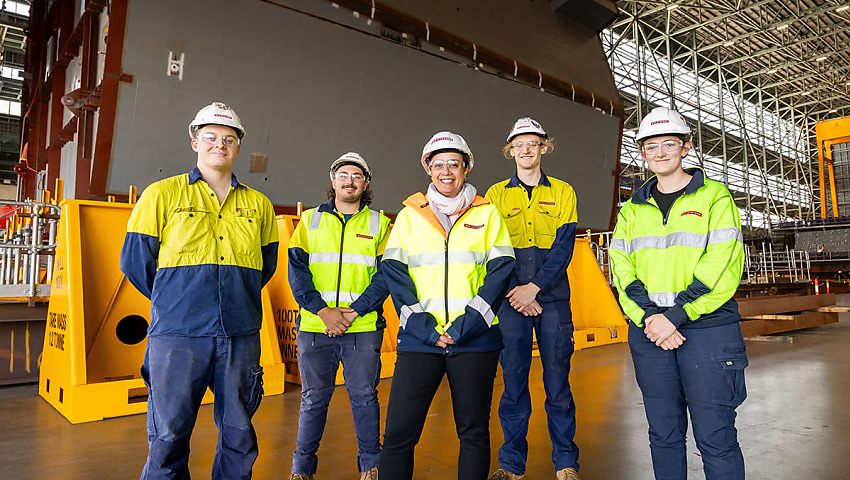
BAE Systems Australia has marked a milestone in the Hunter Class Frigate Program, celebrating the graduation of its first cohort of apprentices, a key step in the company’s plan to create 1,000 early-career positions over the life of the project.
The initial intake began in 2020, when 18 high school students joined the program across two groups, training in steelwork, mechanical, electrical and technical trades. These trades underpin the multi-decade frigate program and are critical to building a sustained, highly skilled workforce.
The company is now recognising 22 graduating apprentices, including 10 from the original cohort who have completed their qualifications and joined the 2,300-strong workforce advancing the program at Osborne.
Georgette Elston, BAE Systems Australia’s head of resourcing and early careers, said the milestone reflects the long-term national value of the program.
“BAE Systems Australia is proud to welcome our first graduating cohort of apprentices. This program is creating thousands of Australian jobs while building national security and resilience,” Elston said.
“The benefit of our apprenticeship program is clear –you gain technical and workplace skills, earn a competitive salary, and build a futureproof career across the defence industry.”
The graduating class includes:
- 18 steelwork tradespeople
- Two piping tradespeople
- One electrical tradesperson
- One detailed design tradesperson
- Two school-based apprentices who commenced in 2021.
- Nine apprentices who began a Certificate III in fabrication in 2022, formalising skills they were already using as welders.
For many, the apprenticeship has been a life-changing experience. Graduates speak highly of the hands-on training, the support networks they’ve built, and the confidence they’ve gained along the way.

Izzy, who completed a Certificate III in fabrication as a school-based apprentice and is now a welding inspector in quality control, said the journey has been both demanding and rewarding.
“It’s definitely been challenging, but very rewarding. I feel like a completely different person – I was so timid at the start, but I’m not afraid to make conversation anymore.”
The apprentices have now moved into full-time roles at the Osborne shipyard, establishing clear pathways for long-term career growth.
John, another school-based apprentice, said he hopes to build a career at the yard.
“There are endless opportunities. I want to stay here for a while, learn from the tradesmen and hopefully stay on longer.”
The Hunter Class Frigate Program is expected to generate thousands of jobs and build long-term sovereign capability in high-value, sustainable trades.
Across all intakes, BAE Systems now has 105 apprentices on the program, including 47 new starters set to begin in 2025. The success of the first graduating cohort highlights that the program is delivering more than ships, it is helping build Australian skills, jobs and national capability for decades to come.

Want to see more stories from trusted news sources?
Make Defence Connect a preferred news source on Google.
Click here to add Defence Connect as a preferred news source.