

 iscover
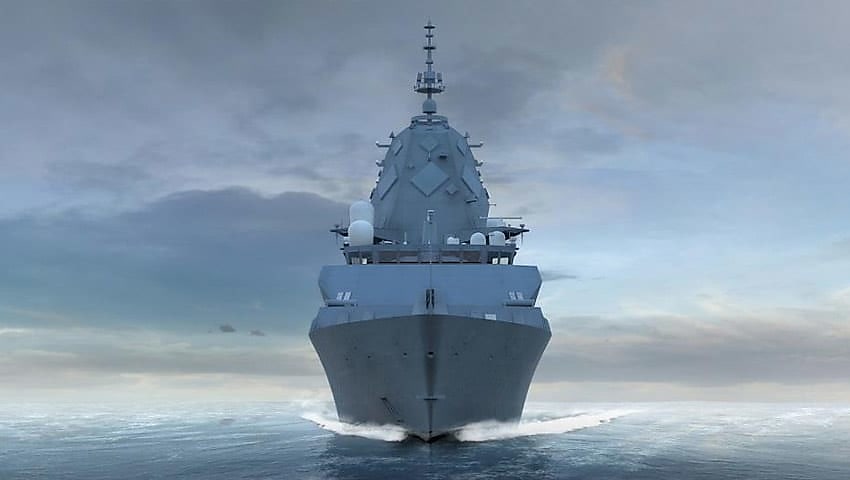
A new software integration developed for modern naval vessels will strengthen the connection between navigation and combat systems aboard the Hunter Class frigate, improving operational awareness and reducing integration risk for the Royal Australian Navy.
German maritime technology company Anschütz has announced a major upgrade to its Synapsis Integrated Navigation System, enabling the platform to integrate directly with the Aegis Combat System used on many allied warships.
The enhancement introduces a newly developed data interface connecting Synapsis with the Gigabit Ethernet Data Multiplex System (GEDMS), the navigation information distribution network used aboard vessels equipped with the Aegis system.
The capability was developed as part of the Warship Integrated Navigation and Bridge System program for Australia’s Hunter Class frigates in 2025 and represents a significant step in integrating navigation, sensors and combat systems on next-generation warships.
The Synapsis platform integrates data from a wide range of navigation and mission sensors to support safe ship handling and operational awareness. With the new interface, the system can exchange navigation data and receive sensor status information directly from Aegis-approved sensors, ensuring consistent and reliable navigation information is distributed across the ship’s networks.
To enable this capability, Anschütz developed a dedicated software module that harmonises data formats and enables two-way data exchange between Synapsis and GEDMS.
As part of the upgrade, the Synapsis Conning application has also been enhanced to display the operational status and selection of Aegis-approved navigation sensors directly within the bridge interface, helping crews monitor systems more efficiently and respond more quickly during operations.
The result is improved integration between navigation and combat systems, a critical capability for modern warships operating in complex, high-threat maritime environments.

According to Anschütz, the addition of the GEDMS interface strengthens the modular and scalable architecture of the Synapsis system.
For navies and shipbuilders, the approach provides a pre-validated engineering pathway for integrating navigation systems with Aegis combat platforms, reducing technical risk, simplifying ship design and improving data consistency across fleets.
The Aegis Combat System, developed by Lockheed Martin, is widely used by the United States Navy and a number of allied naval forces around the world. Synapsis itself is already deployed on several major naval programs, including Germany’s F125 and K130 warships, the Type 26 frigate and Type 31 frigate, as well as a wide range of government and commercial vessels. More than 1,200 ships globally currently operate with integrated navigation systems from Anschütz.
For Australia, the integration is particularly significant as the Hunter Class frigate will form the backbone of the Royal Australian Navy’s future anti-submarine warfare (ASW) surface fleet.
Based on the British Type 26 frigate design, the Hunter Class will combine advanced sensors, quiet propulsion and long-range strike capabilities with the Aegis Combat System to create one of the most capable ASW frigates in the world.
Once in service, the ships are expected to perform a wide range of roles across the Indo-Pacific, including the following:
- Anti-submarine warfare, protecting sea lines of communication and carrier or amphibious task groups.
- Fleet air defence and missile defence, leveraging Aegis sensors and interceptors.
- Long-range strike operations, using vertically launched precision weapons.
- Maritime security and deterrence patrols across Australia’s northern approaches and wider Indo-Pacific region.
- Integration with allied naval task groups, particularly those led by the United States and the United Kingdom.
The ability to seamlessly share navigation, sensor and operational data between bridge systems and the combat management system is expected to be particularly important during complex multi-domain operations, where ships must coordinate sensors, weapons and manoeuvre simultaneously.
As naval operations become increasingly networked and data-driven, the integration of navigation, sensors and combat systems is emerging as a critical requirement for modern warships.
With the addition of the new GEDMS interface, the Synapsis Integrated Navigation System used in Australia’s Hunter Class frigate program is expected to provide a future-ready bridge system capable of supporting the evolving demands of integrated naval warfare.
For the Royal Australian Navy, the development represents another incremental step towards fielding a new generation of highly connected, interoperable surface combatants designed to operate seamlessly with allied fleets across the Indo-Pacific.

Want to see more stories from trusted news sources?
Make Defence Connect a preferred news source on Google.
Click here to add Defence Connect as a preferred news source.