

 iscover
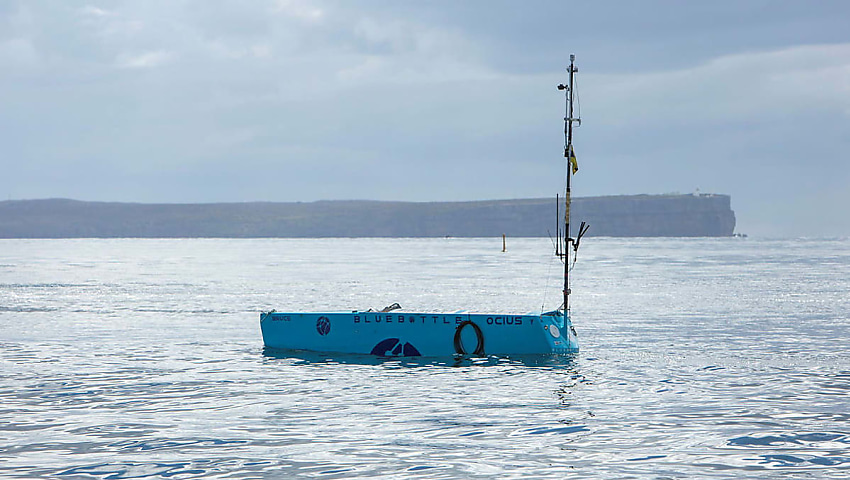
Australia is dramatically expanding its fleet of cutting-edge maritime drones, with the acquisition of 40 additional Bluebottle uncrewed surface vessels (USV) set to give the nation one of the largest operational USV fleets in the world.
The new vessels, to be built in Australia as part of a $176 million dollar contract, will boost Australia’s total Bluebottle fleet to at least 55, marking a significant step forward in the nation’s ability to monitor and protect its vast maritime approaches.
Developed by Sydney-based defence technology company Ocius Technology, the Bluebottle is far more than a simple robotic boat. Powered by wind, solar and wave energy, the autonomous vessel can remain at sea for months at a time while conducting surveillance, reconnaissance and communications missions across huge distances.
In a rapidly evolving maritime battlespace, the Bluebottle’s capabilities are particularly notable. The vessel can deploy aerial drones directly from the water, meaning that an armed or surveillance drone could be launched from a Bluebottle operating hundreds of kilometres offshore.
Deputy Prime Minister and Defence Minister Richard Marles MP celebrated this decision: “The Bluebottle is an innovative platform designed, developed and manufactured right here in Australia. This is an excellent example of Defence and industry working together to deliver cutting-edge capability.”
Defence planners said this flexibility allows the drones to operate as part of a highly integrated force. Bluebottles can work alongside other emerging Australian capabilities such as the Ghost Shark and future submarines, forming a network of autonomous systems operating above and below the surface.
Multiple Bluebottles can also function as a floating communications grid, effectively acting as a “cell network” at sea. This allows them to relay data between underwater systems and airborne assets, creating a vital gateway connecting the undersea battlespace with satellites and aircraft overhead.
The Deputy Prime Minister added: “The Albanese government’s investment in Ocius Technology and their Bluebottle USV has accelerated the delivery of the autonomous systems for Navy. Over the next five years and beyond, Bluebottle will monitor Australia’s maritime approaches and strengthen Defence’s ability to protect our national security interests.”

The technology is expected to complement the Royal Australian Navy’s increasingly lethal surface combatant fleet and, in the future, Australia’s conventionally armed nuclear-powered submarines. Together, these systems will strengthen Australia’s ability to monitor its northern approaches and respond to growing maritime security challenges across the Indo-Pacific.
Bluebottle drones are already proving their worth in operational service. Since 1 July 2024, Ocius Technology has been operating the vessels around the clock from a facility at HMAS Coonawarra in support of Operation Resolute, Australia’s ongoing mission to safeguard the nation’s maritime borders.
Minister for Defence Industry Pat Conroy MP stressed the impact of this contract on Australia's defence industrial base, saying, “With this world-leading technology, we are able to increase surveillance of Australia’s northern approaches and respond to increasing maritime threats. Accelerated development of autonomous capabilities will be fundamental as we navigate this new era of global uncertainty.
“With this investment, the Albanese government is backing Aussie ingenuity while creating highly skilled, well-paid jobs for locals. We are investing right now to uplift our sovereign defence industry.”
The fleet has collectively travelled more than 200,000 nautical miles at sea, roughly the equivalent of circling the globe 10 times, or making a one-way trip to the moon.
Robert Dane, chief executive officer of Ocius Technology, said, “We are very proud to announce this Australian Program of Record for the acquisition of uncrewed surface vessels. For more than two decades, we have invested in building a world-class product and manufacturing capability right here in Australia. This contract represents a major milestone for the company and for Australia's sovereign maritime technology sector.”
These comments were echoed by Head of Navy Capability, Rear Admiral Stephen Hughes AM CS, who said, “Ocius Bluebottle uncrewed surface vessels will provide the Australian Defence Force with flexible, persistent and capable long-range intelligence, surveillance and reconnaissance. The Bluebottle provides operational advantage and flexibility, being able to carry multiple modular payloads for multiple missions. These vessels can autonomously monitor designated areas for lengths of time in dangerous and harsh maritime conditions.”
Individual missions can be remarkably long. On average, the vessels remain at sea for around 75 days before being recalled, with the longest deployment to date lasting an extraordinary 184 days.
Deployment is also highly flexible. Bluebottles can be launched directly from naval vessels or even from simple boat ramps, allowing them to be rapidly deployed from forward operating bases or remote island locations.
As autonomous technologies rapidly reshape modern naval warfare, Australia’s expanding Bluebottle fleet signals a clear shift towards persistent, low-cost maritime surveillance and a future where fleets of robotic vessels quietly patrol the nation’s oceans around the clock.

Want to see more stories from trusted news sources?
Make Defence Connect a preferred news source on Google.
Click here to add Defence Connect as a preferred news source.