

 iscover
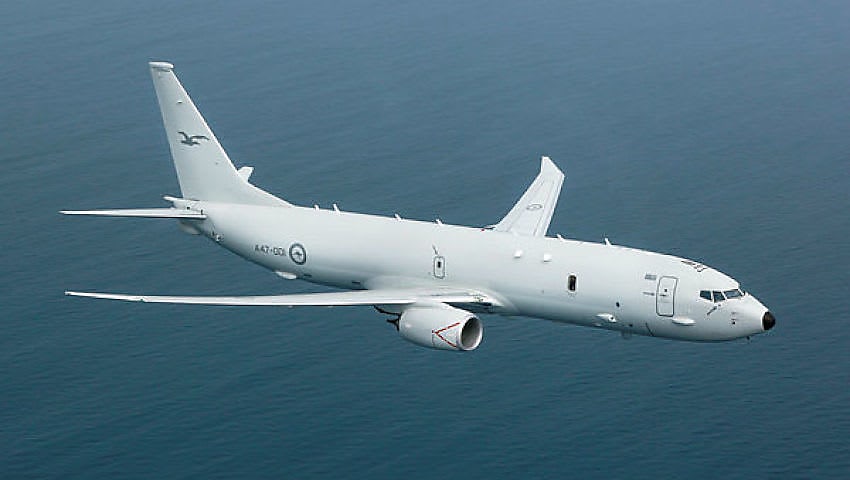
The Royal Australian Air Force has deployed a maritime patrol aircraft and around 50 personnel to the western Pacific to participate in a major multinational anti-submarine warfare exercise, highlighting Australia’s growing role in maintaining security across the Indo-Pacific.
The deployment sees a No. 12 Squadron RAAF Boeing P-8A Poseidon operating from Andersen Air Force Base as part of Exercise Sea Dragon 2026, a United States Navy-led training activity focused on high-end submarine detection and tracking.
Running across March in waters around Guam, the two-week exercise brings together maritime patrol aircraft and crews from the United States Navy, the Indian Navy, the Japan Maritime Self-Defense Force, and the Royal New Zealand Air Force.
The exercise centres on anti-submarine warfare, one of the most technically demanding forms of modern military operations. Crews will compete in a series of missions designed to locate, track and classify both simulated and real submarine targets in open ocean conditions.
Aircraft crews will be tested on the speed and accuracy of their detection efforts, as well as their ability to coordinate complex missions with partner forces – skills considered critical as submarine activity across the Indo-Pacific increases.
Detachment commander Bryce Martin said the exercise provides valuable high-end training for Australian crews while strengthening operational ties with partner nations.
“Exercise Sea Dragon 26 is an excellent opportunity to sharpen our skills and strengthen our international partnerships,” Squadron Leader Martin said.
“The expansive overwater training area near Guam allows our aircrews to train in complex scenarios and refine coordination with the RAAF and alongside our allies and partners.”

The deployment is also notable for the involvement of No. 12 Squadron, which was recently re-formed as part of the RAAF’s effort to expand its maritime surveillance and strike capacity.
Australia operates a fleet of 13 Boeing P-8A Poseidon aircraft, based primarily at RAAF Base Edinburgh. The aircraft is among the most advanced maritime patrol platforms in service globally, capable of conducting anti-submarine warfare, anti-surface warfare, intelligence gathering and long-range surveillance.
Derived from the civilian Boeing 737, the Poseidon carries advanced radar, electronic sensors, sonobuoys and torpedoes, allowing it to detect and track submarines across vast stretches of ocean.
The platform forms a key part of Australia’s broader maritime surveillance network, which includes the Northrop Grumman MQ-4C Triton and underpins the nation’s ability to monitor sea lanes and respond to emerging security challenges across the Indo-Pacific.
Exercises such as Sea Dragon have become increasingly important as regional militaries deepen cooperation to counter growing submarine fleets and protect vital shipping routes that underpin global trade.
For Australia, participation reinforces its role as a key maritime security partner in the region and provides valuable operational experience for aircrews tasked with protecting the country’s vast maritime approaches.

Want to see more stories from trusted news sources?
Make Defence Connect a preferred news source on Google.
Click here to add Defence Connect as a preferred news source.