

 iscover
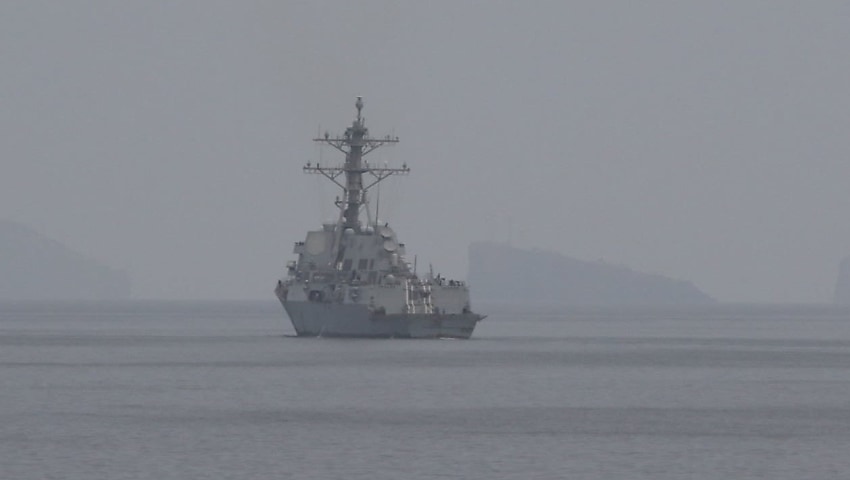
US military has announced it has begun conditions for clearing mines in the Strait of Hormuz using two US Navy guided-missile destroyer warships.
USS Frank E Petersen (DDG 121) and USS Michael Murphy (DDG 112) have reportedly transited the Strait of Hormuz over the weekend and operated in the Arabian Gulf as part of a broader mission to ensure the strait is fully clear of sea mines previously laid by Iran’s Islamic Revolutionary Guards Corps.
The Strait of Hormuz international sea passage provides an essential trade corridor that supports regional and global economic prosperity.
“Today, we began the process of establishing a new passage and we will share this safe pathway with the maritime industry soon to encourage the free flow of commerce,” US Central Command (CENTCOM) Commander Admiral Brad Cooper said.
Additional US forces including underwater drones were announced to join clearance effort into the future, according to CENTCOM.
Earlier this week, University of Western Australia, Defence and Security Institute Adjunct Professor Jennifer Parker said that a credible reassurance effort with limited naval escorts would likely be required to escort US flagged and crewed commercial vessels out of the Gulf.
“Over recent weeks, Iran has demonstrated both the capability and intent to target commercial shipping. Attacks and credible threats against vessels have driven daily transits down from around 130 to just a handful. Until that risk changes, ships will not return in meaningful numbers,” Parker said.
“Washington has asserted that the strait is open. Tehran’s messaging has been more ambiguous, including references to requiring vessels to inform Iranian authorities before transiting. Some interpret this as a precursor to attempts to exert control over the waterway through a toll.

“This ambiguity matters. Shipping is a commercial activity driven by risk calculations. Operators and crews will not move on the basis of political statements, particularly when recent experience suggests those statements may not hold.
“In practice, restoring traffic through the strait will likely occur in two phases. The first is reducing the threat; that can occur through military means, diplomacy or a combination of both, but it must materially degrade Iran’s ability and willingness to target shipping.
“(Secondly) an effective reassurance campaign would also involve a broader international presence to provide surveillance, information-sharing and rapid response capability. The international community should move quickly to establish this. Its very establishment would help restore confidence in transits.
“(In addition) questions remain about whether mines have been laid in or near the strait. A clear, public assessment from the international community on whether the strait has in fact been mined would go a long way. It should be an early priority for any coalition effort.”

Want to see more stories from trusted news sources?
Make Defence Connect a preferred news source on Google.
Click here to add Defence Connect as a preferred news source.