

 iscover
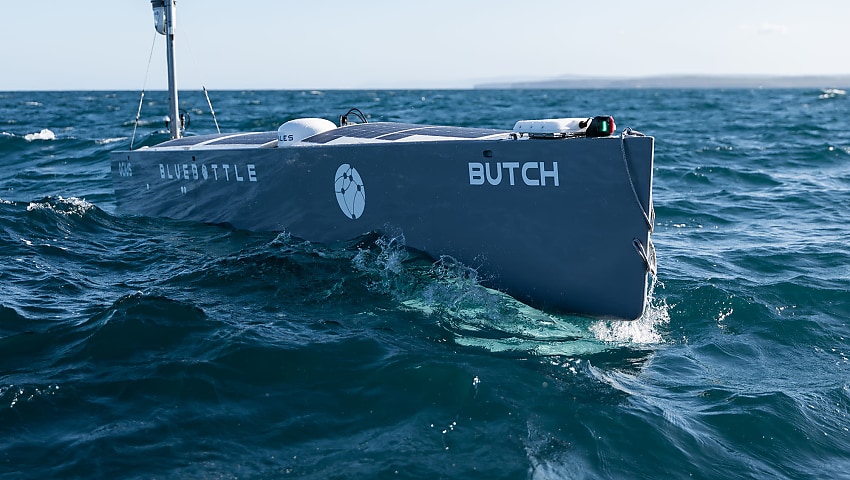
Australian uncrewed surface vessel manufacturer Ocius Technology and UNSW Canberra have announced a collaboration to develop advanced autonomous control systems for the Bluebottle uncrewed surface vessel (USV) fleet to optimise its performance and power usage.
The project is the second Defence Trailblazer-supported research and development (R&D) collaboration between Ocius and academics from the Decision Support and Analytics Research Group (DSARG) at UNSW Canberra. This follows work currently underway to rapidly scale up production of the Bluebottle USV fleet.
As a key supplier to the Royal Australian Navy, Ocius is continuing to deliver greater value to customers by driving down the resourcing required to operate the USVs. This project will focus on optimising power usage, sailing performance and autonomous decision making for the Bluebottle vessels.
The project collaborators are developing a “predict-then-optimise” power consumption model of the Bluebottle USV that integrates AI-driven predictions of vessel behaviour and an advanced autopilot capability, which will allow a single operator to manage multiple vessels simultaneously. The project aims to reduce operator workload, improve maritime surveillance efficiency and support future Defence capability requirements for autonomous and uncrewed systems.
“By integrating a more advanced autopilot system, the Bluebottle will require significantly less human oversight, reducing crew workload and enabling the Navy to optimise its force structure,” said Ocius project investigator Nick Rozenauers.
The model will incorporate predictions of sailing performance under varying conditions, management of propulsion systems for maximum efficiency, and a power model for optimum performance and minimised energy consumption.
“We will be working with Ocius operators and engineers to model the desired behaviour of the Bluebottle fleet,” said Dr Ripon K Chakrabortty, lead investigator and DSARG leader at UNSW Canberra.
“The verified model will then be tested and implemented into Ocius’ vessel autopilot architecture.”

As with the first R&D collaboration, this project is directly aligned with the 2026 Integrated Investment Program and will help fulfil the continued acquisition of Ocius USVs for the RAN’s anti-submarine warfare and intelligence, surveillance, and reconnaissance operations.
“This enhancement not only improves operational efficiency but also supports the ADF’s broader objective of leveraging autonomous technologies to strengthen maritime capability,” Rozenauers said.
Richard Williamson, project manager at Defence Trailblazer, said of the project: “This second collaboration is indicative of demand for the Bluebottle fleet from both industry and the RAN, and it further showcases the value of UNSW research expertise to support sovereign USV development.”
Want to see more stories from trusted news sources?
Make Defence Connect a preferred news source on Google.
Click here to add Defence Connect as a preferred news source.