

 iscover
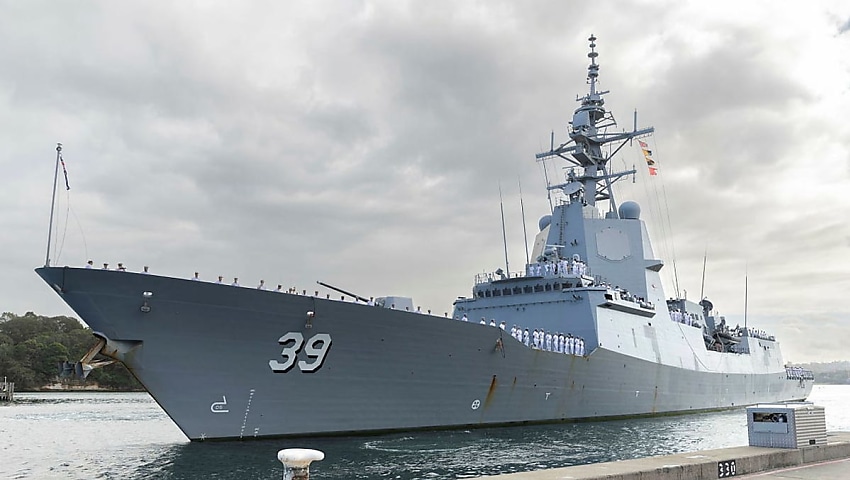
Lead ship of the Hobart Class of guided missile destroyers, HMAS Hobart has successfully completed the latest round of upgrades in a first for the class on time, marking a major boost in capability for the Royal Australian Navy.
Delivered as part of the multibillion-dollar SEA 4000 Phase 6, otherwise known as the Destroyer Capability Enhancement Program, representing a transformative leap in Australia’s maritime lethality and long-range strike capability.
At the heart of the project is the transition from the original Aegis Baseline 7.1 combat system to the Aegis Baseline 9 combat system; this extensive software and hardware overhaul drastically improves the fleet’s Integrated Air and Missile Defence capacity.
Aegis Baseline 9 will allow the destroyers to detect, track and engage advanced airborne threats, including terminal ballistic missiles, forming a critical component of the nation’s broader integrated air and missile defence architecture and systems, fulfilling a key mission articulated in the 2023 Defence Strategic Review and subsequent 2024 and 2026 National Defence Strategies, respectively.
Vice Admiral Matthew Paul Buckley AM CSC RAN, speaking in a piece to camera on Facebook, said: “Sitting astern of me here is HMAS Hobart, the first destroyer to go through the Destroyer Capability Enhancement Program, she’ll be undocking tomorrow (20 August 2026).”
Navantia Australia, acting as the primary platform systems designer, has led the complex physical and structural modifications required to integrate these state-of-the-art combat architectures into the existing ship hulls.
The capability enhancement is anchored by the integration of powerful long-range strike capabilities into the destroyers’ 48-cell Mark 41 Vertical Launch Systems and canister launchers, including:
- Tomahawk Cruise Missiles: Giving the RAN a land-attack strike reach exceeding 1,500 kilometres.
- Standard Missile 6 (SM-6): Providing multi-domain protection against extended-range air threats, anti-surface targets and ballistic missiles.
The program of works will also formally integrate the Naval Strike Missile anti-ship missile, replacing the legacy Harpoon anti-ship missile to deliver high-subsonic, sea-skimming precision strike capabilities.

To tie these systems together, the upgrade incorporates an updated combat management environment that replaces the older tactical interface with an integrated system linked to Saab’s 9LV architecture. This creates unified data-sharing across the Australian Defence Force joint networks and ensures seamless tactical interoperability with coalition partners, most notably the United States Navy.
VADM Buckley said: “What’s exciting about this, is this ship is getting into the water on schedule, it is the first very significant milestone in this very complex and important upgrade to get this ship back into the fleet even more lethal, with more firepower than what she has right now.”
This refit fundamentally transforms the Hobart Class from specialised air-defence escorts into multi-mission force-projection assets. By embedding these capabilities across the fleet, the RAN establishes a resilient, sea-based long-range deterrent central to Australia’s National Defence Strategy.

Want to see more stories from trusted news sources?
Make Defence Connect a preferred news source on Google.
Click here to add Defence Connect as a preferred news source.