

 iscover
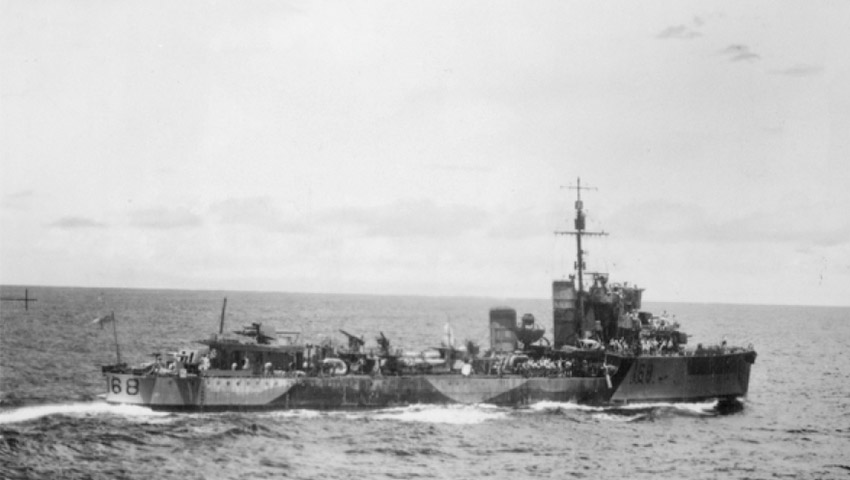
The final resting place of World War II destroyer HMAS Vampire I remains a mystery despite the efforts of a search party from the Royal Australian Navy.
Vampire I was sunk during a Japanese air raid off the Sri Lankan coast on 9 April 1942, with the wreck’s precise location never identified.
Nine Australian sailors were killed in the attack.
HMAS Leeuwin, a hydrographic survey ship, and Mine Hunter HMAS Diamantina spent a week searching a 150 square mile area of the seafloor based on new information from local sources, accounts of survivors and photographic records from the battle.
Despite not finding the destroyer, new data has been collected that the RAN said “improved the chances of eventually locating the wreck”.
“Our search data suggest that HMAS Vampire I sank up to a kilometre and a half down a deep trench and is resting on the seafloor beneath where the battle took place,” RAN spokesman Captain Charlie Stephenson said.
“If that is where the Vampire I sunk, it is possible that she has been buried in sediment or even moved in sub-sea currents over the past 77 years.
“A different type of detection equipment will be required to look deeper into the trench – the type used by deep-sea commercial survey companies working mostly in the resources sector.”
Chief of Navy, Vice Admiral Mike Noonan said, “While the Vampire I remained elusive, Australians should be very proud of what HMA Ships Leeuwin and Diamantina had achieved.”
“Ultimately, nine Australian sailors remain lost at sea,” VADM Noonan said.
“When new information was received, we had a duty to investigate. New data gathered will inform future searches, which hopefully will ultimately close this chapter of Navy’s history.”
Want to see more stories from trusted news sources?
Make Defence Connect a preferred news source on Google.
Click here to add Defence Connect as a preferred news source.