

 iscover
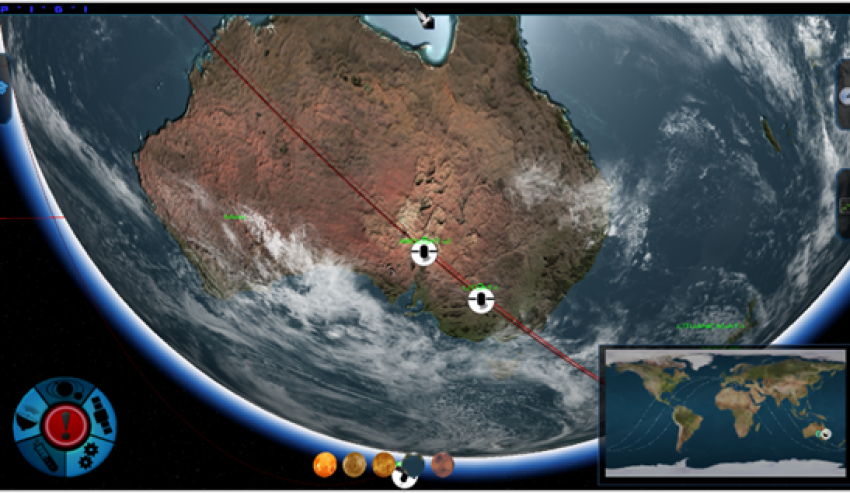
As part of the government’s second tranche of Defence Innovation Hub investments, a Sydney company will develop new technology for the Royal Australian Air Force (RAAF) that can autonomously identify electronic threats.
Saber Astronautics was awarded a $275,000 contract to develop the software to support the RAAF.
The contract is the first phase of a three-phase project using the company's advanced machine learning capability.
It is expected that the technology will not only have defence applications, but commercial, with Saber anticipating it will enable better communications between spacecraft operators and their satellites, especially during disruptive events such as solar flares.
Saber's director and chief executive Dr Jason Held said the contract came at the right time as Australia is looking to advance its space industry and technology with International Astronautical Congress arriving in Adelaide in September.
"This is great timing as it allows us to develop a key technology for secure communications at exactly the time that the Australian market is heating up," said Dr Held.
"Commercial small satellites are more susceptible to solar storms but still need to produce clean data for customers on Earth. We’re particularly excited to explore this potential more broadly with the Australian Air Force."
Saber Astronautics has nearly a decade of experience in applying machine learning to diagnostics, having demonstrated the technology previously on several NASA and commercial spacecraft. Using the technology to diagnose signals is a new application.

The company's mission statement is to reduce barriers to space flight, making it more accessible to people on Earth.

Want to see more stories from trusted news sources?
Make Defence Connect a preferred news source on Google.
Click here to add Defence Connect as a preferred news source.