

 iscover
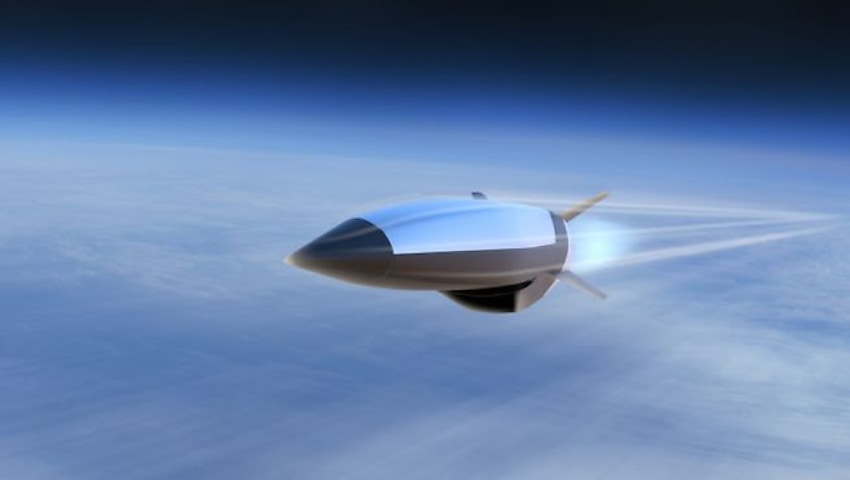
The global defence contractors have been selected to develop advanced long-range attack missiles as part of a joint initiative between Australia and the United States.
Northrop Grumman and Raytheon Missiles & Defense have been selected to develop the Hypersonic Attack Cruise Missile (HACM) for the US Air Force (USAF).
The project forms part of a collaboration with the Southern Cross Integrated Flight Research Experiment (SCIFiRE) — a joint initiative between the United States and Australia.
As part of the project, the primes have been tasked with delivering “operationally ready” HACM missiles, billed as an air-breathing, scramjet-powered munition.
Scramjet engines are designed to leverage high vehicle speed to “forcibly compress” incoming air before combustion.
This is tipped to enable sustained flight at hypersonic speeds of Mach 5 or greater, potentially evading defensive systems.
“Raytheon Missiles & Defense continues to be at the forefront of hypersonic weapon and air-breathing technology development,” Wes Kremer, president of Raytheon Missiles & Defense, said.
“With advanced threats emerging around the globe, the Hypersonic Attack Cruise Missile will provide our warfighters a much-needed capability.”

Mary Petryszyn, corporate vice president and president, Northrop Grumman Defense Systems, said HACM would create a new class of strategically important weapons.
“Our scramjet propulsion technology is ushering in a new era for faster, more survivable and highly capable weapons,” she said.
This latest initiative builds on three years of collaboration between Northrop Grumman and Raytheon Technologies on the development, production and integration of Northrop Grumman’s scramjet engines onto Raytheon’s air-breathing hypersonic weapons.
In July, the primes completed the second flight test of the scramjet-powered Hypersonic Air-breathing Weapon Concept (HAWC) in cooperation with the Defense Advanced Research Projects Agency (DARPA) and the US Air Force.
Drawing from results of the first flight test, the exercise aimed to mature the operationally relevant weapon concept design.
HAWC was released from an aircraft and accelerated to hypersonic speeds leveraging the scramjet engine, with the vehicle flying a trajectory that engineers designed to intentionally stress the weapon concept and explore its limits.
The test reportedly achieved all primary and secondary objectives, which included demonstrating tactical range capabilities.
[Related: Raytheon, Northrop Grumman advance hypersonic missile development]

Want to see more stories from trusted news sources?
Make Defence Connect a preferred news source on Google.
Click here to add Defence Connect as a preferred news source.