

*The following article contains potential scenarios that reflect the current state of regional security issues within the Indo-Pacific and technologies that are either already in service with Australia and our allies or are ready for immediate deployment.
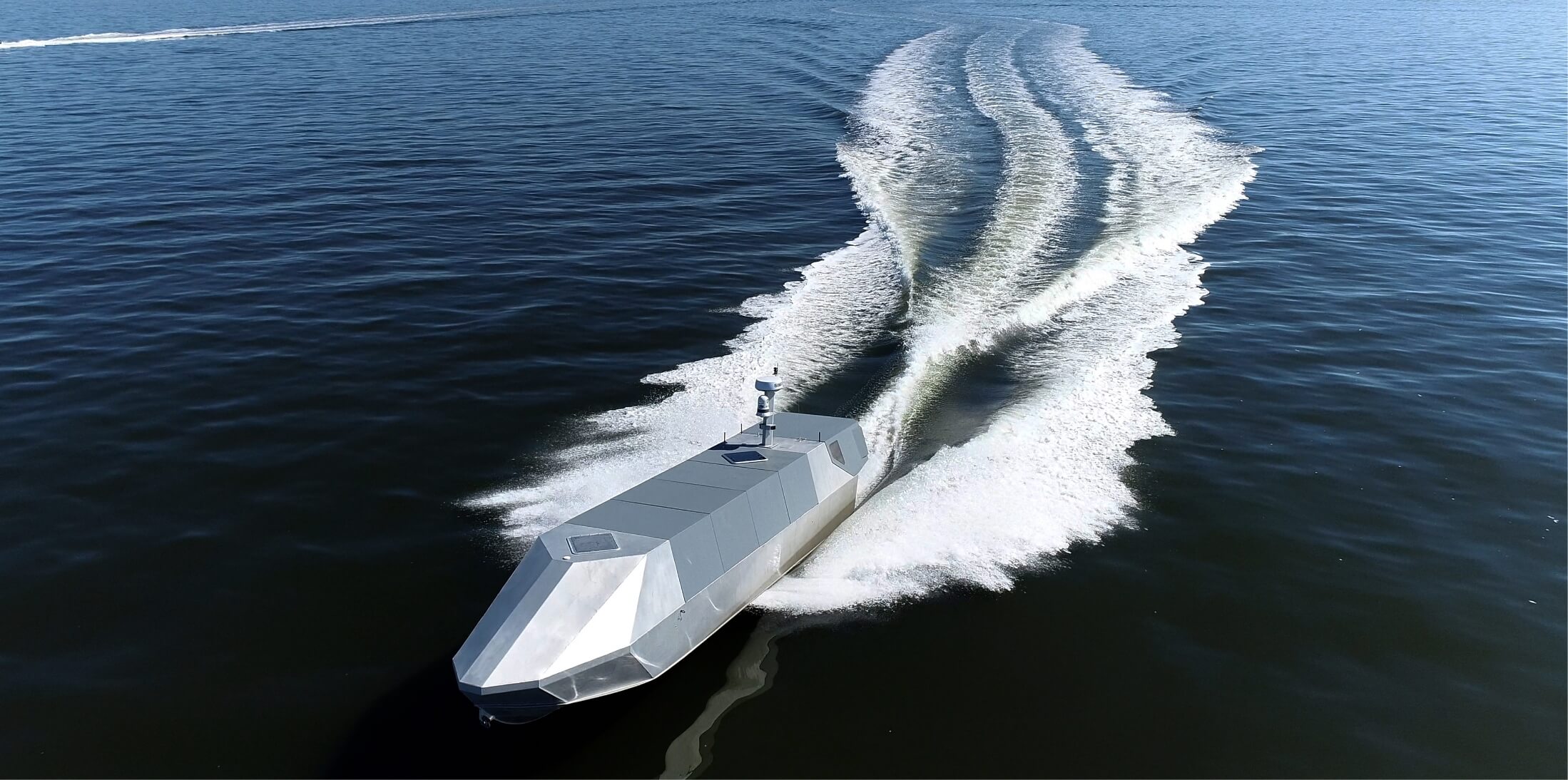
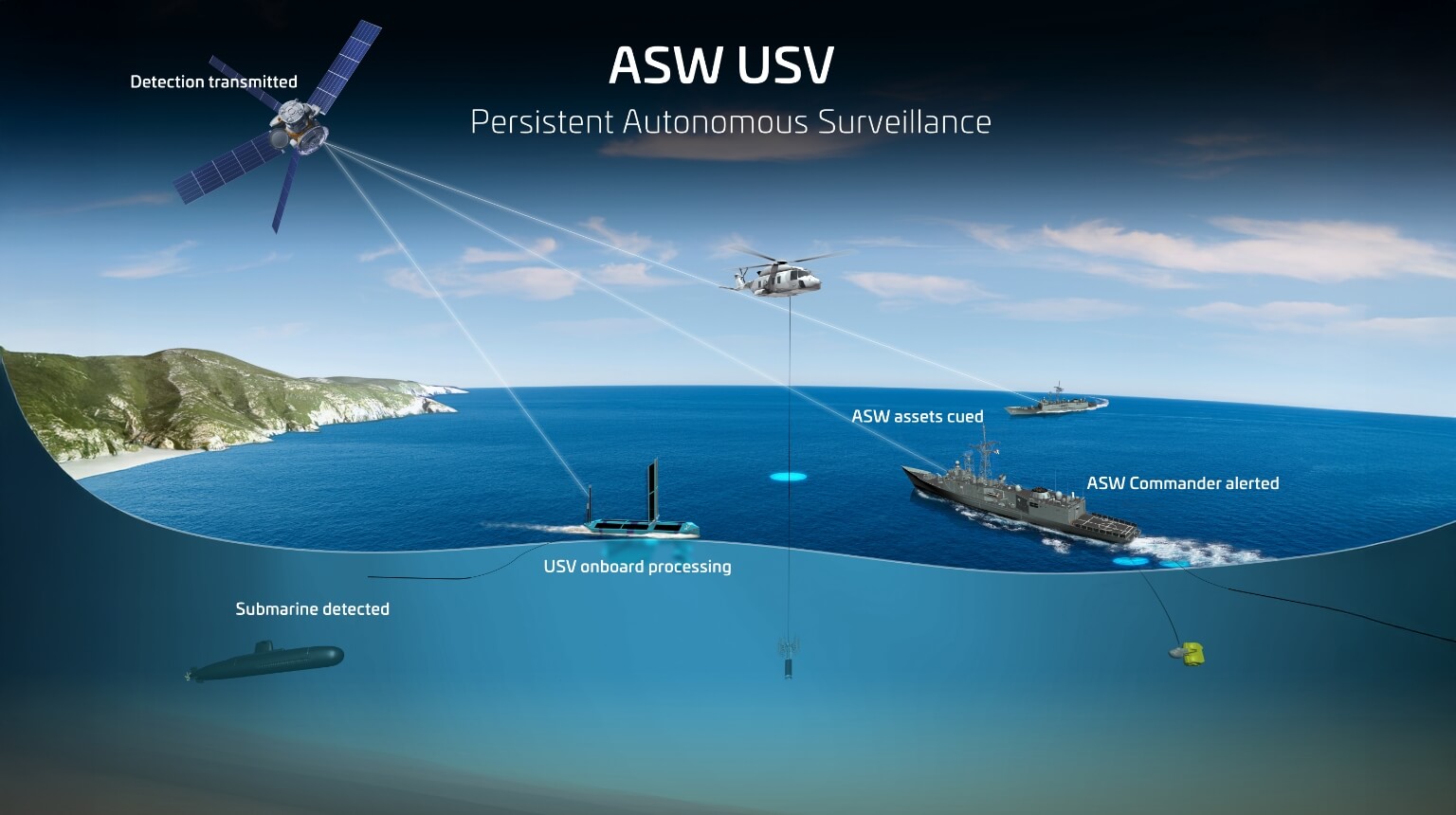
Somewhere in the vast expanse of the Indo-Pacific, a lone, uncrewed surface vessel (USV) patrols a strategic chokepoint listening for acoustic anomalies.
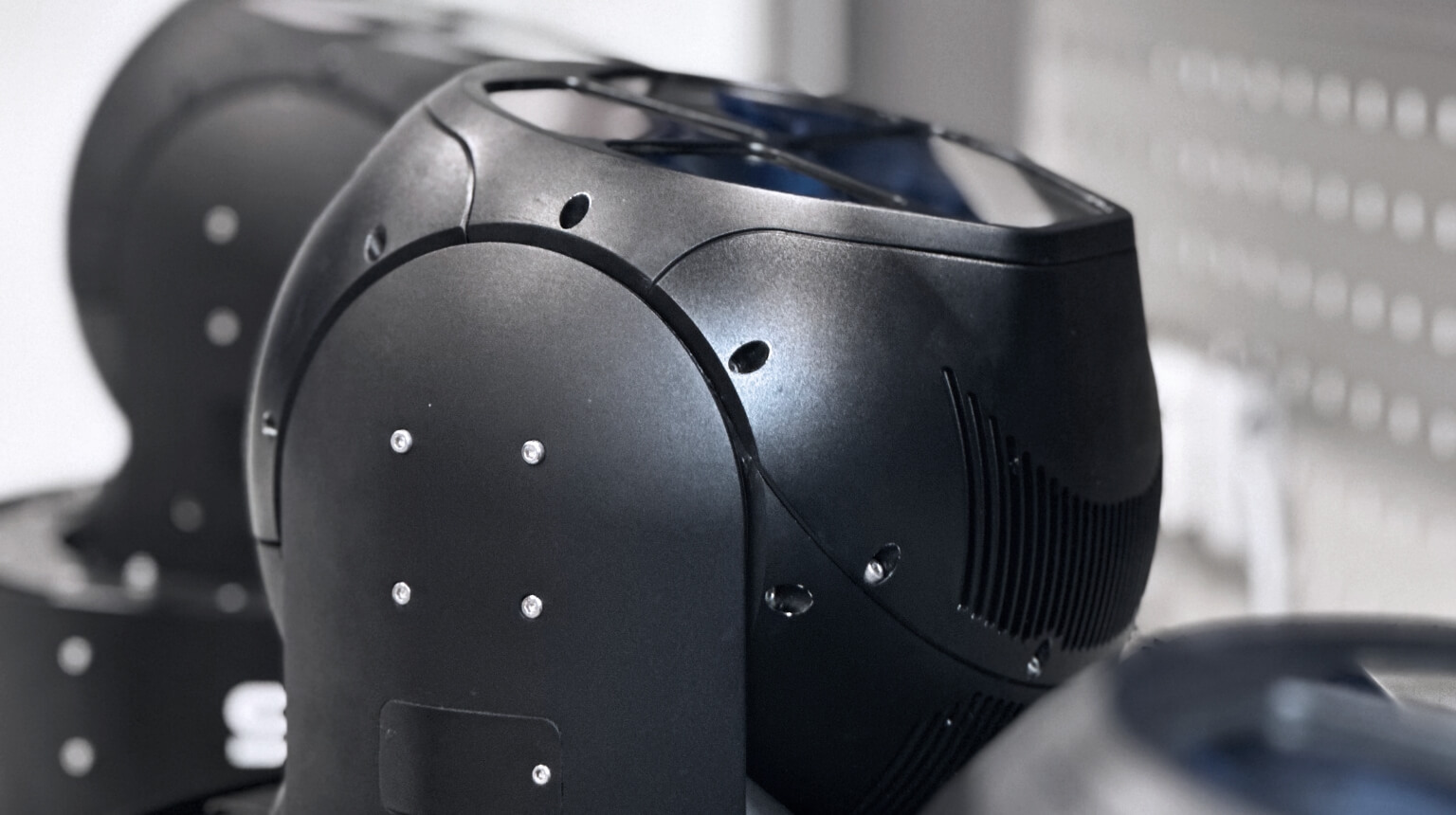
A submarine, running quiet and deep slips into range – unaware that it has already been detected. How? A Thales Australia towed array system, the Blue Sentry, which has been integrated into the USV, instantly captures, processes and detects the unusual acoustic data and transmits for further analysis via secure SATCOM links. This enables rapid processing classification and distribution into the common operating picture (COP), providing Australia and its partners with a comprehensive maritime domain awareness to enable greater decision advantage.
The anti-submarine warfare (ASW) commander, operating within a coalition task group, receives this data which is rendered as a concise actionable item – an adversary’s submarine is approaching the force. As the flow of data continues, the commander is provided tactical options – to prosecute or to evade. The ASW commander tasks a surface asset fitted with a depressed active and passive towed sonar and an ASW capable helicopter to establish a detection screen. Using multi-statics, the exchange and processing of acoustically compatible sensor data between autonomous and conventional assets, the task force efficiently hunts and deters the adversary submarine.
While deployed for an ASW mission, the same Blue Sentry-enabled large USV detects a louder, less sophisticated, acoustic contact on the surface, outside of known maritime shipping lanes – a possible illegal entry vessel. The large USV shares this data for further interrogation by shore-based Australian agencies and the vessel is successfully intercepted.
In the confined, complex littoral waters of the Torres Strait, a smaller USV is on patrol, surveilling these waters for illegal fishing activities. Fitted with the Blue Sentry, the USV is able to detect vessels at extended ranges. Two contacts are detected approaching the Prince of Wales Channel, both slow moving and the USV shares this contact data back to shore.
Ashore, those authorities receive these data feeds into its centralised COP in near-real time, allowing greater time for decision makers to determine subsequent interception activities by crewed assets. An Australian Border Force Maritime Patrol Aircraft closes in on the contact and provides visual identification of the vessel – engaged in probable people smuggling activities. A response vessel plots an intercept course and proceeds in a deliberate manner, at distance from the Australian coastline. In the Torres Strait, a Royal Australian Navy (RAN) patrol boat is notified and closes on the contacts – both local fishing traffic. The patrol boat can return to its assigned patrol area.
While this is an imagined concept, it is an illustration of the reality of the development and integration of Thales Australia’s autonomous advantage through the Blue Sentry system. This sovereign cutting-edge system is technically proven and integrated capabilities that deliver unmatched undersea superiority.
It highlights the ability for autonomous maritime systems, intelligent processing and trusted sensor chains to converge to redefine anti-submarine warfare and maritime ISR missions.
This redefinition is seeing the pursual of asymmetric advantage as traditional undersea capabilities such as manned submarines and surface ships are being supplemented particularly with autonomous systems.
The maritime domain is one that remains largely unseen, relatively secretive, hard to access and even harder to control. It’s not just physically deep – it’s strategically complex.
Control of this domains underpins deterrence.
Surrounded by the largest and deepest oceans on earth, Australia can meet the challenge of a sophisticated maritime domain awareness capability through the competent employment of effective autonomous uncrewed vessels.”
- Adam Bush
Surrounded by the largest and deepest oceans on earth, Australia can meet the challenge of a sophisticated maritime domain awareness capability through the competent employment of effective autonomous uncrewed vessels. A country of innovators, Australia has never been better placed to harness our extraordinary potential in response to this challenge.
For decades, Australian defence scientific entities have pioneered world-leading submarine technologies, such as the sound-absorbing anechoic tiles developed in collaboration between ASC and Defence Science and Technology Group (DSTG), making platforms harder to detect acoustically.
For over 30 years, Thales has worked with DST and the RAN to create internationally leading capabilities in thin-line towed array sonars and its processing. These innovations, combined with an active SME ecosystem, provide Australia with a distinct advantage in the production of high-performing capabilities that rely more on smart systems than the high cost of the crewed vessels that carry them.
Sovereign manufacturing matters. For Australia, undersea superiority is inseparable from sovereign industrial capability. There are very few manufacturers left in Australia that can design, develop and manufacture high-end capability at scale. Thales Australia stands as a national strategic asset, delivering not only world-class sonar systems and mission software – but does so right here, in Australia.
As the geopolitical situation in the Indo-Pacific continues to deteriorate and the submarine capabilities within Australia’s region continue to expand, the need for capable towed array systems that can not only detect and track but also rapidly classify a subsurface contact have never been more important.
Autonomous advantage is an operational necessity and undersea superiority stems from seamlessly networked architectures and technologies informing real-time decision making.
In the depths where no flag flies, unseen and unheard autonomy is the decisive edge. This is particularly true in gaining strategic advantage in the Indo-Pacific. Undersea dominance won’t go to the biggest fleet, it will go to the smartest, quietest and most autonomous systems, supported by a resilient local industrial base.

Adam Bush
Strategy principal, Thales Australia, Navy veteran