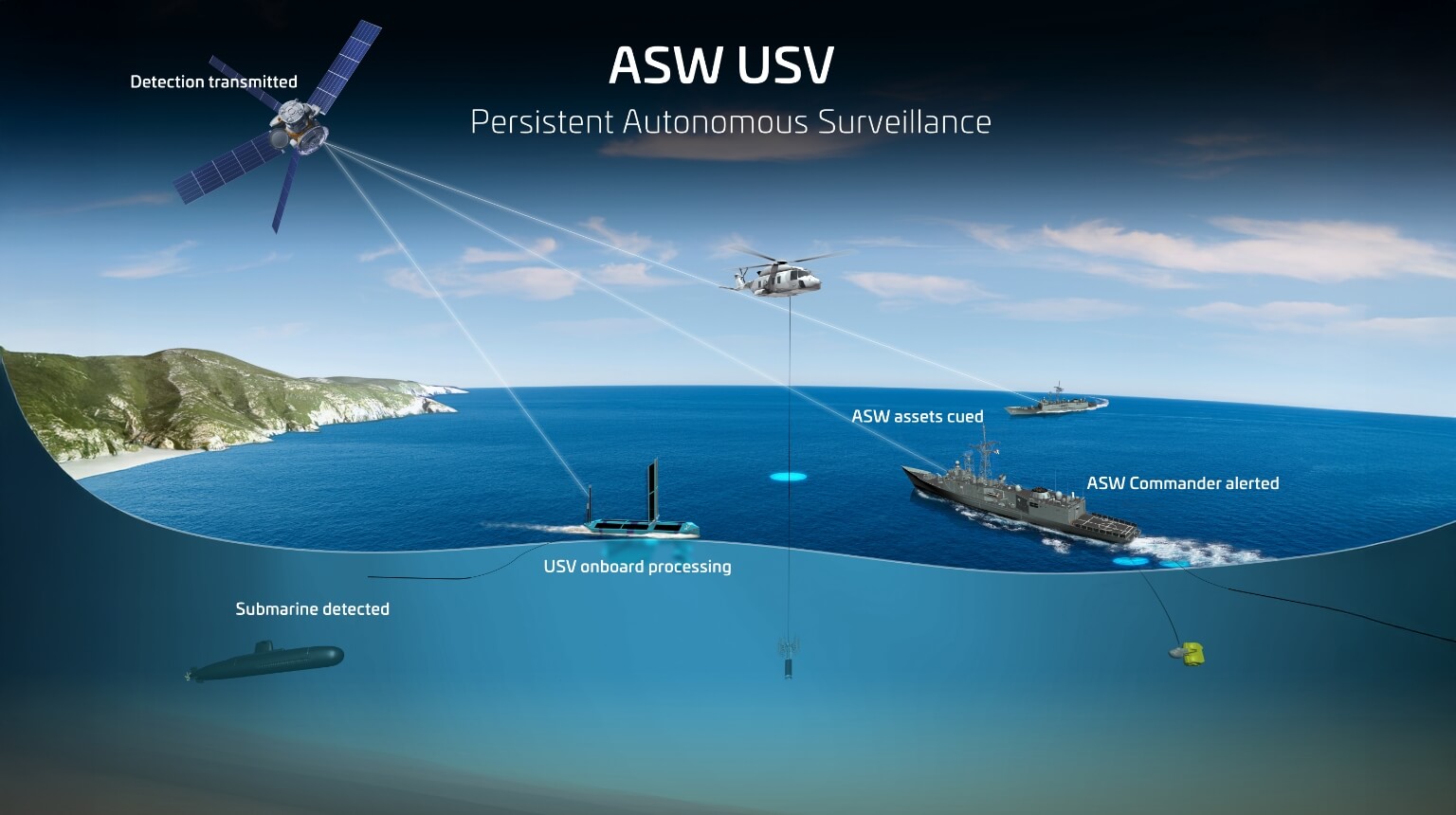


As interest in the Indo-Pacific intensifies, maritime threats become more complex. Australia’s vast maritime area of responsibility demands persistent coverage and a rapid response. Traditional defence capabilities face challenges in dangerous waters, but integrated, autonomous vessels make a new form of maritime presence possible – one that is rapidly deployable, mission-adaptive and scalable.
With proven solutions already in the water and more operational autonomous nautical miles at sea than any competitor, Leidos is setting the pace when it comes to the most challenging aspects of uncrewed surface vessel (USV) requirements.
“Leidos has designed and delivered USVs that have more than 140,000 nautical miles under the keel, including 46,650 nautical miles in a recent US Navy exercise from San Diego to Sydney,” says Caroline Dawson, vice president Land and Sea Systems, Leidos Australia.
With 50 years of maritime experience, Leidos Australia is demonstrating how integrated autonomy can change the game. Indeed, already four different USVs have been deployed for operational missions for the US Navy in the western Pacific. The seven-month deployment of Sea Hunter, Seahawk, Ranger and Mariner is an example of proven mission performance.
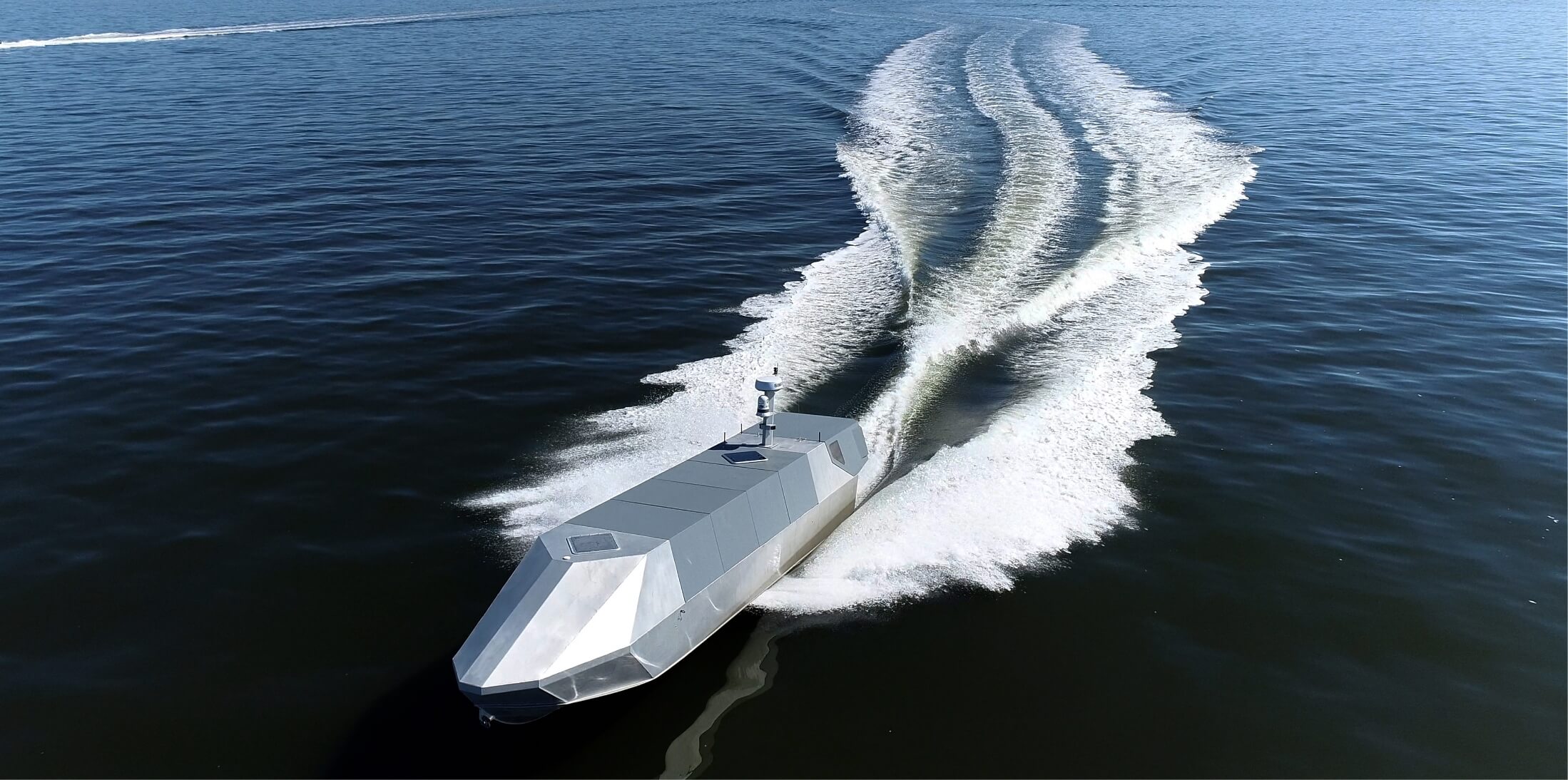
Recently, Leidos has also unveiled how this expertise has been instrumental to the release of its smaller USV capabilities, with Sea Archer (Autonomous Reconfigurable Containerised High Endurance Range) currently undergoing sea trials in the US.
Sea Archer is a fast, mission-flexible, small USV that provides efficient surface and undersea support to maritime security and surveillance efforts. It represents a critical pivot in how Australia can gather intelligence, deliver contested logistics and help maintain security across our waters at speed and scale.
“In a territory like ours, coverage, endurance and agility are critical. The capability to monitor vast areas, detect security threats, navigate hazardous environments and provide continuous support in areas that are difficult or dangerous for crewed vessels presents opportunities for enhancing our maritime operations.
“Sea Archer responds to these needs. Its design supports rapid production, with very simple tooling and equipment manufacturing requirements that can be built at multiple shipyards across Australia. Indeed, the aluminium construct is well-aligned to Australia’s world-leading aluminium boat building heritage. The vessels, in full production run, have a target price of less than $1.5 million,” Dawson says.
Sea Archer may be small, but its performance is impressive. Combining sprint speeds of up to 40 knots, with range – the ability to travel 1,500 nautical miles – it has payload flexibility and integrated AI decision making which makes it adaptable for a variety of missions, including strike, logistic resupply, ISR and EM deception operations.
Through open architecture and modular design, Leidos’ mission autonomy system and integration layer, Sea Archer can also interoperate with both crewed and uncrewed systems. In addition, Sea Archer can operate as the Navy’s ute – deploying advanced, Australian payloads to the required area in an operationally relevant time frame.
While Sea Archer showcases cutting edge maritime hardware, Leidos’ vision extends beyond individual vessels, with a focus on integration and system-wide capability to enable any existing vessels to become autonomous. Leidos is currently exploring multiple Australian SME payloads for deployment.
Achieving autonomous capability at sea is not simply about acquiring new platforms and vessels – it is about designing smarter, faster and more adaptive ecosystems and integrating systems that meet mission needs.”
- Caroline Dawson
“Achieving autonomous capability at sea is not simply about acquiring new platforms and vessels – it is about designing smarter, faster and more adaptive ecosystems and integrating systems that meet mission needs.
“Australia doesn’t only need more hardware, it needs smarter systems that interconnect, enhance our intelligence, respond to threats autonomously and reduce the operational burden on personnel.
“With 37 vessels autonomised, we have the capability to transform any vessel type into a mission-ready autonomous vessel – at any size. So, we can either provide one of our vessels or autonomise your existing vessel. The future potential of that is very exciting,” Dawson says.
Explore Leidos’ autonomous maritime systems here: Autonomy and Autonomous Solutions | Leidos.