

These early systems, used extensively in Iraq and Afghanistan, served as remote-controlled eyes in the sky: ideal for counter-insurgency missions, where airspace was largely uncontested and communications were uninterrupted.
But the modern battlefield no longer offers that luxury.
In conflicts like Ukraine, drones are being shot down, jammed, or spoofed by the thousands. Both nations’ use of electronic warfare has made high-bandwidth data links with operators a liability rather than an asset. And in these denied and degraded environments, drones can no longer depend on real-time video feeds or human interpretation from afar.
Instead, they must think, and more importantly see, for themselves.
On a recent episode of the Defence Connect Spotlight podcast, co-founder and chief executive officer of Arkeus Simon Olsen unpacks how hyperspectral optical radar, or HSOR, is redefining drone autonomy.
According to Olsen, HSOR is enabling drones to operate autonomously in the most contested environments on the earth, through a purpose-built AI-enabled sensing system.
“If we had the same drone equipped with HSOR, it could operate across any environment,” Olsen says on the podcast. “By land or sea, day or night – in all conditions our customers need to operate, HSOR enables capability in degraded environments to extend the range at which targets can be detected and prosecuted.”
HSOR – enabling warfighter autonomy in tomorrow’s comms-denied battlefield
The shift from human-operated drones to AI-enabled autonomy represents a fundamental change in how militaries approach aerial reconnaissance, surveillance and targeting.
In particular, legacy drone systems were designed to provide full-motion video back to a human operator. The human would interpret, assess and then act. But in a degraded environment, GPS denied, video disrupted, that model simply doesn’t work.
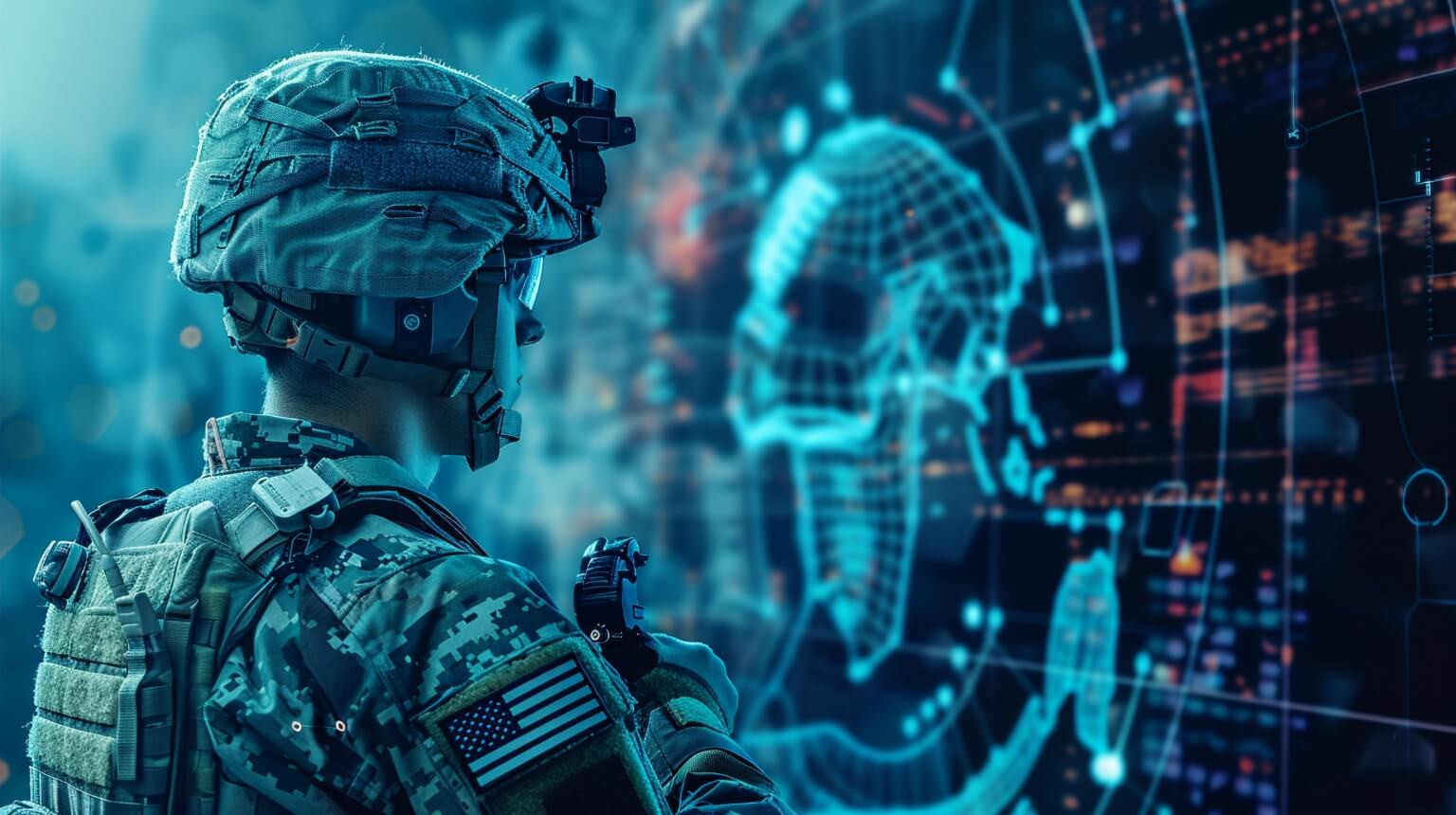
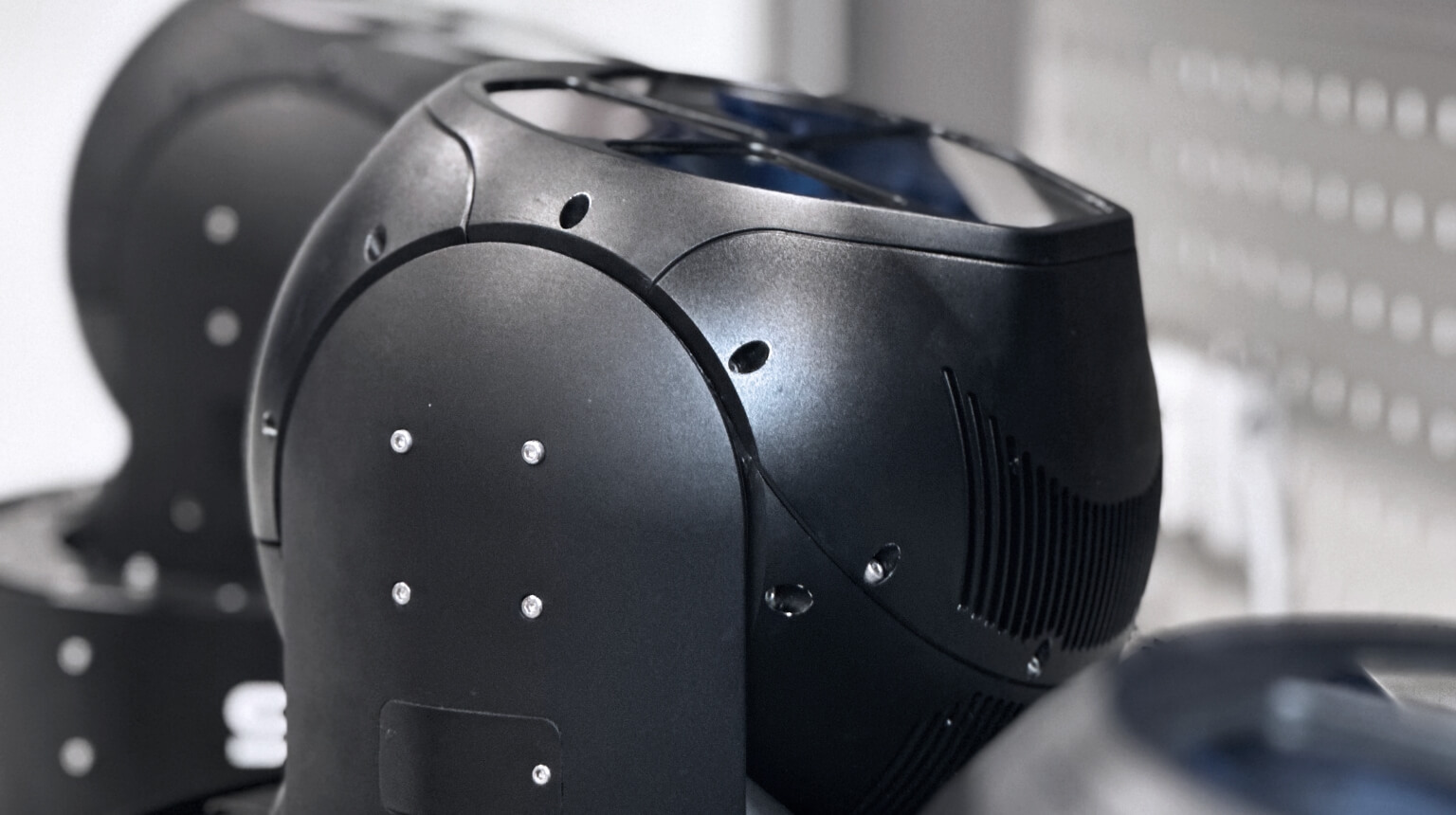
Arkeus’ answer is HSOR: a system that doesn’t rely on the visible spectrum or even traditional imaging. Instead, it gathers spectral data, measuring the chemical and material signatures of objects and terrain, and processes it onboard in real time. Combined with artificial intelligence, this allows a drone to understand the environment and make decisions, not simply capture raw footage.
This can improve situational awareness and operational decision making considerably, delivering an asymmetric advantage to the Australian Warfighter.
“In once recent mission, our hyperspectral optical radar delivered actionable intelligence in seconds,” Olsen says. “When you think about speed to effect and disrupting an adversary’s mission, this matters. It also enhances the safety of our soldiers – enabling us to take crude or vulnerable platforms out of the fight for data collection.”
Arkeus’ flagship HSOR was designed from the outset for AI-enabled operations, unlike similar capabilities in the market. This gives the drone a critical onboard advantage.
“We are the only ones who have designed, built and manufactured a sensing system specifically for AI,” Olsen says. “The data we produce is optimised to enable onboard AI-driven understanding – not to send raw imagery back to a human operator,” he says.
A return to high-intensity conflict
With HSOR, the drone processes what it sees onboard. No video feed. No latency. No signal signature. That’s a game changer for survivability.”
- Simon Olsen
Nowhere is the urgency of autonomous drone capability more evident than in Ukraine. According to Olsen, Ukrainian forces are losing an estimated 10,000 drones per month – many of them downed by Russian jamming, spoofing or electromagnetic interference.
“Traditional military-grade drones are too expensive and too vulnerable to sustain those kinds of losses,” Olsen says. “That’s why we’re seeing a shift to modified commercial drones – cheap, fast and expendable.”
But even those systems are limited by one key factor: their need to communicate.
“Every time a drone transmits a video, it risks being detected or disrupted,” Olsen says. “With HSOR, the drone processes what it sees onboard. No video feed. No latency. No signal signature. That’s a game changer for survivability.”
How a drone can really ‘see’ a battlefield
While standard imaging systems rely on colour and contrast, how a vehicle or person appears to the human eye, HSOR takes an entirely different approach. It captures bands across the electromagnetic spectrum, identifying what something is rather than just what it looks like.
“Think of it as the drone being able to detect, differentiate and understand the environment,” Olsen says. “It can distinguish between a decoy and a real tank, detect disturbed earth beneath camouflage, or operate in zero-light conditions.”
This approach also reduces false positives – one of the persistent challenges of AI-based object detection trained on imagery alone. By feeding AI contextualised spectral data rather than flat images, HSOR is less prone to error and more effective in real-world conditions.
“In one recent mission, our system provided the same level of intelligence output in seconds that legacy systems needed hours to deliver,” Olsen says. “That speed to effect doesn’t just save time – it can save lives.”
Australian innovation for a global fight
Despite competing in a global defence market dominated by US giants, Arkeus has kept its development, manufacturing and supply chain entirely Australian. Olsen sees this as a strategic advantage – not just for sovereignty, but for resilience, risk reduction and speed to deployment.
“We’ve demonstrated our systems against the best the US has to offer and come out ahead,” Olsen says. “More importantly, we’ve built something that can be rapidly integrated into existing defence platforms without the need for extensive redesign.”
With growing support from the Australian Department of Defence, Arkeus is positioning itself not just as a niche technology provider, but as a trusted enabler of future capabilities under the AUKUS partnership.
“The opportunity for Australian industry isn’t just in innovation – it’s in execution,” Olsen said. “You need to deliver something the warfighter can use tomorrow, not just demonstrate something in a lab.”
Notwithstanding this, the broader trend is clear: warfare is shifting towards autonomy, survivability and operational agility. In this world, drones are no longer just sensors, they can be autonomous decision makers, able to navigate and fight through denied environments. Olsen doesn’t argue for removing humans entirely from the decision loop – rather, repositioning them.
“We want to take the soldier out of harm’s way, not out of the fight,” Olsen says. “By enabling drones to understand and act in real time, we free up humans to make strategic decisions, not interpret pixelated video from 30,000 feet.”
As global militaries invest in resilient, distributed capabilities, Arkeus’ bet on HSOR may well shape the future of drone warfare, not by flying higher or faster, but by seeing and understanding smarter.
“In the next fight, whoever understands the environment first will have decision dominance,” Olsen said. “And that understanding can’t wait for a data link.”

Simon Olsen
Co-founder and chief executive officer, Arkeus