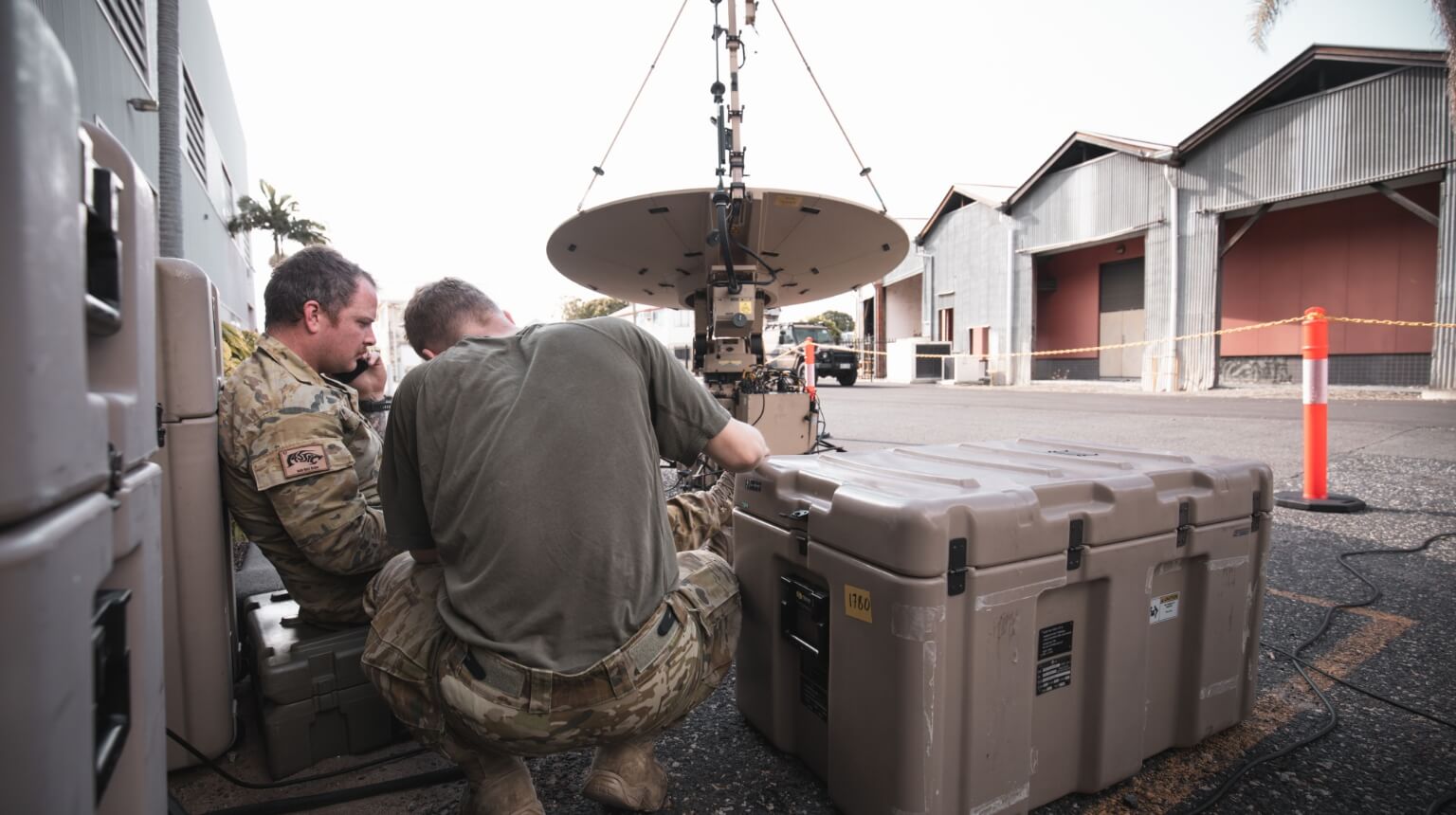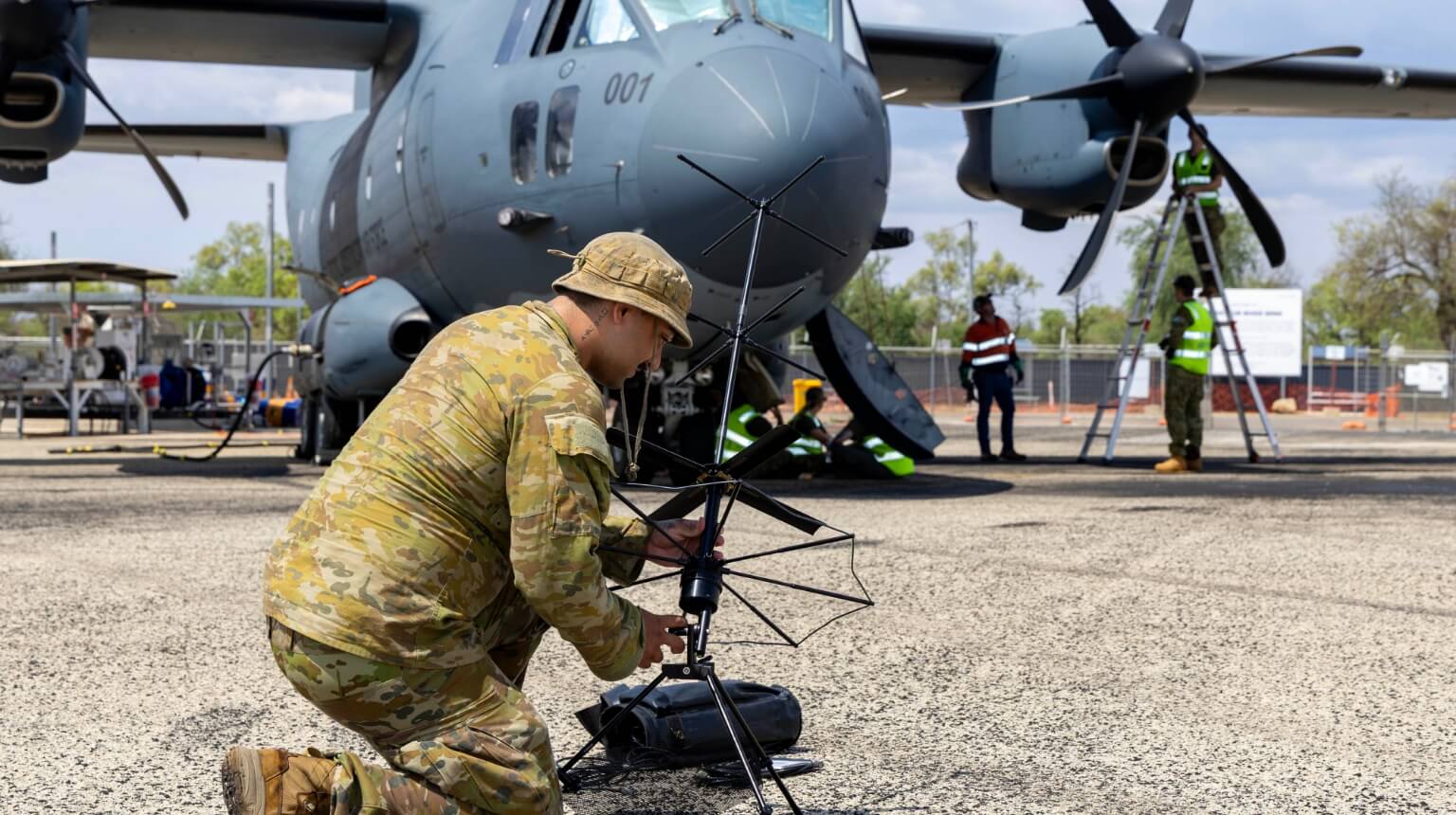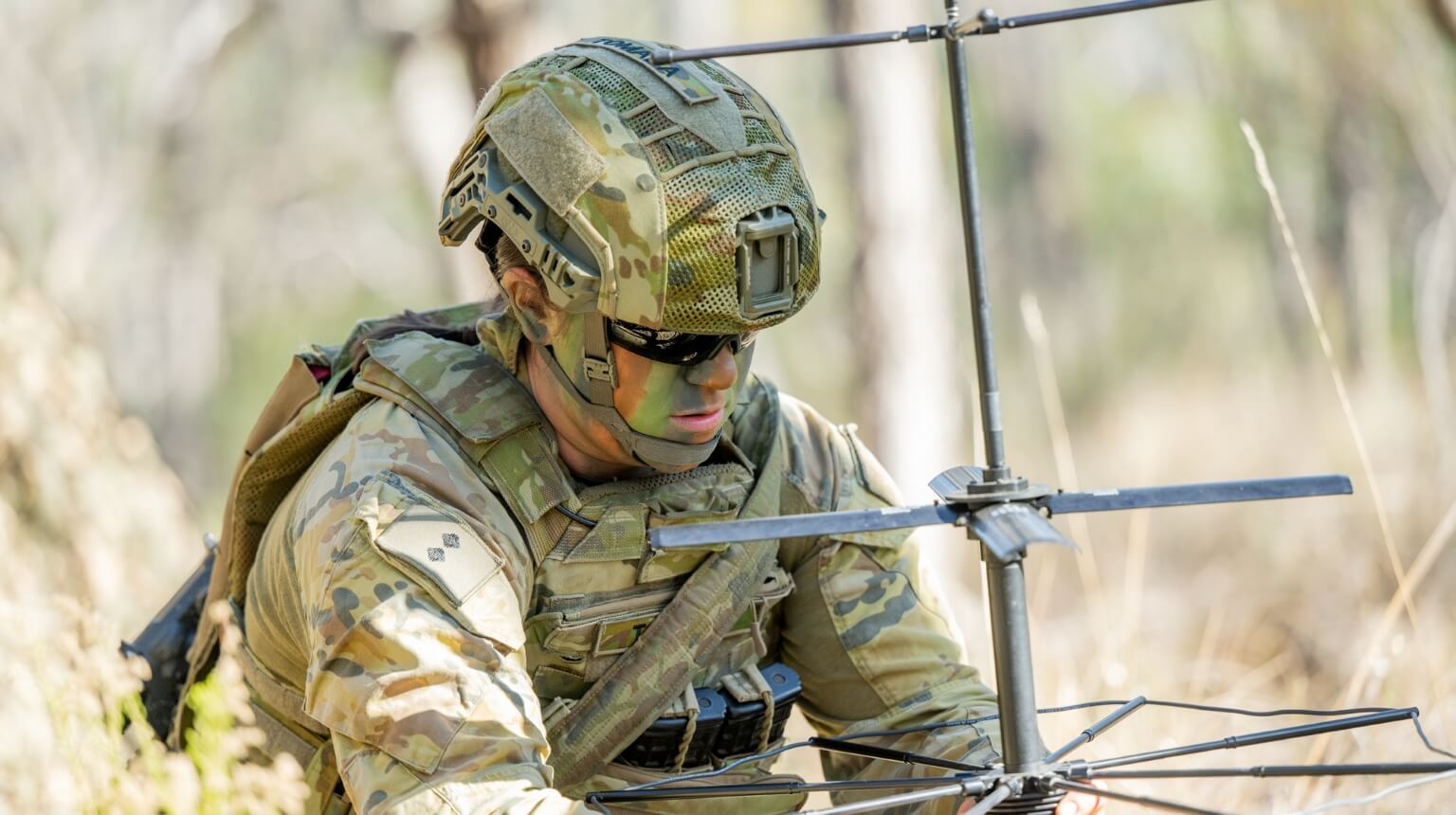
Among the industry players helping drive this evolution, PentenAmio stands out as an emerging sovereign powerhouse, uniting two specialist firms – Australia’s Penten and the UK’s Amiosec – into one integrated force with a shared mission: redefining secure mobility and electronic deception for modern warfare.
In an exclusive conversation with Defence Connect, PentenAmio Executive Co-chair Matthew Wilson explores how the merger, completed earlier this year, represents far more than a corporate alignment.
The move is a deliberate repositioning to meet the accelerating demands of Western defence and national security customers operating in an increasingly volatile global environment.
“We’ve now got 300 highly experienced experts operating across the UK and Australia, all dedicated and focused on the security and prosperity of our nations,” Wilson says.
“It’s created a new and interesting platform for us to engage with a broader ally base … and that’s becoming a much bigger part of the PentenAmio story.”
A natural merger for allied security
For most in the defence community, the union of Penten and Amiosec felt like a logical step. Both organisations were founded in 2014, shared similar missions, and had spent the better part of a decade collaborating across secure mobility, AI-enabled cyber defence and electronic deception.
Wilson confirms that the merger process was eased by years of collaboration between the two businesses and a strong cultural alignment. “We’ve worked as partners for around 10 years on secure mobility and cryptographic technologies,” he says. “That meant that the technical integration was already solid.”
With roughly half of PentenAmio’s people based in Canberra and the other half in Tewkesbury and Chippenham in the UK, the company’s leadership structure mirrors its dual-sovereign focus, an even split between UK and Australian executives. According to Wilson, customers themselves have driven much of the pace of integration.
“Our collective customers actually wanted us to engage them as one company … to treat problems as shared and to present unified solutions,” he says.
Building a mobile-first defence posture
Central to PentenAmio’s strategy is secure mobility – the ability for defence and national security personnel to operate effectively in mobile environments without compromising classified data or operational integrity.
For Wilson, this isn’t just a product line. It’s a strategic necessity for nations like Australia and the UK, whose smaller populations demand smarter, technology-led force multipliers.
“Unlike larger adversaries, we can’t simply add people to a problem,” Wilson says.
“We need partnerships and technology to deliver force multiplication. Our focus has been on giving defence and national security personnel the tools needed to make faster, more precise decisions securely from anywhere in the world.”
Our focus has been on giving defence and national security personnel the tools needed to make faster, more precise decisions securely from anywhere in the world.”
- Matthew Wilson
This “mobile-first” mindset draws inspiration from the transformation that reshaped enterprise workforces two decades ago, when laptops and smartphones became ubiquitous productivity tools. PentenAmio’s challenge has been replicating that flexibility inside defence environments, within stringent security and regulatory frameworks.
The results are already visible. In the UK, tens of thousands of PentenAmio devices are in daily use across government operations. In Australia, adoption is growing steadily, with pockets of innovation spreading through agencies and defence programs.
“In Australia, we’re seeing real progress … but often in specific pockets,” Wilson says. “Our role is to help customers understand not just the tools themselves, but the direction of change in this space … and how to enable their workforce whilst protecting the mission.”
Breaking down barriers to change
Introducing new mobile security architectures into defence isn’t simply a technical task, it’s a cultural one. There has always been comfort in traditional fixed, office-bound systems, compounded by decades-old interpretations of policy frameworks. This has slowed the pace of adoption.
Wilson believes that open dialogue and education are key to overcoming this inertia.
“Policy evolution in Australia has been significant … frameworks like the PSPF and the information security manual have matured,” Wilson says. “However, interpretation can still be wedged in 20-year-old structures. That’s where education and discussion become vital.”
For PentenAmio, Wilson confirms that the idea that a government worker “walks out of the office and leaves their identity behind” is outdated in an era of digital connectivity and persistent surveillance. Secure mobility, he argues, must recognise and adapt to the reality of a digitally connected workforce.
Resilience, not just reaction
As cyber and electronic warfare effects increasingly dominate the early stages of modern conflict, the need for resilient communication systems has never been greater.
Wilson warns that the window for reaction is shrinking rapidly and that organisations can no longer afford to build systems that only respond to incidents; they must design for resilience by default.
“The early stages of conflict aren’t about holes in the ground. They’re about cyber effects, jamming, disruption and denial,” he says. “If a building’s control system is taken out by a cyber attack, can you still operate the mission? That’s the kind of resilience we need to plan for.”
PentenAmio’s work is less about encryption in isolation and more about continuity of operations under contest, ensuring that defence and government missions can continue, even in degraded environments.
Lessons from Ukraine: The industrialisation of innovation
When Wilson speaks about resilience and sovereign capability, his perspective is informed by the ongoing lessons emerging from eastern Europe. The Ukrainian experience, he says, underscores the need for rapid industrialisation of innovation and a modern shortening of the cycle between concept and fielded capability.
“Ukraine has shown the need not just for innovation, but for the ability to industrialise that innovation quickly,” Wilson says. “In Australia, we often interpret that as ‘we need more innovation inside government’. But in the UK and the US, the lesson is different: empower industry, engage industry and let that innovation cycle move fast enough to make a difference.”
For Wilson, this requires Australia to rethink how it partners with local industry and move away from transactional contracting towards genuine strategic collaboration.
“Industry must be treated as a strategic partner in national security,” he said. “If conflict came to our shores, we’d fight with the industry we have. That means actively shaping and growing the industry we need today. The environment we’re in isn’t static … Success isn’t about reaching a fixed point and staying there. It’s about continuous improvement, continuous engagement, and ensuring our systems and our partnerships can adapt at the pace the world demands.”
As Australia deepens its ties with the UK and US through AUKUS and other frameworks, companies like PentenAmio represent the next generation of sovereign, allied capability. They must be agile, secure and prepared for the realities of modern conflict.

Matthew Wilson
Executive Co-chair, PentenAmio