

The speed, scale and sophistication of contemporary warfare defined by contested information environments, rapid technological evolution and compressed decision cycles demand new ways to train, plan and operate.
Central to this transformation is the development of advanced digital operational capabilities and the supporting infrastructure that enable the Australian Defence Force to experiment, learn and fight as an integrated force across all domains.
Preparing for a data-centric battlespace
In the emerging strategic environment, information is both weapon and shield. Every platform from a single soldier’s sensor to an autonomous underwater vehicle generates torrents of data that must be processed, analysed and acted upon faster than ever before.
As Systematic’s Mark Gainsford observes, “the pace at which requirements and operational contexts evolve is currently faster than at any other time in history”.
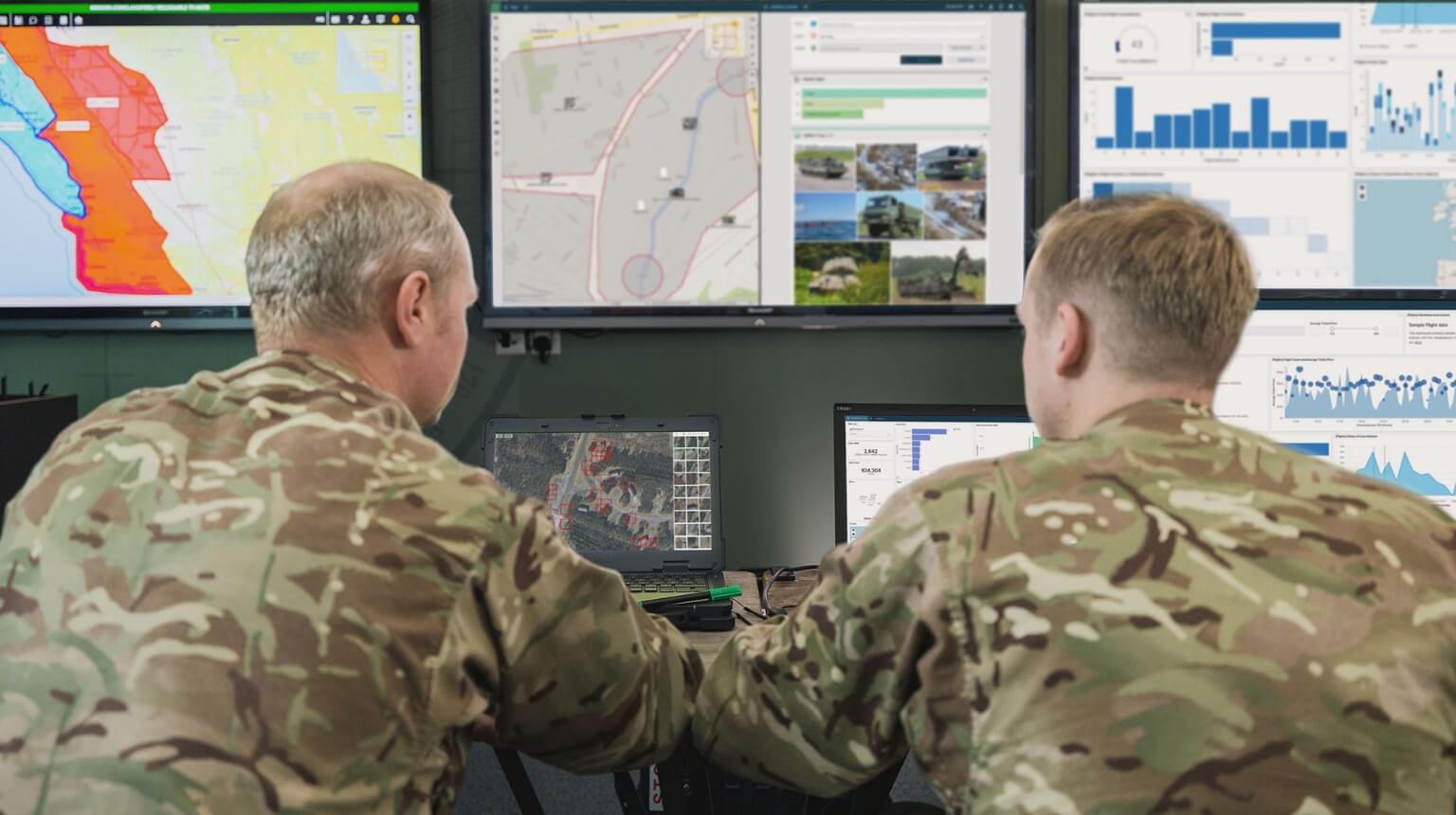
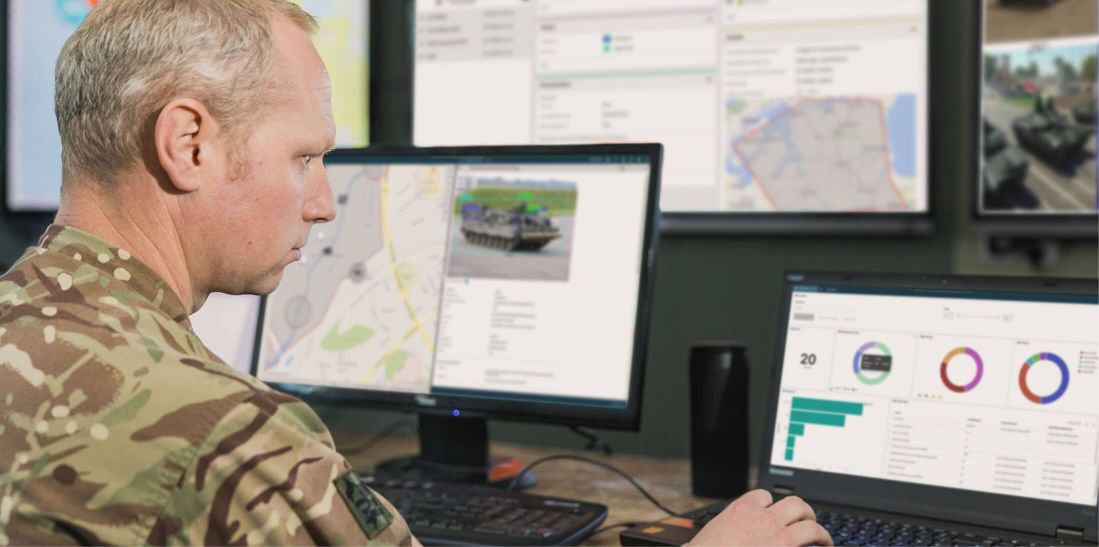
Digital command and intelligence software systems are key to managing the vast amounts of data generated. This can help with the flow of information, supporting the deployment of assets and assisting decision making by commanders by providing them with a richer understanding of the battlespace.
Operations in the modern battlespace are also becoming highly contested, with cyber disruption, electromagnetic jamming and the growing influence operations dominated by misinformation and disinformation adding to the noise, friction and fog of war.
As a result, the need for commanders and their staff to leverage all the tools at their disposal is more important than ever.
Gainsford adds, “The plethora of systems, technologies and platforms are only adding to the ‘noise’ for the individual warfighter and the decision makers. The question is, how do you rise above that noise and how do you analyse the vast amounts of information noise and turn it into actionable data in real time to build decision superiority?”
Building decision superiority through AI training and testing
The ADF’s ability to prevail in a contested environment will ultimately hinge on a combination of decision superiority, driven by speed and accuracy and tried-and-tested simulation capabilities, to prove the growing spectrum of capabilities against peer competitors well before the boots hit the ground.
Artificial intelligence (AI) and data-driven analytics are beginning to play a role here, but as Systematic’s Matt Dodds notes, these technologies are only as effective as the training and trust underpinning them.
Well-designed training, testing and simulation environments allow commanders and operators to train “with the machine”, helping them to understand how AI models assist and complement rather than replace human judgement and decision making.
Gainsford says, “The emergence of artificial intelligence to help humans in that cycle deal with the volume to aid them in that decision making cycle. These are all things that are most prevalent in all the C2 applications and systems and notably SitaWare in our case, to help the commanders and staffs at various levels make best use of the information available, but also probably more importantly, use it as a means to aid their decision making so they’re maintaining an operational tempo or some sort of advantage over their adversary.”
Further enhancing this, contemporary training environments and exercises, whether real or simulated, enable warfighters to practice operating “in the loop” and “on the loop” controlling autonomous systems, setting mission parameters, and learning to trust data-driven recommendations while retaining ultimate responsibility.
This iterative exposure builds confidence, shortens the learning curve and ensures that technology complements, rather than overwhelms, the human decision maker.
When bringing AI tools into the operational environment, the integration and model training is a fundamental part of a successful deployment of AI.
However, as both Gainsford and Dodds caution, these systems must be trained on reliable, context-specific data.
When that training data changes, say, between summer and winter operational patterns, the model’s behaviour must adapt accordingly. Contemporary digital simulation provides the sandbox in which these adjustments can be validated without operational risk, while doing so in real time and without the costs associated with “real world” training.
Data, sovereignty, and the infrastructure challenge
Behind every digital operating environment lies a massive infrastructure challenge. AI-driven systems and real-time modelling consume immense computing power and bandwidth.
In the age of hypersonics, autonomous vehicles and sensor fusion, the volume of information that must be stored, transmitted, processed and secured is enormous.
This is not just a technical issue – it is one of sovereignty. As Gainsford highlights, data sovereignty and AI sovereignty are inseparable.
“At the core of data sovereignty is making sure that the data you have is in the ‘assured’ environments you want it to be, in a national sense. But data sharing across international boundaries, particularly in joint or coalition operations, adds another layer of complexity for sovereignty, warfighters and decision makers, so guaranteeing that is critical,” Gainsford says.
The ADF must ensure that its data, algorithms and models remain under sovereign control even as it collaborates with allies.
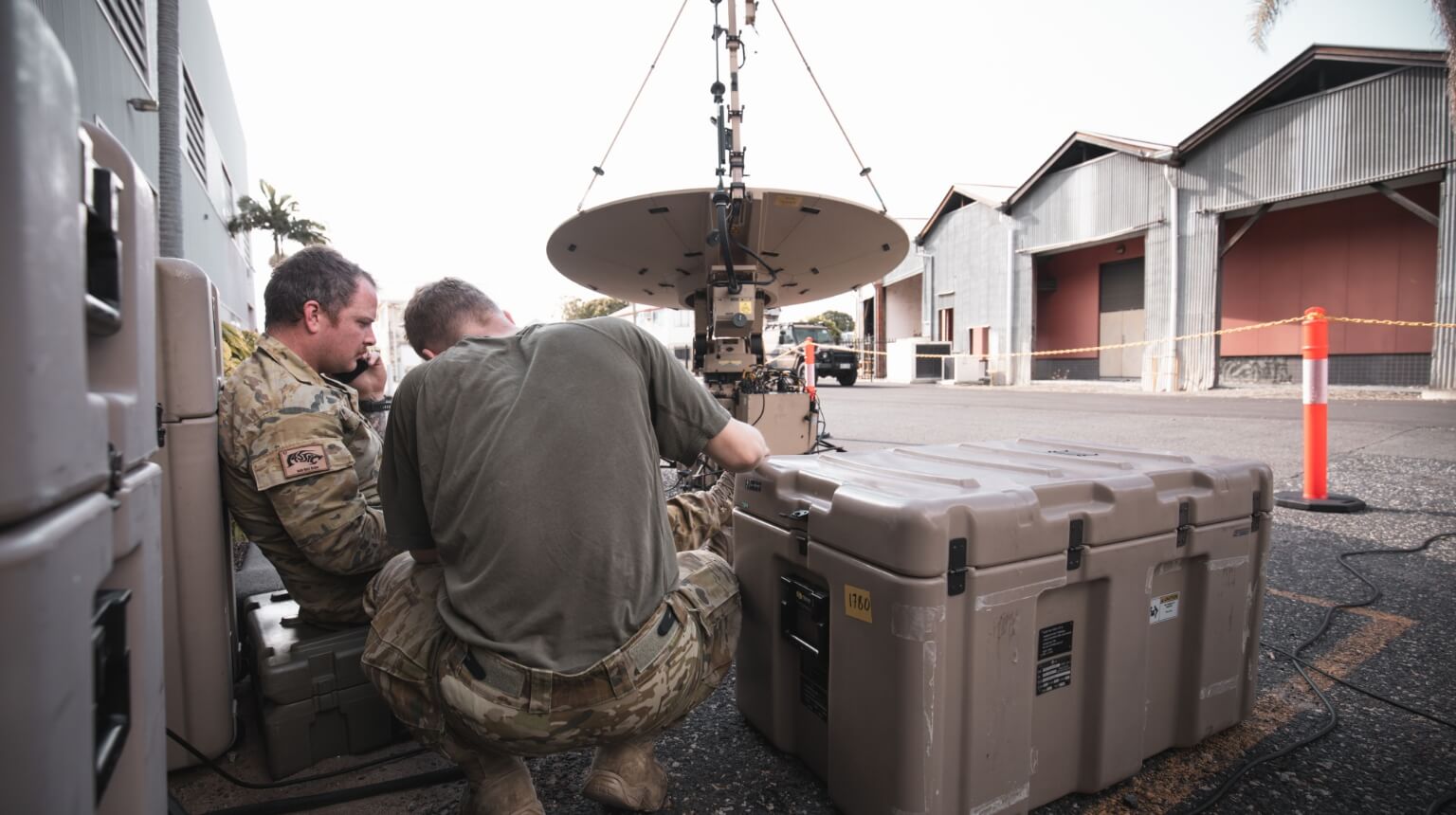
That requires secure cloud environments, sovereign data storage and operational frameworks built to work across national and coalition boundaries without compromising classified information.
Equally, operational training with digital technology must reflect the reality of operating in contested and degraded communications environments.
As Dodds has observed, the future battlespace will be defined by the struggle for electromagnetic dominance, where assured communications are often anything but assured.
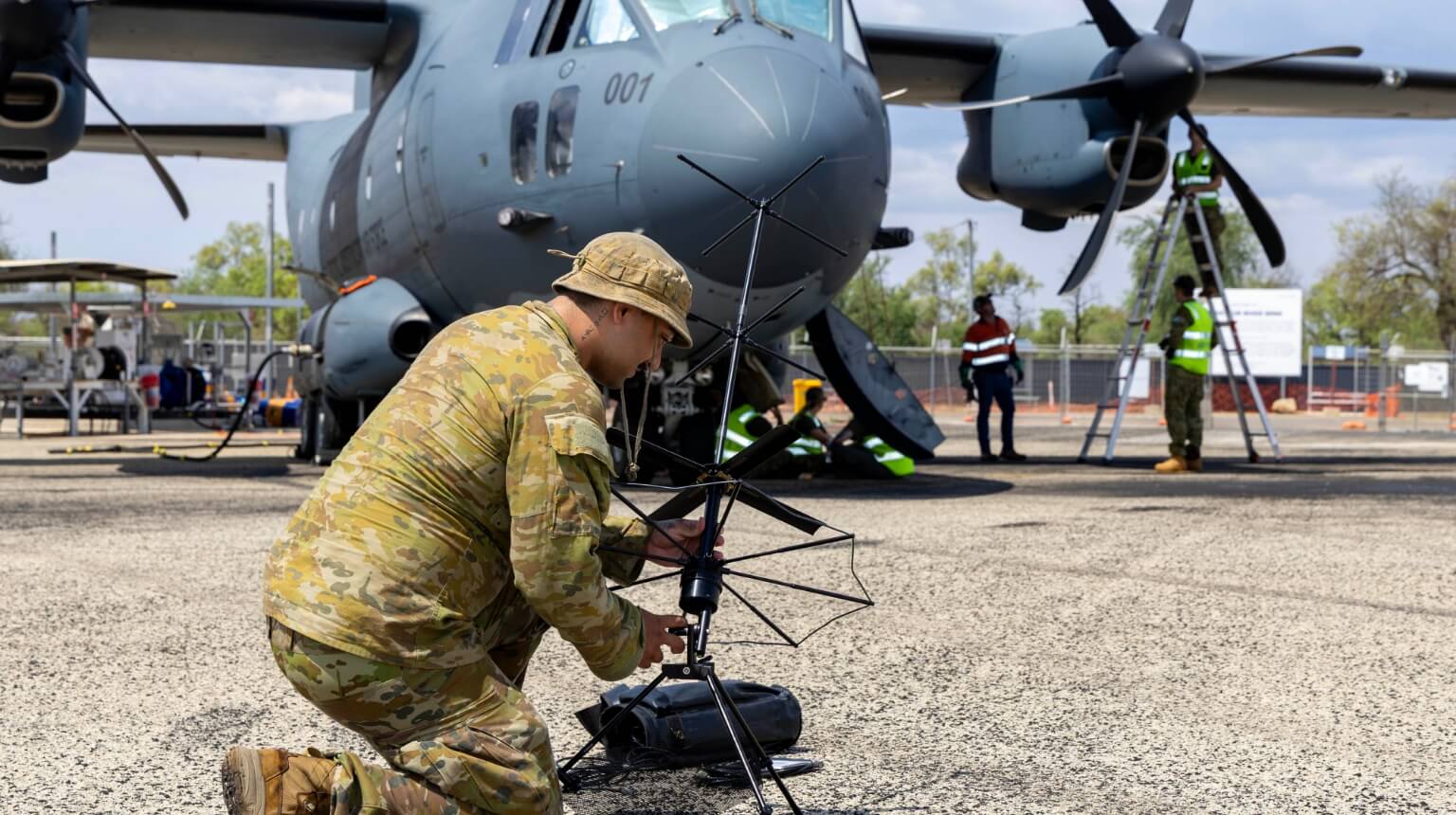
Digital infrastructure must therefore replicate operational challenges such as limited bandwidth, jamming and disrupted connectivity – conditions that warfighters will face in any high-intensity conflict.
Delivering digital transformation
Moves towards the digitalisation of command environments have been transformative for military operations. Cross-domain data delivery helps to enable the wider dissemination of data to users on the battlefield, while supporting greater situational awareness at all levels.
This data delivery means that true sensor-to-shooter integration is becoming a tangible concept, as sensors can now truly talk to each other in a way that supports greater confidence in what operators see.
The speed of detection, data processing and engagement across distributed forces is now faster than ever and needs support from computing hardware that keeps pace with the latest advances in technology.
As AI is becoming a norm and is moving to the tactical edge, true command digitalisation will mean that service branches need to invest and deploy computing hardware.
Delivering hardware to operators at a more rapid pace will ensure that the tactical and strategic advantages that the digital command environment can provide is delivered.
Keeping the human at the centre
Amid all the talk of algorithms and autonomy, both Gainsford and Dodds emphasise a crucial point: the human remains at the centre.
Gainsford explains one of the hallmarks of SitaWare is that it reliably and consistently supports the more dispersed and distributed nature of contemporary military operations. This keeps the human at the centre without compromising the fidelity of the information, which is core to their mission.
Technology must simplify, not complicate, the operator’s task. Simulation must therefore mirror the cognitive and emotional pressures of combat while ensuring systems remain intuitive and user-centred.
The goal is not to create a digital substitute for war, but a realistic, repeatable training environment that sharpens judgement and fosters resilience.
Investing in the foundation
To deliver this capability, Defence must continue investing in the digital foundation that enables digitalised command-and-control at scale: high-performance computing, secure cloud networks, interoperable data standards and sovereign software architectures.
Gainsford adds, “Modern systems need to enable the seamless flow of information from the sensor to the effector, the warfighter and the decision makers, doing so requires a robust, survivable and rapidly upgradeable digital backbone, that is what we deliver.”
Modern systems need to enable the seamless flow of information from the sensor to the effector, the warfighter and the decision makers, doing so requires a robust, survivable and rapidly upgradeable digital backbone, that is what we deliver.”
- Mark Gainsford
Partnerships with trusted industry leaders, such as Systematic, are vital to ensuring these systems evolve in line with operational needs while remaining adaptable to emerging technologies like quantum computing and agent-based AI.
Conclusion
In the age of great-power competition, Australia cannot afford to learn in combat what it could have mastered in simulation.
Digital command and control capabilities, underpinned by secure and sovereign infrastructure, offer the ADF the ability to anticipate, adapt, and out-think adversaries.
They serve as the bridge between concept and capability – the arena where Australia’s future integrated force can prepare for the realities of modern warfare.
By investing in and evolving these capabilities today, Defence ensures that its people, platforms and partners are ready not just to fight the next war, but to win it before it begins.