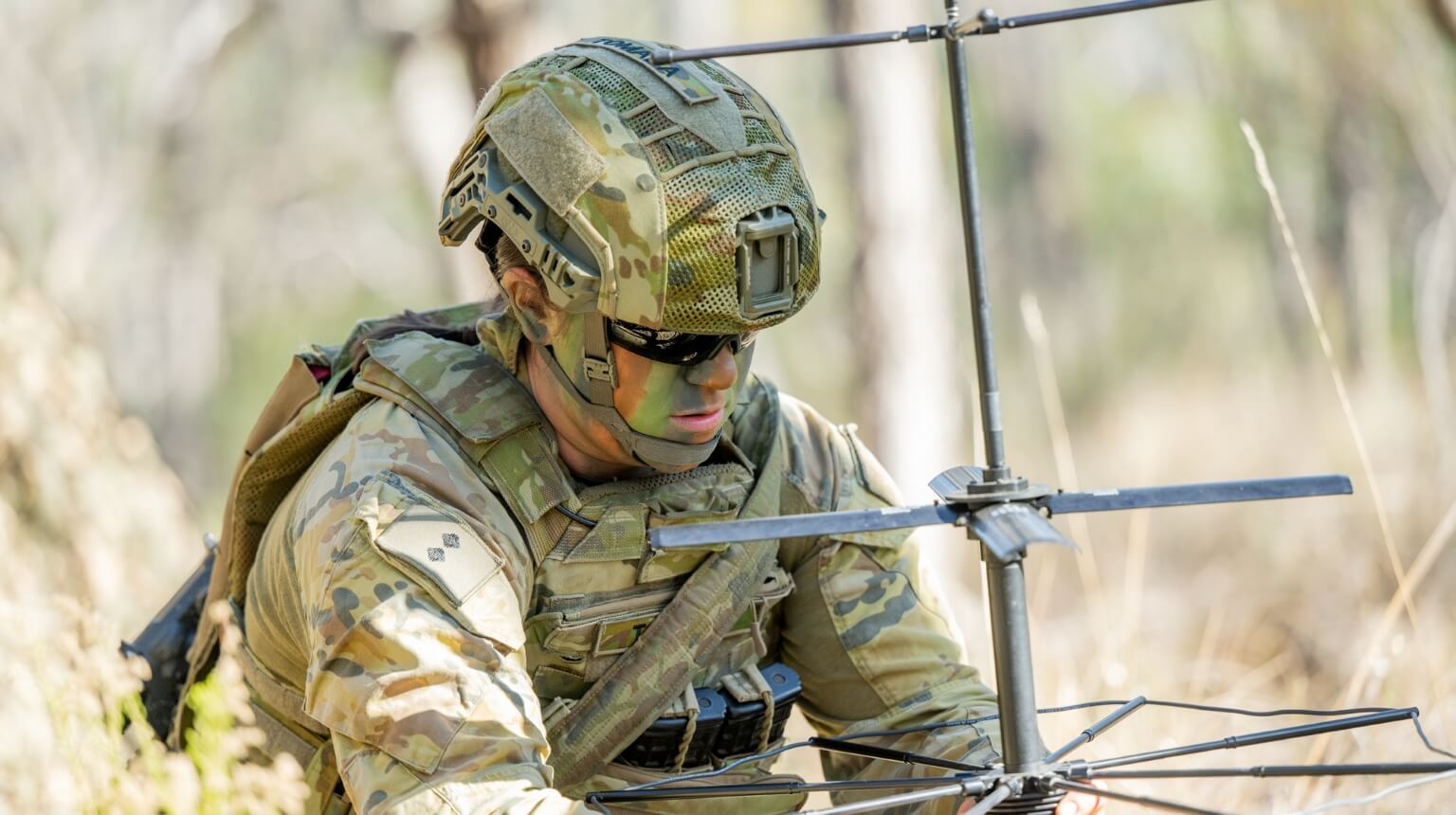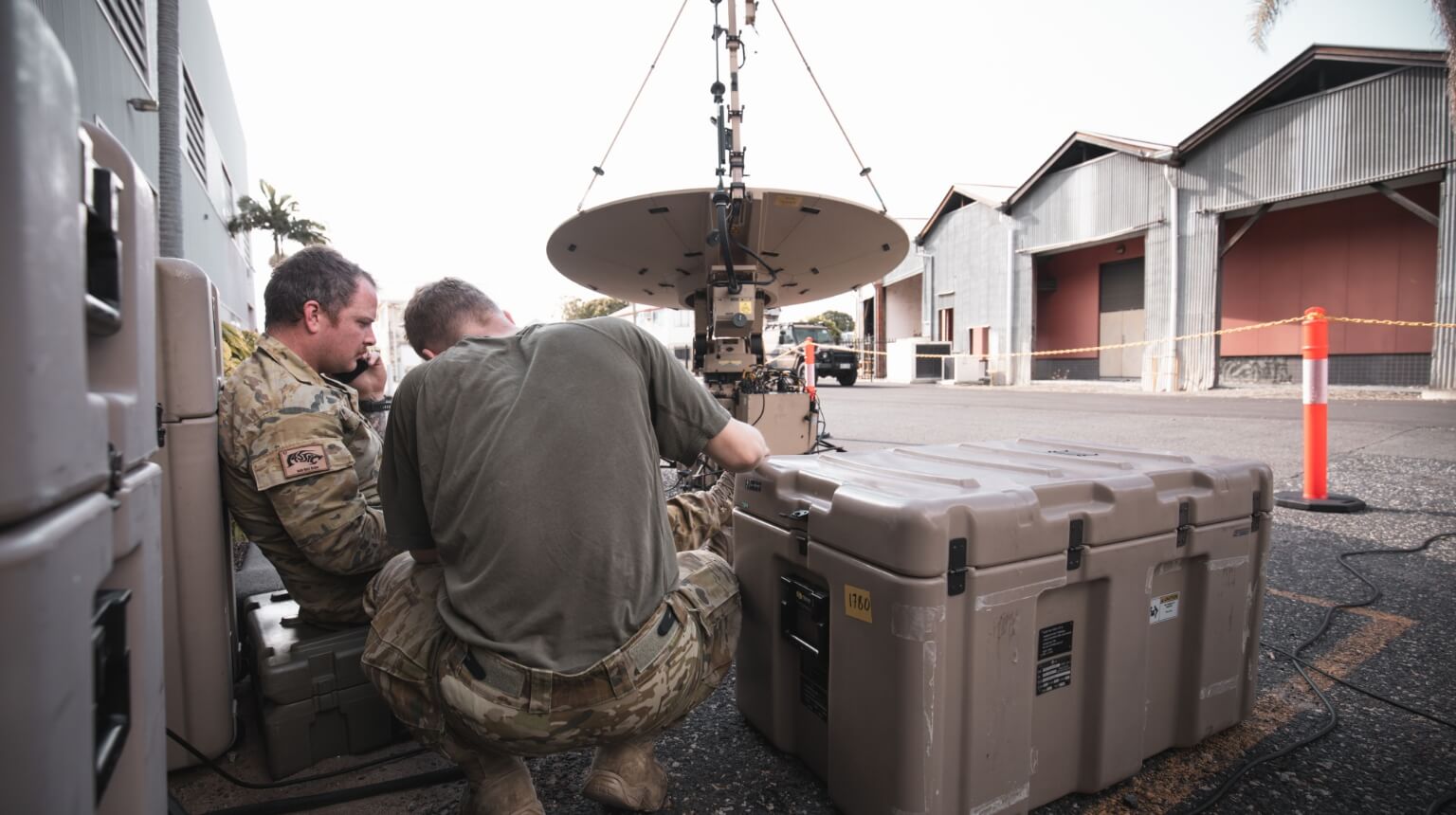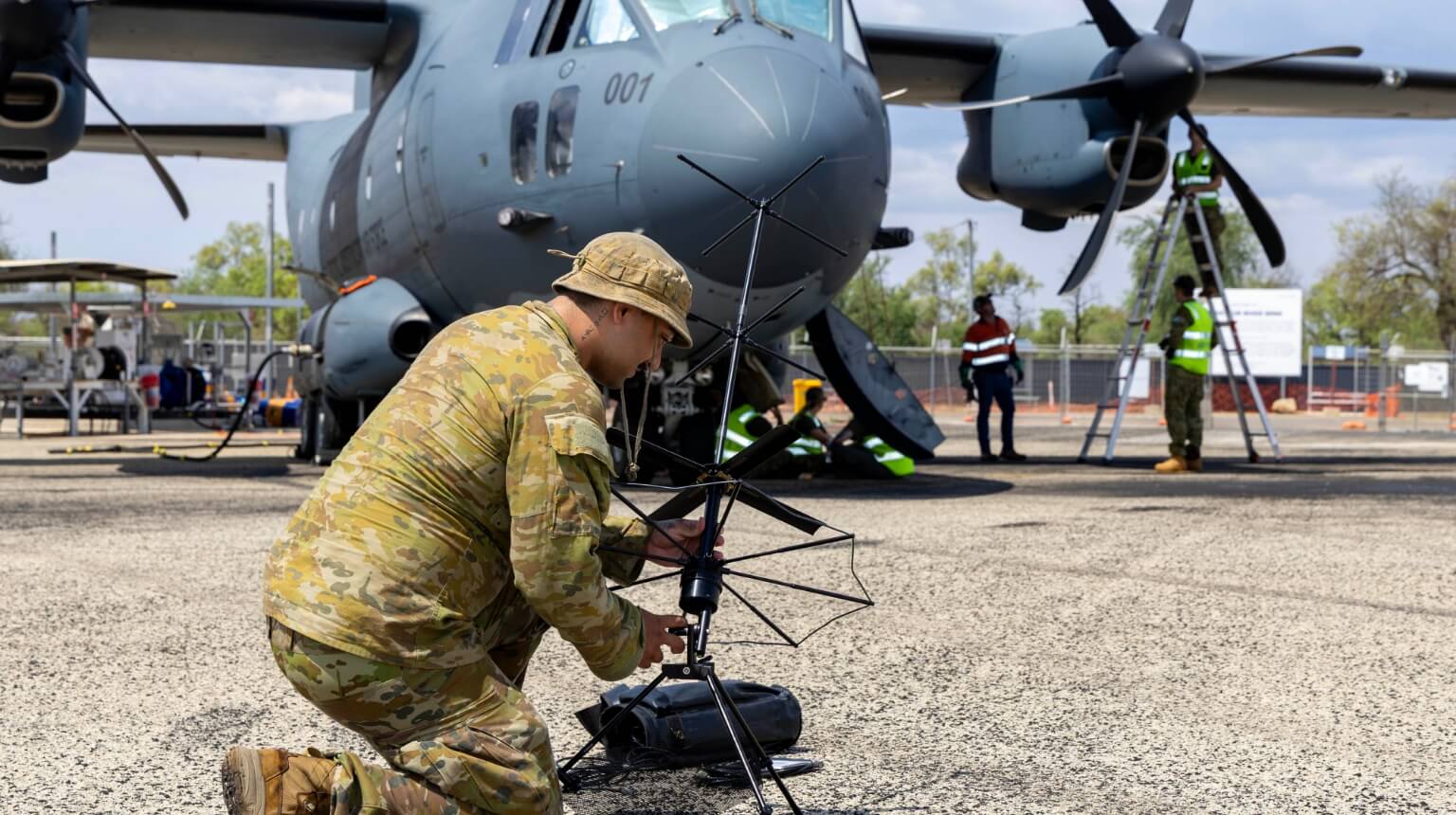



As outlined in the Defence Strategic Review and the 2024 National Defence Strategy, the evolution towards a “focused and integrated force” depends not only on platforms, people and posture but, critically, on the digital backbone that connects them.
The ongoing modernisation of the Defence information and communications technologies (ICT) and digital ecosystem is therefore not a peripheral exercise in technology management; it is the foundation of 21st-century warfighting capability.
The scale and complexity of Defence ICT
The Department of Defence operates one of the largest and most complex ICT environments in the country.
Speaking on Defence Connect’s podcast, Leighton Freene, Managing Director – Defence and Federal Government at Kinetic IT, explains that Defence’s digital ecosystem supports between 80,000 and 120,000 users with uniformed personnel, APS staff, contractors and allied partners spread across Australia and deployed operations.
It’s a similar but different scenario for Freene who, prior to working in ICT, spent 12 years in uniform in the Australian Defence Force.
This immense network, he says, underpins every operational domain, from cyber to space, and is maintained through an intricate web of hundreds of suppliers and technology systems.
Such complexity is both a strength and a challenge. It allows for diverse capability integration, but it also introduces significant risk in ensuring interoperability, reliability and cyber resilience.
As Freene notes, “providing service integration across that whole ecosystem” requires constant coordination across a “patchwork quilt” of technologies and vendors. Few private-sector environments approach this level of complexity or operational consequence.
From legacy systems to integrated capability
One of the defining challenges for Defence is the coexistence of legacy systems, some decades old, with emerging digital technologies such as cloud computing, AI and data fusion platforms.
Defence must maintain legacy equipment that ‘might be decades old’ while simultaneously integrating cutting-edge technologies that demand secure, modern ICT infrastructure.”
As Murray Thompson, Group Executive - Advisory and Transformation at Kinetic IT, observes, Defence must maintain legacy equipment that “might be decades old” while simultaneously integrating cutting-edge technologies that demand secure, modern ICT infrastructure.
It’s a challenge Thompson knows well. Thompson was head of ICT Operations for the Australian Department of Defence where he was responsible for managing the agency’s global ICT network and cyber security operations. Following a distinguished 35-year career in the Australian Army, including as a major general, he joined Kinetic IT where he now uses his firsthand expertise to drive solutions in digital transformation, cyber security and service automation.
This challenge, Thompson says, is what underscores the importance of robust service integration and management frameworks. Ensuring that old and new systems operate coherently across classified and unclassified networks is critical.
It also reflects a broader cultural shift within Defence from viewing ICT as an administrative enabler to recognising it as a strategic capability in its own right.
Cyber security: The first and last line of defence
As Defence’s digital surface area expands, so, too, its vulnerability.
In a varied discussion on Defence Connect’s podcast, both Freene and Thompson repeatedly highlight that cyber security begins with the individual – with user awareness and cyber hygiene forming the first line of defence.
However, as Thompson cautions, effective protection requires a layered approach that extends far beyond end user behaviour.
“To provide a proper defence,” Thompson says, “you need to know your network.”
Kinetic IT’s approach, he explains, emphasises tight integration between ICT operators and cyber security specialists
This means not outsourcing cyber security as a discrete function but embedding it within every layer of system administration, patch management and incident response.
In an environment where AI-enabled attacks are becoming the norm, Defence’s cyber defenders increasingly rely on machine learning to detect anomalies and respond at machine speeds.
“It’s machines versus machines now,” Thompson says, noting that future cyber defence will require automated response mechanisms that act faster than human operators can.
AI, data fusion, and the new decision advantage
Beyond defence of the network, AI and cloud computing are transforming how Defence uses information as a weapon system.
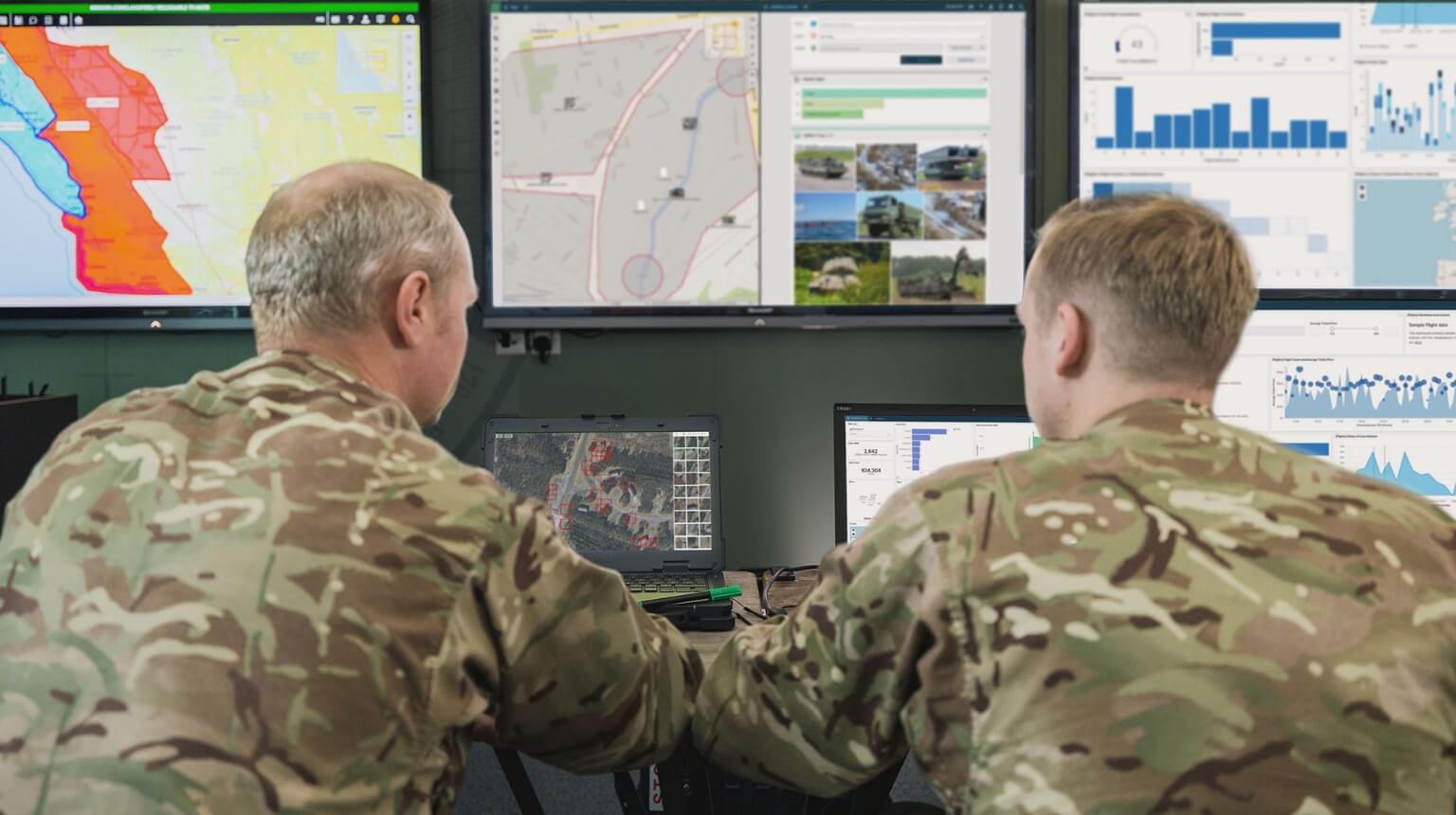
The integration of artificial intelligence into Defence’s decision-making ecosystem enables the fusion of sensor, intelligence and operational data into what Freene describes as “a single pane of glass” – a unified operating picture that enhances the speed and accuracy of command decisions.
This “data fusion” marks a shift from traditional “sensor fusion” models focused on individual platforms like the F-35. Instead, it aggregates data across domains – land, sea, air, space and cyber – to generate actionable intelligence in near real time.
As Freene explains, the objective is not to replace human judgement but to augment it: AI will “assist in decision making”, ensuring that commanders have the most accurate and timely information available.
This capacity for speed to decision is now recognised as an essential capability. Chief of Army Lieutenant General Simon Stuart has consistently emphasised “speed to capability” as a critical determinant of operational success.
In digital terms, that speed is achieved through a combination of trusted data, intuitive interfaces and AI-enabled analysis; each dependent on the integrity and interoperability of Defence’s ICT systems.
Trust, integrity, and human judgement
While AI promises new efficiencies, it also introduces new risks. As Thompson notes on the podcast, “hallucinating AI insights” can lead to false positives or flawed conclusions if data integrity is compromised.
Defence’s challenge is therefore twofold: ensuring that data is accurate and secure and that humans remain central to the decision loop.
Emerging best practice suggests that Defence should invest in sovereign, domain-specific large language models (LLMs) trained on validated Defence data within secure cloud environments.
This approach preserves control over sensitive information while leveraging AI’s analytical power – without the risks of external dependency or data leakage.
Yet, as both Kinetic IT executives emphasise, the quality of human judgement remains paramount.
“The advent of AI actually makes it even more important to have highly capable, highly talented individuals that have got real business context,” Freene says. AI is a force multiplier for human decision making, not a replacement, he adds.
Building the workforce and the network
No digital transformation can succeed without people. The shift towards an integrated digital Defence ecosystem depends on attracting and retaining skilled personnel across ICT, cyber security, data science and systems integration disciplines.
As Freene observes, Australia’s relatively small population makes this a strategic challenge in itself: “We need to make the opportunities within the Defence Force as attractive as they can practically be, to make sure that top talent comes through the door.
Parallel to workforce reform, there are critical infrastructure challenges, such as how Australia will maintain secure undersea and space-based communications for its expanding submarine and long-range strike capabilities.
Thompson’s final observation in the Defence Connect podcast is telling: the question of “how we are going to communicate to our growing submarine fleet” highlights the extent to which future operational effectiveness depends on mastering both the physical and digital battlespace.
The digital foundation of a focused force
Australia’s transition to an integrated, focused force is inseparable from its digital transformation.
Defence’s ICT ecosystem is no longer a background enabler; it is the connective tissue of national defence.
From secure networks and AI-driven analytics to sovereign cloud architectures and cyber resilience, each component is integral to ensuring that the Australian Defence Force can deter, fight and win in an increasingly contested digital age.
As the 2026 National Defence Strategy looms, the lesson from industry partners like Kinetic IT is clear: achieving digital superiority will require more than new technologies. It will demand a cultural shift towards agility, collaboration and trust in both data and people.
The future of Defence will belong not just to those with the best weapons, but to those with the most resilient, intelligent and integrated networks connecting every sensor, decision and serviceperson across the force.