

Secure, resilient and sovereign communications technologies are emerging as the new front line of deterrence and defence preparedness – a critical foundation for both the Australian Defence Force and the nation’s broader civil and industrial resilience.
Modern warfare and national security operations hinge on one core truth: without assured communications, even the most sophisticated forces can be paralysed. Yet as the strategic environment in the Indo-Pacific becomes increasingly contested, Australia must reckon with its dependence on foreign-owned networks, satellite constellations and vulnerable undersea cables.
The solution lies in developing a suite of novel, secure and scalable communications systems that combine defence-grade resilience with dual-use civilian benefits, ensuring the nation’s ability to operate, communicate and coordinate, no matter the threat.
At the heart of this shift is the concept of sovereign communications sovereignty – the idea that Australia should possess, control and defend its own critical communications infrastructure, from satellites and terrestrial networks to data routing and encryption. This is not about cutting ties with partners but about ensuring that Australia can stand independently if required.
A future-ready communications ecosystem would blend multiple layers of technology to achieve redundancy and resilience. The first layer involves secure, sovereign satellite communications (SATCOM).
A future-ready communications ecosystem would blend multiple layers of technology to achieve redundancy and resilience.”
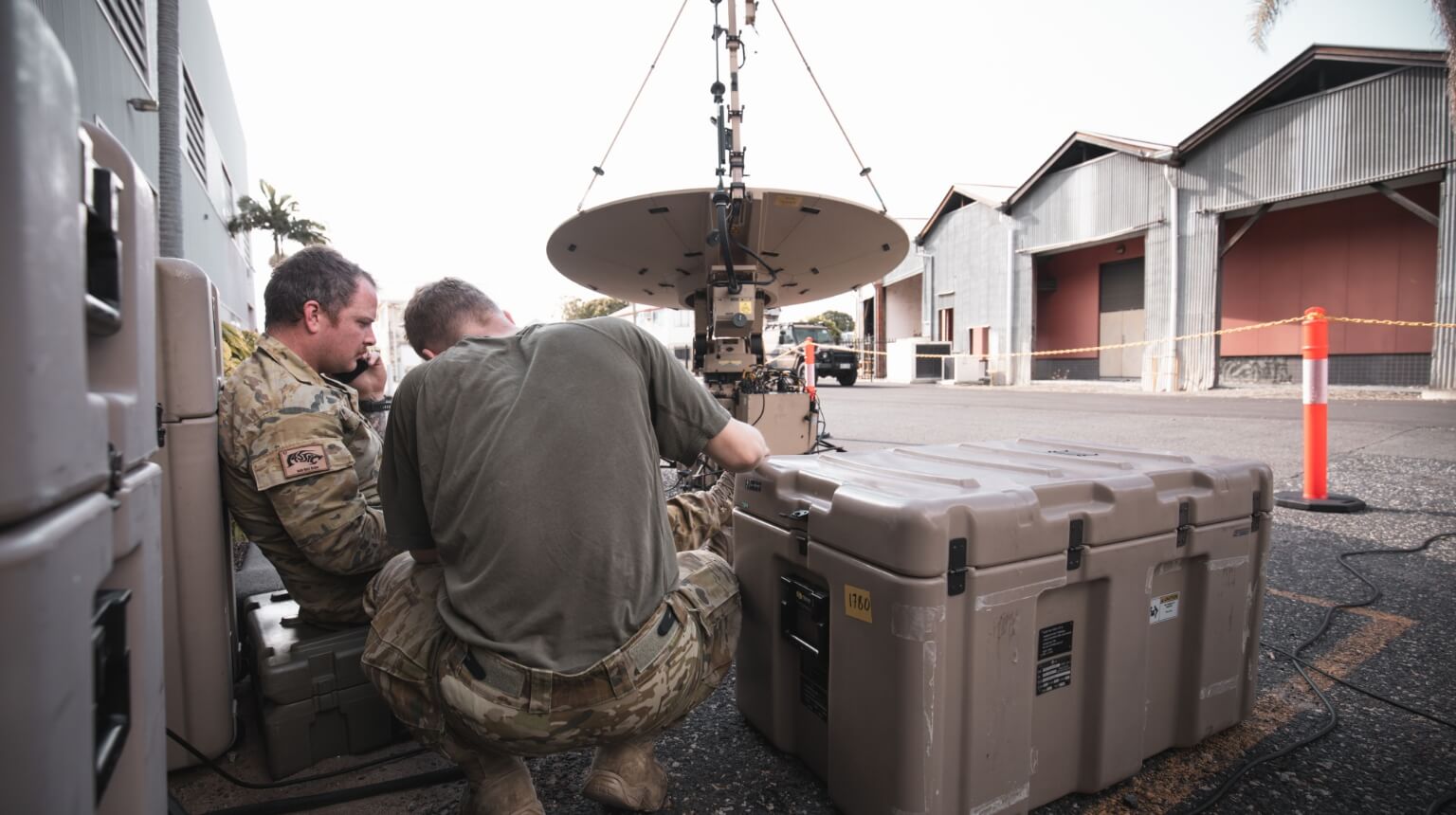
Australia’s growing investment in military SATCOM through Defence’s JP 9102 program is a strong start, establishing a national geostationary satellite capability under Australian control. Yet the future lies in low-Earth orbit constellations – networks of small, rapidly deployable satellites offering high-speed, low latency links that can reconfigure dynamically if individual nodes are compromised.
Crucially, these systems can be designed with dual-use intent. While the ADF could rely on hardened, encrypted channels for operations, civilian and commercial users from emergency services to remote industries could access secondary bandwidth in peacetime.
In times of crisis, that same architecture could pivot seamlessly to prioritise defence and national command needs. By embedding defence resilience into civilian infrastructure, Australia can avoid the duplication and inefficiency that has plagued past defence-industrial programs.
Complementing the satellite layer, quantum communications and post-quantum encryption represent a frontier technology that could give Australia an edge in securing its data flows.
Quantum key distribution, for instance, offers a theoretically unbreakable means of encrypting transmissions using the principles of quantum physics.
While still emerging, pilot projects linking universities, defence agencies and the private sector could establish Australia as a southern hemisphere leader in quantum-secure networks.
Importantly, these systems could be integrated into both Defence and critical national infrastructure energy grids, air traffic control and emergency management, creating a shared security fabric across government and industry.
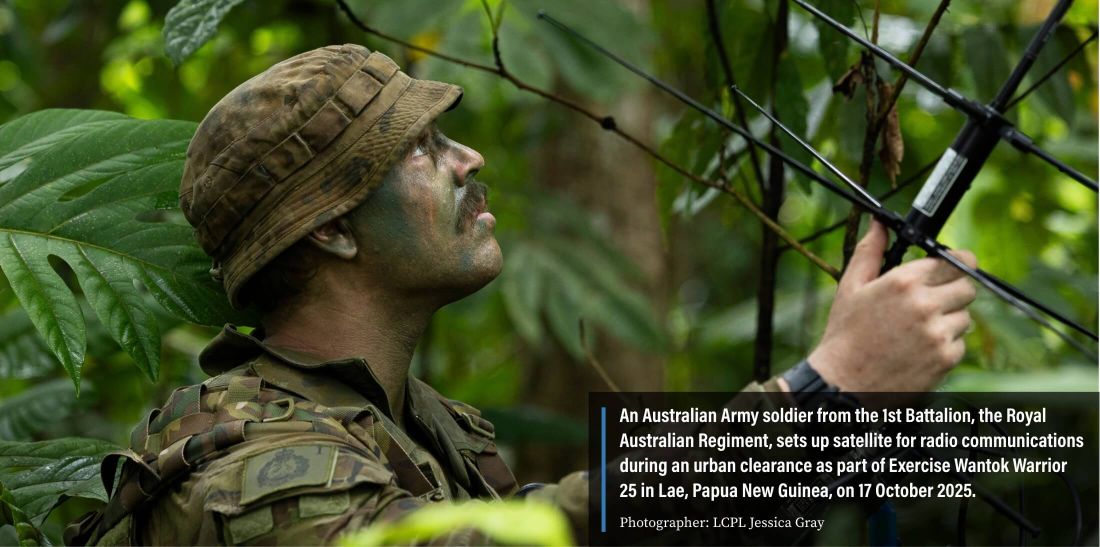
Another critical layer lies much closer to Earth. Mesh networking and mobile ad hoc networks offer self-healing, rapidly deployable communications solutions for both the battlefield and disaster response.
Imagine a bushfire zone where standard mobile towers are down or a contested littoral environment where satellite access is jammed; a fleet of drones, vehicles or ships could automatically form a local, encrypted mesh network, maintaining connectivity without relying on centralised infrastructure.
For Defence, this means sustained command and control in denied environments; for civil authorities, it could mean life-saving coordination during floods, cyclones or cyber-induced blackouts.
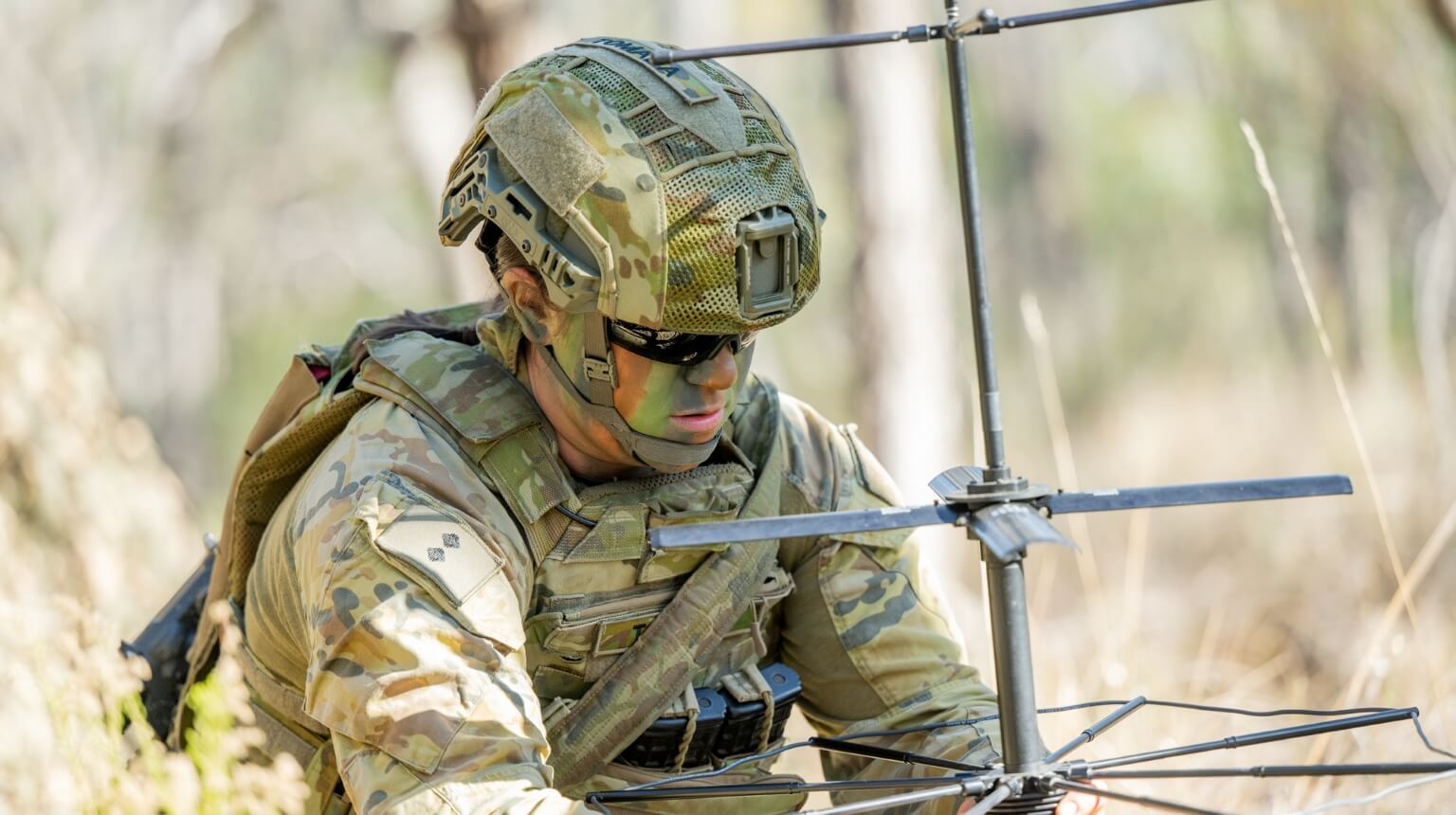
Similarly, high-frequency (HF) and troposcatter communications, once viewed as legacy technologies, are undergoing a renaissance. These long-range, beyond-line-of-sight systems offer resilience precisely because they are difficult to disable en masse.
With modern digital modulation and adaptive antennas, Australia could establish a continent-spanning HF backbone linking bases, naval task groups, and regional partners – a form of communications insurance policy against satellite or fibre-optic disruption.
Of course, hardware is only half the story. The software and architecture underpinning this communications ecosystem must be equally robust.
AI-driven network management can detect and respond to jamming, intrusion or degradation in real time, automatically rerouting data or changing frequencies. When combined with sovereign encryption standards and secure, homegrown operating systems, Australia would reduce its exposure to hidden vulnerabilities that may exist in foreign-sourced code.
Building such a system at scale will require tight coordination between Defence, the Australian Signals Directorate, the CSIRO, universities and the domestic tech industry. It will also demand a fundamental policy shift from seeing communications as a utility to recognising it as a strategic national capability, on par with energy, fuel and food security.
The economic dividends are equally significant. A robust dual-use communications ecosystem would stimulate high-tech manufacturing, software development and skilled jobs across regional Australia.
By investing in sovereign production of satellites, encryption modules and advanced semiconductors, Australia could capture portions of the rapidly growing global communications security market, while reducing dependence on vulnerable supply chains.
In the end, resilient communications are not just a defence asset, they are a national insurance policy. As the Indo-Pacific strategic environment grows more volatile, Australia’s ability to coordinate military, governmental and civilian responses under duress will define its capacity to endure and prevail.
A sovereign, secure communications architecture layered across space, air, sea, land and cyber would ensure that Australia’s voice, data and command links remain intact, regardless of crisis or conflict.
It is an investment not just in national defence but in national cohesion, ensuring that when the signal is needed most, Australia’s voice will never be silenced.