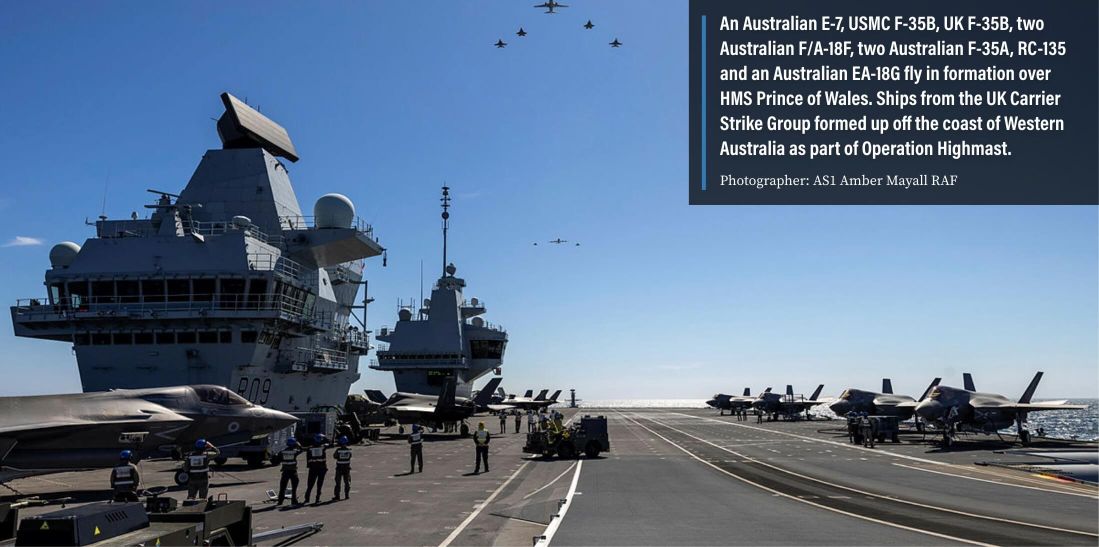


In a major leap for allied integration, US Air Force (USAF) pilots have flown Royal Australian Air Force (RAAF) F-35A Lightning II aircraft in the first-ever fifth generation “interfly” mission between the US and a partner nation. Conducted in the Northern Territory, the flights involved USAF Reserve Major Justin Lennon and Major Colby Kluesner – both experienced F-35 evaluator pilots – who have operated seamlessly alongside their Australian counterparts.
“Thanks to the commonality of F-35 variants, aligned training and operational practices between F-35 users, the flying portion is the easiest part,” Maj Lennon says. “The only way anyone might know it’s not an Australian in the cockpit is the accent on the radio.”
The interfly has been made possible through RAAF’s Lightning-X program, designed to normalise interoperability between F-35 operators and treat allied pilots as if they were native RAAF personnel in all aspects of operations – from medical clearances to egress procedures. Squadron Leader Nicholas Reynolds of No. 77 Squadron calls it “a big win to be able to seamlessly integrate here at Talisman Sabre 25”.
This historic step is part of a broader strategy by the F-35 global user community to build shared readiness and enable true interchangeability in combat. “In a prolonged conflict, airplanes are capable of flying more hours a day than a pilot,” Maj Lennon says. “Having the added flexibility to put any pilot in any F-35 and generate combat AirPower anywhere in the world adds to the F-35 coalition’s lethality.”
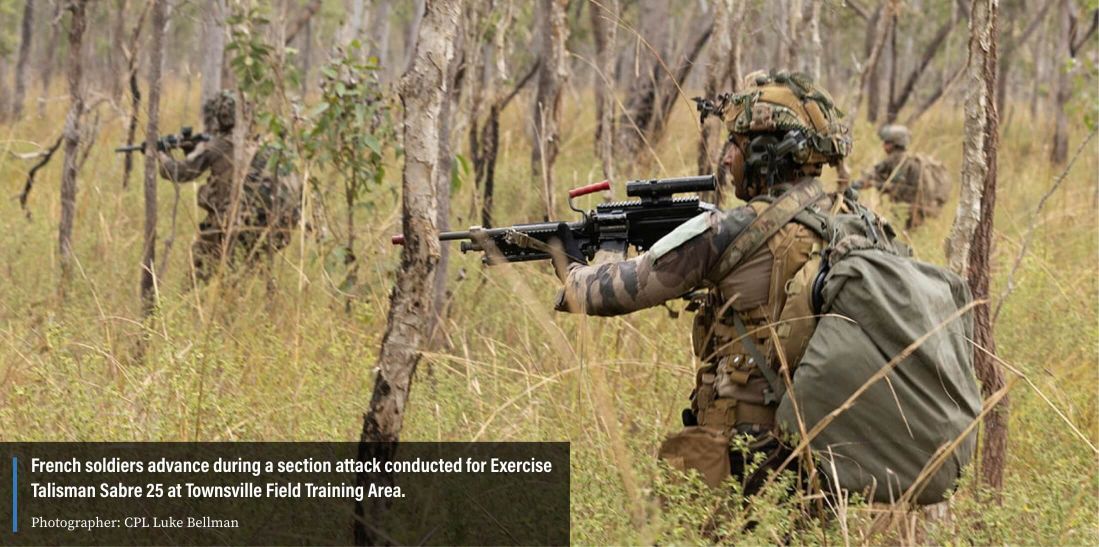
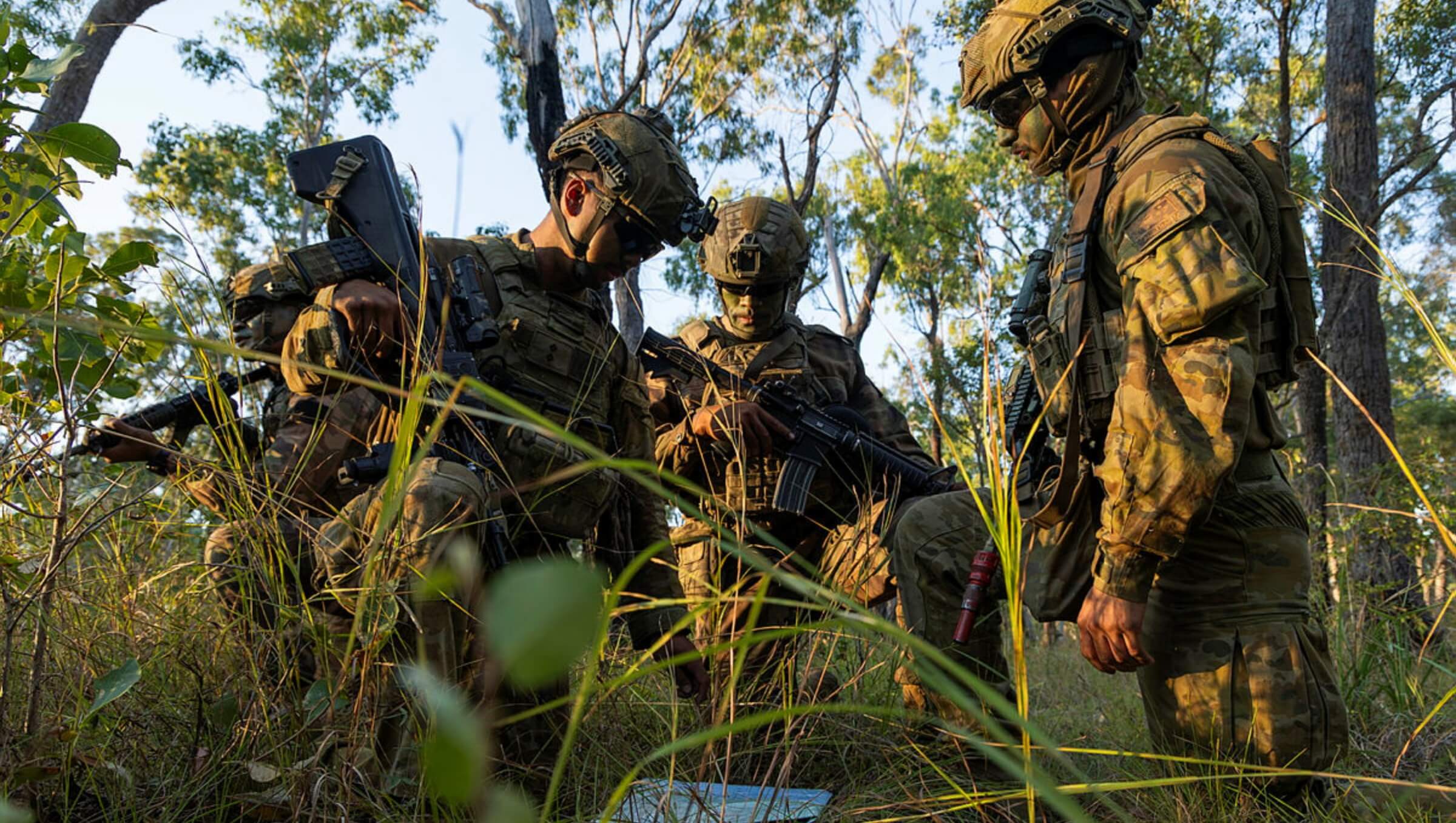
While AirPower integration headlines the exercise, Talisman Sabre 2025 is delivering similarly transformative effects on the ground. At the Bradshaw Field Training Area, soldiers from the 16th Regiment, Royal Australian Artillery, conducted a successful live-fire intercept of a simulated cruise missile using the National Advanced Surface-to-Air Missile System – firing an AIM-120 advanced medium range air-to-air missile into the sky to engage a high-speed, high-altitude threat. It was the third live-fire success for the regiment in 2025, following AIM-9 Sidewinder launches earlier this year.
“This system forms part of the inner tier of our integrated air and missile defence network,” says Major Talal Moutrage, an Air Defence Artillery Fire Control officer. “We provide the critical integration with joint partners to ensure the protection of friendly aircraft and enable the effective delivery of land defensive fires.”
Together, these air and land capabilities – tested under the high-pressure, multi-domain scenarios of Talisman Sabre – are bringing Australia’s Defence Force closer to its vision of a truly integrated joint force, capable of rapid and decisive action alongside allies.
Together, these air and land capabilities – tested under the high-pressure, multi-domain scenarios of Talisman Sabre – are bringing Australia’s Defence Force closer to its vision of a truly integrated joint force, capable of rapid and decisive action alongside allies.
Central to this transformation is the Land Domain Training System, led by Land Combat College under Brigadier Andrew Moss. On the ground during the exercise, BRIG Moss is observing firsthand how training translates to real-world operations. “This is the Land Domain Training System in action – a deliberate continuation of learning from the schoolhouse into a realistic and complex warfighting environment,” he says.
Mentorship and human capital development are also deeply embedded in the training continuum. BRIG Moss is mentoring Lieutenant Colonel Andrew Raven, Commanding Officer of Battle Group Ram and part of a broader culture shift across the Army. “Mentorship at every level – from brigadiers to lance corporals – has become an essential part of our learning,” LTCOL Raven says. “It allows us to challenge assumptions, test ideas and develop as leaders.”
The success of this mentorship culture and training pipeline has been echoed in the skies above RAAF Base Williamtown, where 10 out of 10 candidates passed the demanding Introductory Fighter Course – a feat not seen in over two decades. Wing Commander Michael Green, CO of No. 76 Squadron, describes the achievement as “remarkable”, especially given previous setbacks due to COVID-19, the introduction of the Pilatus PC-21 trainer aircraft and aircraft availability issues during the Hawk 127 re-engine program.
“This result is critical,” WGCDR Green says. “There is not only a need for increased numbers flowing into operational squadrons but a need for aircrew who will excel in their roles.”
Whether flying F-35s in integrated formations, intercepting missiles with precision on the battlefield or rebuilding a world-class fighter pilot training pipeline, the message from Talisman Sabre 2025 is clear: Australia and its allies are preparing now for the conflicts of the future. Through realistic joint training, deep integration and a commitment to excellence across all domains, the ADF is laying the groundwork for a force that is agile, lethal and ready to deter or defeat any peer competitor.