

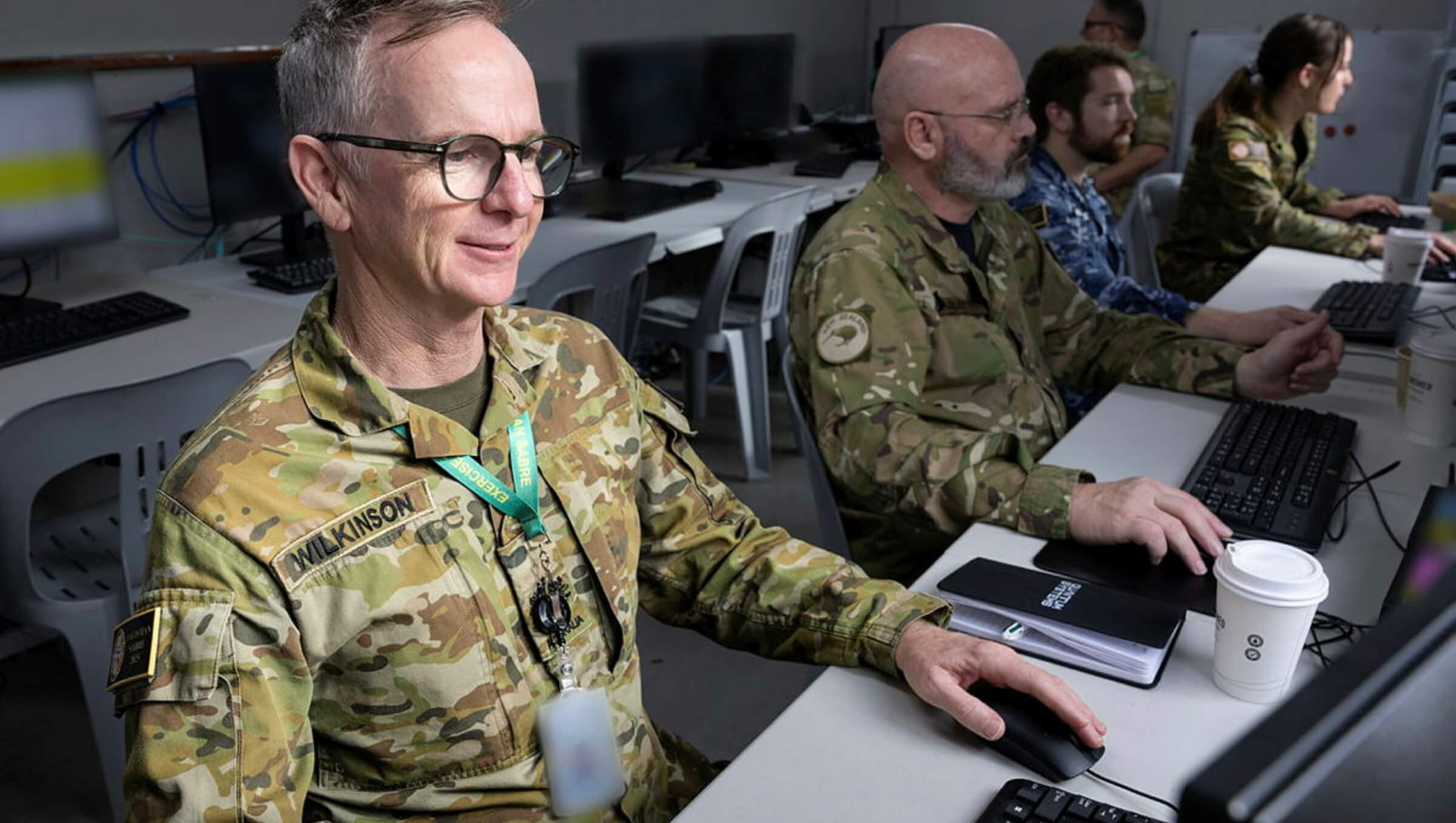
The Department of Defence has confirmed the creation of a purpose-built space workforce and the establishment of a Cyber Reserves program, both designed to strengthen Australia’s preparedness for operating in highly contested and technically demanding environments.
Central to both efforts is a renewed emphasis on training, simulation and real-world threat modelling, with Defence leaders highlighting the importance of building skills and readiness to detect, deter and respond to increasingly sophisticated challenges.
“The complexity of modern space and cyber operations demands more than just technology – it requires highly trained people with the right skills, supported by realistic training environments,” says Chief of Air Force Air Marshal Stephen Chappell.
The complexity of modern space and cyber operations demands more than just technology – it requires highly trained people with the right skills, supported by realistic training environments.”
- Chief of Air Force Air Marshal Stephen Chappell
The space workforce, to be shaped by a Defence-led review which concluded in late 2024, will focus on building expertise in areas like satellite communications, space domain awareness and orbital operations. Defence Space Command will play a central role in developing simulation environments that replicate both natural and hostile space scenarios, allowing personnel to rehearse responses to potential attacks on critical systems.
Similarly, the Cyber Reserves initiative – set to begin recruitment in 2025 and reach initial operating capability by early 2026 – will bring experienced cyber professionals and Defence alumni into a flexible, part-time force. These reservists will support core cyber defence activities and help train full-time personnel in how to identify and mitigate complex threats.
Simulated attack exercises and real-time network defence scenarios will form a key part of cyber training, ensuring the Australian Defence Force (ADF) can respond rapidly to foreign interference, ransomware operations and hostile cyber intrusions.
“Defence is investing in a national effort to ensure we can operate in and defend the digital and space domains. This means building realistic training environments, simulating potential adversary behaviour and growing a workforce that can think and fight in these domains,” AIRMSHL Chappell says.
Both initiatives reflect a broader shift in the 2024 National Defence Strategy, which calls for increased resilience and workforce readiness across all domains. The Defence Strategic Review has also flagged the urgent need for sovereign capabilities and simulation-led training programs to prepare the ADF for grey zone threats and full-spectrum conflict alike.
These workforces won’t just support operational requirements – they’ll be the foundation of a Defence Force ready to fight and win in an era where the first shots may be fired from orbit or through a line of code.