

 iscover



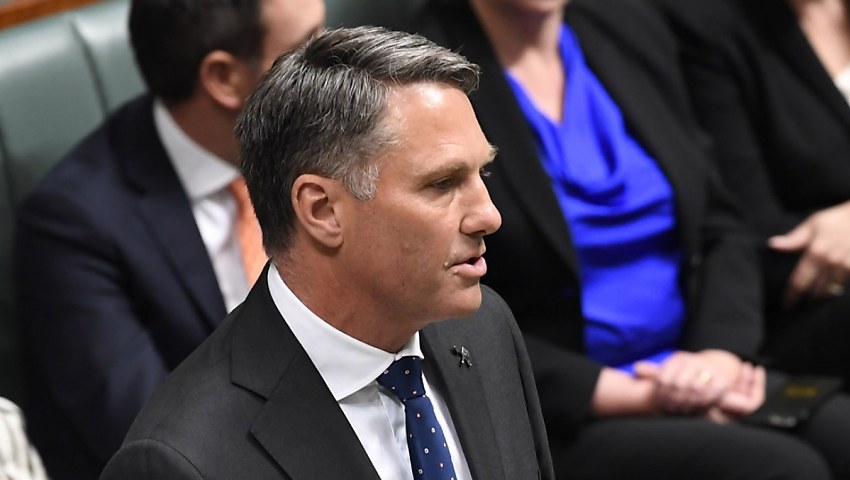
Defence Minister and Deputy Prime Minister Richard Marles has said the ADF must invest in long-range strike capability because Australia cannot rely on the US to guarantee its safety.
Speaking at the annual Sydney Institute dinner, Marles also said Australia must deploy nuclear-powered submarines and “project force and power”.
It comes ahead of the new federal government’s long-awaited Defence Strategic Review and follows similar comments made by Shadow Defence Minister Andrew Hastie.
“The reality is that a tougher environment will require a more hard-nosed Australian approach to the defence of our interests: the ability to project power to shape outcomes and deter threats,” Marles said.
“We must marshal and integrate all arms of national power to achieve Australia’s strategic objectives.
“Australia’s defence capabilities cannot match those of major powers. Australian statecraft is only viable if it is underpinned by the ability to project force and power: to deter military threats and defend Australia’s national interests within our immediate region.
“We must invest in targeted capabilities that enable us to hold potential adversaries’ forces at risk at a distance and increase the calculated cost of aggression against Australia and its interests.
“We must ensure we accord adequate priority to high-end military capabilities to do this.
“The ADF must augment its self-reliance to deploy and deliver combat power through impactful materiel, enhanced strike capability – including over longer distances – and better logistics and supply chain support, including through a vibrant and innovative partnership with industry.”
Earlier this month, Shadow Defence Minister Andrew Hastie similarly said Australia must quickly invest in bombers and drones to prepare for a potential conflict.
The former SAS commander called for an increase in defence spending “well above” 2 per cent of GDP and argued that “the window is closing fast” for Australia to be ready for a major war.
“(We need) strike bombers, precision-guided missiles and unmanned autonomous vehicles – in the skies and in the seas below.”
Hastie previously urged the federal government to explore the potential of purchasing the in-development B-21 Raider.
“We need to be able to hold an adversary at risk, at distance, out passed the archipelago to our north, and in order to do that, you need strike capabilities — missiles, aircraft and long-term, nuclear submarines,” he said.
The B-21 is the ‘sequel’ to the UFO-like B-2 Spirit, which can carry nuclear weapons and costs $2 billion each.
Want to see more stories from trusted news sources?
Make Defence Connect a preferred news source on Google.
Click here to add Defence Connect as a preferred news source.