

 iscover
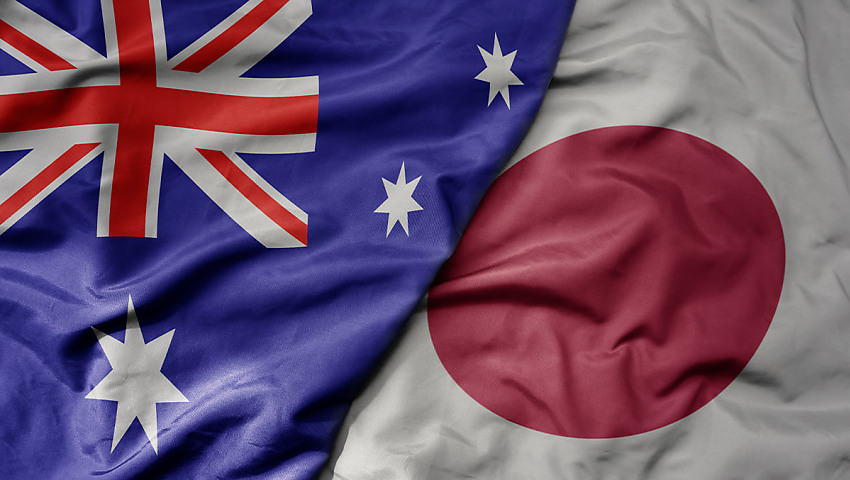
Opinion: Non-resident fellow of the US Studies Centre, Guy Boekenstein, says Australia’s Mogami Class frigate deal cements a maturing defence partnership with Japan, proving that united efforts strengthen security, industry and regional influence.
“一本の矢は簡単に折れるが、束になった十本の矢は折れない – a single arrow is easily broken, but not 10 in a bundle.”
This Japanese proverb illustrates how strength and resilience that comes from working together and supporting each other leads to stronger relationships and outcomes. The announcement this week of the Australian government’s decision to procure the Mitsubishi Heavy Industries (MHI) Mogami Class frigate for the SEA 3000 project reflects its underlying sentiment.
The Japanese government always viewed this as more than just a maritime project – it was a central plank and catalyst to deepen the strategic industrial and technology relationship with Australia. If Japan had not won SEA 3000, this would not have been the end to this goal.
As Keio University professor Tomohiko Taniguchi, a former senior adviser to Prime Minister Shinzo Abe, told me: “Australia is a key partner for Japan in promoting democracy, a trusted partner which Japan will work with to maintain the Indo-Pacific as a free and open region and a force multiplier for Japan and its alliance network. Japan’s strategic value to Australia can be described in the same way” – this includes the defence industry and technology space.
We have come a long way

The development of the Australia–Japan defence and security relationship has been an incremental one compared with the economic and trade relationship. This is understandable for numerous reasons on both sides and is often the nature of defence international engagement.
In 2007, I was the first Australian Defence civilian student to graduate from the Japanese government’s National Institute for Defense Studies. My dissertation argued the case for Australia and Japan to deepen our relationship and help close the trilateral loop with the US. The relationship wasn’t ready.
Likewise in 2014–15, during the Australian government’s ambitions to replace the ageing Collins Class submarine with the MHI Soryu Class. I was an adviser to the Australian Minister for Defence at the time and was closely involved in the proposal. It was poorly handled on both sides all around (political, officials, industry). This was in part to a general lack of understanding and experience on both sides due to the relationship still being immature.
Fast forward a decade and the depth of defence engagement between Australia and Japan is remarkable. Our Defence staff presence in the Australian embassy in Tokyo has more than tripled. We engage with the Japan Self-Defense Forces in approximately 39 training and exercises (bilateral and multilateral) each year. The Japanese government has been more forward-leaning on increasing practical cooperation, including dual-use technology, in many cases that we have. And the broader bilateral relationship and Australian public perception of Japan is arguably the best it has been for decades.
The Mogami was the right call – but we have only just begun
The Mogami decision is a testament to the maturity of the bilateral Defence relationship and the Japanese government’s determination to further normalise its defence posture and diversify global supply chains. It is also a reflection on the hard work that has been done on both sides over the years to set in place the necessary policy, regulatory, security settings that enable Japan to enter into its largest ever foreign military sale.
Most importantly, this is the kick-start needed to build a much deeper strategic relationship that will impact the bilateral relationship and our shared alliances with the United States far beyond this project.
From a capability perspective, the choice makes a lot of sense. There has already been significant commentary covering this but at the core of the Mogami Class’ appeal is its superior technological and combat systems configuration.
The platform also supports anti-submarine warfare through a comprehensive suite of sonar systems, including a towed array and hull-mounted sonar. Notably, the Mogami Class’ high degree of automation enables it to operate with a core crew of just 90 personnel, significantly lower than the complement required by older ships or competing designs.
While this all should be celebrated, we also need to remain mindful that this is the start of the process for contract negotiations, developing understanding and trust on both sides, and a multitude of other issues that will need to be worked through in a new cultural context for both sides.
There is absolutely no question of MHI’s ability to deliver vessels on time and on budget – Japan actually delivers continuous shipbuilding. However, some in Japan have questioned MHI’s commitment to the project and workforce talent to pull off such a large-scale foreign program, especially when it comes to the planned build phase in Australia. MHI has a full order book with its involvement in domestic projects, including the Global Combat Air Program, Aegis platform, BMD Glide Phase Interceptor and others.
MHI's President and CEO, Seiji Izumisawa, recently dismissed these concerns and emphasised that MHI had already established a strong foundation of cooperation with Australia. “We now look to strengthen and grow this relationship in the area of defence and space. Japan and Australia are like-minded countries that can contribute greatly to the prosperity of the region and world through greater cooperation in a range of fields”.
The Japanese ambassador to Australia has echoed this sentiment on many occasions. This has further been demonstrated by Japan’s willingness to offer an already in-production vessel to Australia over its domestic needs. So, the commitment is clear and I share the majority view that MHI and the Japanese government will deliver.
The timing is right to build the bundle
The long-term benefits for Australian industry that SEA 3000 will accelerate are enormous and it will remain important to look beyond this project and see the bigger picture. Australian governments (at all levels) and industry should embrace the associated opportunities this will open up with Japan in defence, space, dual-use technology, composites, advanced manufacturing, components, and the list goes on.
Let’s think creatively to provide real opportunities (i.e. actually linked to contracts) for Australian SMEs and not let them get lost to large overseas primes, global consultants and other usual suspects.
Let’s embrace the Japanese spirit of taking a long-term approach to building this relationship and look beyond forward estimate budget announcements and ‘life of posting’ initiatives.
And finally, let’s use this to build a genuine and enduring strategic partnership with arguably our most important partner in the Indo-Pacific region – a phrase that is thrown around a lot by politicians but often fails to reach practical outcomes. We have a chance to strengthen our “bundle” with Japan – the timing is right, the political will is there, the geostrategic drivers are clear and industry on both sides is ready to help diversify supply chains.
Guy Boekenstein is the managing director Australia and Oceania, Kissinger Advisors.
Want to see more stories from trusted news sources?
Make Defence Connect a preferred news source on Google.
Click here to add Defence Connect as a preferred news source.