

 iscover
After the recently confirmed Iranian attacks in Sydney and Melbourne, should we be concerned about grey zone warfare campaigns to utilise public radicalisation in Australia?
Earlier this week it was revealed that Iranian diplomatic staff have been directed to leave Australia after the federal government and Australian Security Intelligence Organisation (ASIO) confirmed the country had orchestrated two attacks in Sydney and Melbourne last year.
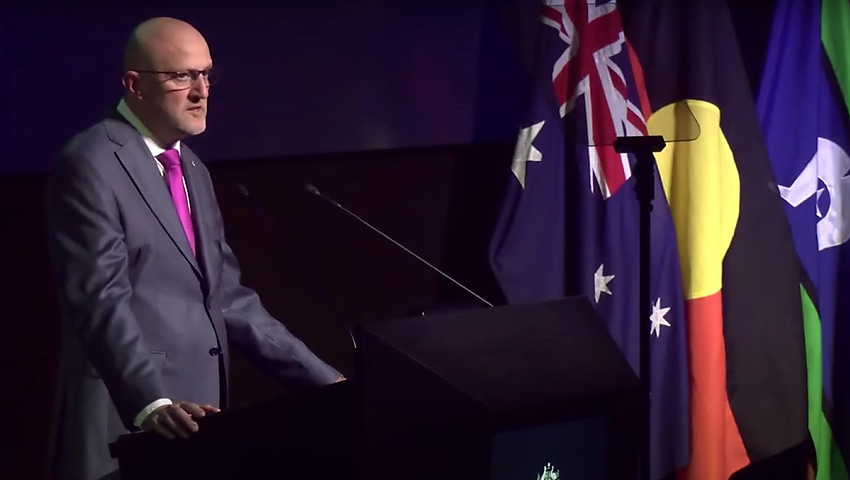
ASIO boss Mike Burgess affirmed that Iran had undertaken the two attacks, against Lewis’ Continental Kitchen in Sydney on 20 October and Adass Israel Synagogue in Melbourne on 6 December last year, to sow confusion in social cohesion and cause discord in the Australian community.
In addition, Australia responded by suspending operations at its embassy in Tehran and listing Iran’s Islamic Revolutionary Guard Corps as a terrorist organisation.
“For the past 10 months, anti-Semitism has been one of ASIO’s most pressing priorities, involving the full use of our capabilities and powers,” Burgess said.
“ASIO now assesses the Iranian government directed at least two and likely more attacks on Jewish interests in Australia. Our painstaking investigation uncovered and unpicked the links between the alleged crimes and the commanders in Iran’s Islamic Revolutionary Guard Corps, the IRGC.
“The IRGC used a complex web of proxies to hide its involvement. This is the sort of obfuscation and boundary blurring I warned about earlier this year.
“It goes without saying that Iran’s actions are unacceptable. They put lives at risk, they terrified the community and they tore at our social fabric. Iran and its proxies literally and figuratively lit the matches and fanned the flames.

“I want to assure all Australians that ASIO and our law enforcement partners take these matters extremely seriously. You do not just have the right to be safe, you have the right to feel safe.”
Director-General Burgess confirmed that the plots, investigated since October last year, were directed by the IRGC through a series of overseas cutout facilitators to coordinators that found their way to tasking Australians.
“It’s a layer cake of cutouts between IRGC and the person or the alleged perpetrators conducting crimes. In between them, they tap into a number of people, agents of IRGC, and people that they know in the criminal world, and work through there, so it’s a series of chains. There’s an organised crime, there’s an organised crime element offshore in this. But that’s not to suggest organised crime are doing it. They’re just using cutouts, including people who are criminal and members of organised crime gangs to do their bidding or direct their bidding … in Australia.”
This raises a key question, is it likely that the assessment by ASIO boss Mike Burgess is deliberately understated in his address?
He confirmed that Iran’s aim is to sow confusion and cause discord, however, given the current geopolitical climate, were the strikes instead opportunities seen by Iran and grasped at a timely opportunity when discord and strife had already begun to flourish in an Australian community?
It’s no secret that Australia has recently taken a turn towards a more radicalised public. Burgess himself admitted that “we investigate dozens of incidents targeting Jewish communities, places of worship, businesses and prominent individuals’.
In recent examples, we have seen a definite rise in public advocacy for and against Palestine and Israel. Members of the public have conducted non-violent protests, such as the mass pro-Palestinian March for Humanity across the Sydney Harbour Bridge earlier this month.
However, they have also shown the propensity for potentially violent actions taken against Police, government and other members of the public during violent protests outside the Land Forces Expo in Melbourne last year, targeted violence against shipping and defence industry companies (July this year) as well as consistent defacing of international embassies such as the US Consulate in North Sydney (2024) and the Indian Consulate in Melbourne (April 2025).
Radicalised attacks have undoubtedly resulted in the graffiti of important sites, such as the Australian War Memorial (2024) and Dorrigo War Memorial (July), as well as the vandalism of commemorative statues of Captain Cook (2024, 2025) and Queen Victoria (2024).
Dr Levi West, ANU College of Arts and Social Sciences research fellow, terrorism and counter-terrorism expert, provided some clarity here about the blurring line between state-sponsored operations and grassroots activism.
“Australia is not the only country that has experienced Iranian subversive activity. The most likely calculus for the Iranian government was that Australia provided opportunities to target what they perceived as Israeli interests, without directly targeting Israel itself,” West said.
“These actions are distinct in that they didn’t necessarily reflect any broader anti-Semitism in the Australian community, and are complicated by the use of criminal proxies motivated by either money or self-interest, rather than hatred or ideology.
“Regarding the opportunism of the attacks and protests … these kinds of operations (undertaken by Iran) have substantial lead times that includes cultivating and developing the relationships with the various criminal elements involved.
“It is unlikely that the protests or broader anti-Israeli sentiment would have been a significant contributing factor to the planning or decision making.
“Anti-Semitism has been, regrettably, a reliable point of exploitation for subversion for centuries. The Russians have used it extensively, as have others, including Iran. It is better to think of these operations as hostile subversion that exploits rather than relies on aspects of public protest or similar.
“These would have likely been part of broader planning and calculus by the Iranian regime, and the IRGC specifically.”
It sounds like we’re not at a critical point-of-no-return yet. However, the new Iran confirmations, supported by evidence collected by ASIO, raise questions that have never been asked about the Australian public. What is the propensity and appetite for ordinary citizens and organised crime members of the public to conduct directed actions against their own society?
Looking to our European allies for advice, we can see that Iranian ally Russia is conducting a similar “public contracting” unconventional war there. In this case, European citizens have been reportedly tasked with sabotage of critical infrastructure, military sites, energy grids, communications and even undersea cables.
Through these actions, Russia aims to destabilise European governments, undermine public support for Ukraine by imposing social and economic costs on Europe, and weaken the collective ability of NATO and the European Union to respond to Russian aggression, according to a recently published research paper, titled The scale of Russian sabotage operations against Europe’s critical infrastructure, by Charlie Edwards and Nate Seidenstien at the International Institute for Strategic Studies.
“Data reveals Russian sabotage has been aimed at Europe’s critical infrastructure, is decentralised and, despite European security and intelligence officials raising the alarm, is largely unaffected by NATO, EU and member state responses to date,” the paper noted.
“Russia has exploited gaps in legal systems through its ‘gig economy’ approach, enabling it to avoid attribution and responsibility.
“Since 2022 and the expulsion of hundreds of its intelligence officers from European capitals, Russia has been highly effective in its online recruitment of third-country nationals to circumvent European counter-intelligence measures.
“While the tactic has proven successful in terms of reach and volume, enabling operations at scale, the key challenge facing the Russian intelligence services has been the quality of the proxies, who are often poorly trained or ill-equipped, making their activities prone to detection, disruption or failure.”
These kinds of “contracted out public attacks” are not a one-off and the Australian government needs to be on the ball, taking action and looking for indications that members of the public are ready and willing to consider internationally sponsored actions against their own country, whether that be for financial or ideological motives.

Want to see more stories from trusted news sources?
Make Defence Connect a preferred news source on Google.
Click here to add Defence Connect as a preferred news source.