

 iscover
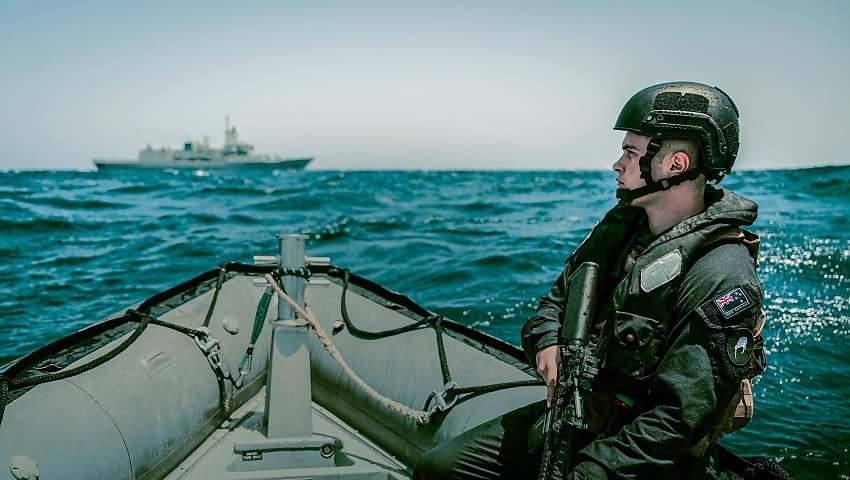
Opinion: New Zealand’s defence capability is on the cusp of its most significant uplift in decades.
Released in April, the Defence Capability Plan 2025 lays out a roadmap for the NZ Defence Force to modernise and, crucially, be more closely aligned with its key partners, especially Australia.
While Canberra is pursuing an ambitious strategy of “total integration” with Papua New Guinea, Wellington is charting a different course reflecting a strong and independent national security policy.
New Zealand is investing in complementary, high-value capabilities that maximise its contribution to regional security and coalition operations, while enabling political and operational independence in the South Pacific. “Total integration” is a political bridge too far.
A more combat-focused NZDF
The Defence Capability Plan 2025 marks a decisive shift away from New Zealand’s posture as a peacekeeper, signalling a determination to build a combat-capable force with real deterrence value. This pivot reflects the rapidly worsening security outlook in the Indo-Pacific.
The government has earmarked NZ$12 billion in new investment over the next four years, a significant sum for a country of New Zealand’s scale. A recent headline purchases underline this new direction – MH-60R helicopters. The unashamed focus on anti-submarine/anti-surface capability over more utilitarian options signals intent.
Complementary, not carbon copy

There is plenty of discussion about “interoperability” with Australia. But this can be mistaken for a need to have the “same” kit as Australia. The high-end capabilities of the Australian Defence Force – submarines, F35s and the world’s most formidable, armoured vehicles – are beyond New Zealand’s financial reach of the New Zealand government.
The Australia–New Zealand defence relationship can be a model of complementary integration that recognises the benefits of diversity in capability.
New Zealand’s focus is on high-value contributions that play to the strengths of a smaller but professional force: maritime surveillance, special operations, and light infantry with deep language and cultural affinity with the Pacific. This approach avoids duplication and creates some tactical advantages.
At sea, the Royal New Zealand Navy’s formidable Sea Ceptor adds air defence capability to a joint task force that the ADF doesn’t have. Their fleet tanker is one of only three operated by both nations. This approach avoids duplication, maximises efficiency and creates a true force multiplier.
Providing skills and talents that a nimble small player can provide. New Zealand’s close connections with the Pacific bring cultural and language skills that Australia doesn’t have.
Industry plans
Released in October, NZ’s Defence Industry Strategy identifies some focus areas where there is existing strength. Uncrewed systems and space feature heavily.
The space industry is already worth half a billion dollars annually. Following Australia’s lead, overseas companies will be required to submit local industry content plans.
Navigating complex local politics and procurement settings will be an enduring challenge for offshore industry.
A stronger Anzac partnership
For Australian defence audiences, the key takeaway is this: New Zealand is stepping up.
By investing in capabilities that directly enhance interoperability with the ADF, Wellington is signalling a seriousness that matches the times. It cannot mirror Australia’s breadth of capabilities, but provides a credible and adaptive regional force, capable of independent operations.
This gives politicians and joint planning staff alike operational flexibility. For an Indo-Pacific facing mounting pressures, that’s exactly the kind of ally Australia needs.
*Ross Browne is a director of Museum Street Strategies, a New Zealand specialist defence and national security public affairs firm.
Want to see more stories from trusted news sources?
Make Defence Connect a preferred news source on Google.
Click here to add Defence Connect as a preferred news source.