

 iscover
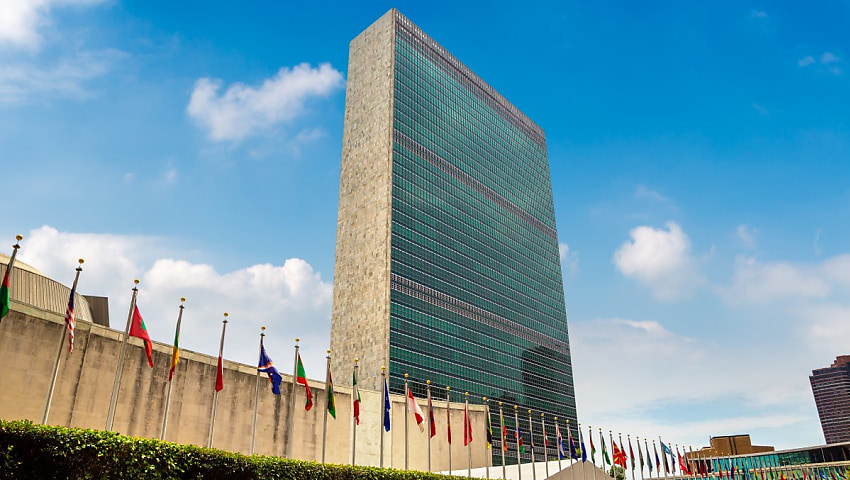
Opinion: Sovereignty today is defined less by borders than by control of critical systems like data, energy and supply chains, and Australia risks strategic vulnerability unless it reduces hidden dependencies and builds real resilience into those networks, strategic analyst Shay Gal has explained.
A veto map is the real geography of power. It is drawn by control over access, data, energy, and repair, not by borders. States that hold junctions without controlling them remain sovereign in name and conditional in practice.
If Greenland still feels like someone else’s problem, Australia is already behind the curve.
What unfolded in Europe this week was a test of sovereignty as it now operates: through access, permanence, and control of strategic connectors.
When Brussels speaks about Arctic security, and Washington speaks about permanent access “within NATO”, they are not negotiating geography. They are negotiating leverage.
Australia is building the same kind of junctions. Risk follows.
Start with the seabed. The global digital economy is not wireless. It runs on glass threads laid across the ocean floor. An Australia–India cables dialogue brief noted that submarine cable networks carry roughly 99 per cent of global data traffic and that, as geopolitical tension rises, these networks are increasingly contested.
Seabed warfare is back on the agenda, and Indo-Pacific states are considering sovereign installation and repair capabilities. Australia’s own naval leadership has described subsea cables as both a lifeline and a vulnerability.

Europe has learnt this lesson through exposure. Finland’s Defence Command said days ago that Russia is likely to persist in efforts to damage undersea infrastructure in the Baltic Sea, following repeated outages affecting power cables, telecom links, and gas pipelines since the invasion of Ukraine. NATO has responded with frigates, aircraft, and naval drones.
Finnish authorities have seized vessels suspected of sabotage. This is the grey zone in practice, shallow enough to deny, deep enough to hurt.
Project that forward to the Indo-Pacific, where distances are larger, repair assets scarcer, and incentives for disruption higher. The opening move in a future crisis need not be a missile launch. It can be a sequence of incidents that delay mobilisation, blind maritime awareness, fracture logistics, and force decisions back into slow, analogue processes.
Taiwan’s experience with repeated cable malfunctions, followed by tighter surveillance and boarding practices around critical routes, is not an anomaly. It is a preview.
Overlay the Australia–UK–US security pact. The partnership is a triumph of statecraft. What is discussed less candidly is the dependence it creates.
A recent US review of the arrangement, led by figures who have openly questioned whether American industry can meet its own submarine requirements, underscores a basic reality. Scarcity is leverage. A partner under domestic pressure will prioritise its own fleet first. No communiqué changes that arithmetic.
Australia can be an ally, an investor, and a force multiplier. When the pipeline tightens, it joins a queue. Queues are veto maps dressed in polite language.
Then there is AI. Canberra’s National AI Plan and the APS AI framework are necessary, but incomplete. AI is not software. It is compute, power, data, connectivity, cooling, supply chains, specialised chips, and trusted operating environments. If continuity of compute and data flows cannot be assured under stress, an AI strategy belongs to peacetime.
This is where Greenland becomes directly relevant to Australia.
Greenland matters to Washington because it sits at the intersection of basing, missile warning, Arctic routes, and strategic minerals. But treating an allied territory primarily as an adjustable asset on a veto map corrodes the very sovereignty the alliance claims to defend.
Europe’s unease is not about tone. It reflects a recognition that Washington’s willingness to instrumentalise allied territory as leverage, rather than as sovereignty to be strengthened, sends a signal that no ally’s geography is truly off limits when US bargaining power is at stake.
The European Commission’s rush to assemble an Arctic security and investment package is not simply defensive. It is an attempt to reassert control over a space that has been reframed as negotiable.
Australia’s equivalent is not an Arctic island. It is a lattice of bases, ports, data routes, and industrial dependencies stretching across the Indian and Pacific Oceans, increasingly intertwined with allied and private infrastructure. HMAS Stirling’s proximity to new cable landing points and discussions of data hubs in remote Australian territory are advantages.
They are also concentration risks. They tighten the coupling between the war-fighting system and the civilian digital ecosystem. That coupling can be resilient or brittle, depending on design choices made now.
The most dangerous illusion in Canberra today is that resilience is a technical add-on. It is not. Resilience is deterrence. Deterrence now depends as much on protecting the veto map as on projecting force.
Australia’s own security assessments have made this clear. Intelligence warnings over the past year have pointed to foreign interest in critical infrastructure, the likelihood of sabotage in a crisis, and the use of interference to undermine public support for major defence programs. This is not speculation. It is a map of the battlespace.
Shrinking the veto map requires a shift in mindset. Dependence on allies is not a moral virtue. It is a strategic tool that must be engineered. The objective is not separation from allies. It is to ensure that integration does not collapse into a single plug that can be loosened by politics, scarcity, law, or disruption.
That requires treating subsea connectivity as defence infrastructure, not commercial telecommunications with a national security footnote. It means hardening landing points, diversifying routes, and planning for rapid restoration under contested conditions.
It means investing in sovereign or tightly contracted repair capacity, spares, and permissions, because restoration speed is a deterrence. In a crisis, the difference between a 72-hour repair and a 21-day wait is the difference between continuity and paralysis.
It also requires rewriting the procurement reflex. Australia’s creation of a Defence Delivery Agency reporting directly to ministers creates an obligation to embed veto-map discipline into every major program: diversified suppliers, onshore sustainment, real exit rights, and contingency planning that assumes supply chains will be contested.
This dynamic is structural, not regional.
Australia is already practising cable diplomacy in its near region. Papua New Guinea has approved a mutual defence treaty under which Google will build three subsea cables funded by Canberra. Across the Pacific and Timor-Leste, Australia is no longer merely connecting networks. It is shaping veto maps and inviting contestation where influence now resides.
Sovereignty is no longer a flag. It is a topology.
Greenland was the warning flare, not about Chinese or Russian encroachment, but about Washington’s own readiness to redraw the practical limits of allied sovereignty when it suits its veto map.
If the veto map is not shrunk now, Australia will discover too late who drew it.
Shay Gal is a strategic analyst and adviser specialising in international security and geopolitical strategy, with senior experience advising government ministers. He works with government and defence leaders on power dynamics, strategic risk, and decision making in contested geopolitical environments.
Want to see more stories from trusted news sources?
Make Defence Connect a preferred news source on Google.
Click here to add Defence Connect as a preferred news source.