

 iscover
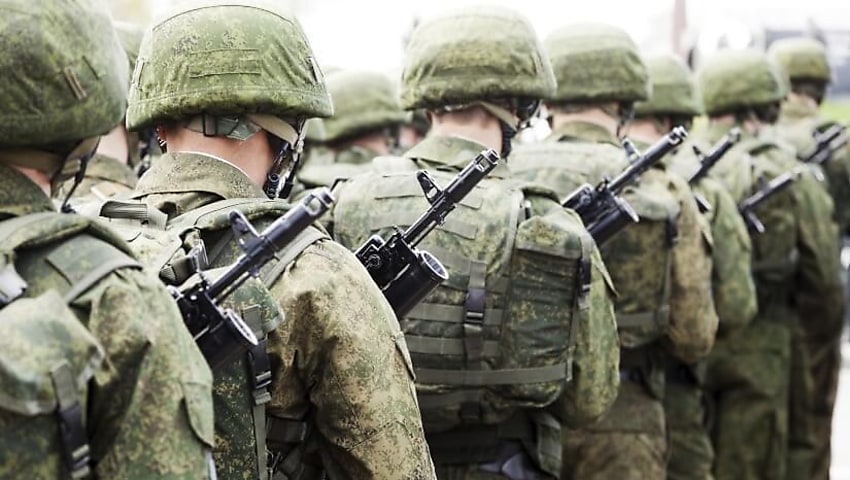
What is martial law? When has it been used? And is Trump invoking it?
Last week on X, I came across a post that discussed the current sociopolitical situation in the United States and the increasing tensions between citizens and law enforcement.
As I was reading, a poignant, rare term was mentioned – martial law.
Now, do I think the US is at the point of having the military run civilians? No. But in Trump’s America, who knows what could happen next.
What is martial law?
Martial law is when the military takes over and governs a region when civilian authority and government practices fail.
In a scenario where martial law is enacted, all existing laws and law enforcement practices are ceased, with the military having virtually unlimited, unrestricted authority. The provision of martial law can potentially lead to curfews, media blackouts, land blocks and even military tribunals.
It is generally only used in severe cases of social or political unrest, natural disasters or wartime. In the United States, it is not listed as a constitutional right but is clearly defined in the majority of state-based legal provisions.

A key point to remember about martial law is that civilian courts and jury systems are still the primary point of justice; the dissolution of courts and creating permanent laws are not permissible features of martial law.
What is the legality of martial law and why is it such a scary topic?
In the case of the United States, martial law is not a concept explicitly listed in the constitution but outlined in most state legislation, allowing governors to sound the alarm and declare the militant state.
Because it isn’t in the constitution, presidents are more likely to call in the Insurrection Act of 1807 where the military can be deployed and used with civilian agencies like police, rather than fully overrun all existing authorities.
But what makes martial law so impending and have an almost doomsday connotation is the fact that it practically overrides the rule of law as well as the separation of powers – and when these checks and balances on authorities aren’t upheld, democracies fall.
When has marital law been used by the US before?
Martial law is not an arbitrary, foreign concept in the United States though, there have been many examples of it being employed in periods of unrest, something the US is no stranger to.
The biggest and most omnipresent example of martial law being declared in America was throughout the Civil War (1861–65), where President Abraham Lincoln widely imposed the concept across the country, but primarily in the south for states that failed to adhere to the laws of the Union.
After the war, however, the Supreme Court found that the Union overstepped its bounds, resulting in the landmark Ex parte Milligan case that declared military tribunals are the last resort and can only be used when civilian courts are entirely unavailable.
“The court went out of its way to say martial law is not appropriate when the civilian courts ‘are open and their process is unobstructed’, that really drives home the limits on martial law,” said Stephen Vladeck, law professor at Georgetown University.
Martial law was in place for nearly three years in the Territory of Hawaii following the Pearl Harbor attack (1941). Under this imposition, civilians faced a major suspension of their everyday way of life through measures such as curfews, press and radio restrictions, ration controls and blackout periods.
It has been used for shorter periods in smaller regions and cities during periods of civil unrest such as the LA Riots (1992) and continually in racially based social periods of instability, such as when the Ku Klux Klan was active, or when the first black students walked through the school gates in Little Rock, Arkansas.
Final thoughts: So, is Trump going to call it in?
On 16 January, President Donald Trump posted to Truth Social, saying: “If the corrupt politicians of Minnesota don’t obey the law and stop the professional agitators and insurrectionists from attacking the Patriots of I.C.E., who are only trying to do their job, I will institute the INSURRECTION ACT.”
Now, does this mean it will actually happen, probably not. Trump has been a fountain of empty promises and faithless threats for his entire career and presidency.
“The courts are going to defer heavily to the judgement of the president in this regard, but based on everything that I’ve seen coming out of Minneapolis and Minnesota more generally, there’s no call for invoking the Insurrection Act here,” said University of Illinois Chicago legal scholar Steven Schwinn.
“The triggers just are not implicated. There’s no rebellion, there’s no insurrection, there’s nothing even close to that.
“And moreover to the extent that there is violence or unrest in Minneapolis … many would argue it’s the federal government’s own doing”.
Despite this, the murder of two US citizens by federal law enforcement is a clear marker of unprecedented, changing times, so who really knows what’s next.
The idea of military governance in Trump’s America is a scary thought, not only for the future of the nation, but for the entire Western world.
Want to see more stories from trusted news sources?
Make Defence Connect a preferred news source on Google.
Click here to add Defence Connect as a preferred news source.