

 iscover
Opinion: Australia risks remaining legally sovereign while effectively operating within allied military systems unless it asserts greater control over how its territory is used in practice, explains strategic and security policy expert, Shay Gal.
Australia tells itself a comforting story about sovereignty. No foreign bases. Allied activity by invitation. Force posture jointly set. Full knowledge and concurrence. None of this is false. None is sufficient.
Formal sovereignty no longer holds when the logic of strategic ground is set elsewhere. That is Australia’s structural problem.
Cyprus showed what happens when external enclaves outlive the settlement that justified them. Greenland showed that sovereignty can endure in law while primacy shifts in practice. Australia is neither. But the line from Akrotiri to Pituffik now reaches Canberra.
The issue is no longer who owns the map.
It is who decides what the map is used for.
Cyprus strips away illusion. Akrotiri and Dhekelia remained useful after the guarantee system that legitimised them failed. Utility endured. Legitimacy did not.
Greenland reveals the second condition. Pituffik sits under Danish sovereignty. Yet its function is embedded in American strategic design. The question is no longer title. It is primacy.

Australia presents the third. No enclave. No formal subordination. Yet sovereign ground operating inside another power’s system.
The stakes have risen.
The 2024 National Defence Strategy anchors defence in denial, national defence and a resilient northern base network. The 2024 Intelligence Review confirms deep reliance on Five Eyes and on Australian geography for crisis resilience. Australian territory is no longer depth. It is architecture.
US force posture now spans a system. Marines in Darwin. Expanded air, land and maritime cooperation. Prepositioning. Accelerated logistics. Sustainment. Space integration. Northern bases upgraded. New sites assessed.
This is not access. It is an operating lattice.
Pine Gap exposes the limit of reassurance. Asked in June 2025 whether it supported US operations against Iran, Richard Marles did not deny it. He returned to non-comment and to knowledge and concurrence.
The legal formula is clear. The operational boundary is not.
Sovereignty cannot rest on awareness. Awareness is not control.
Cyprus showed that ground can outlive its political logic. Greenland showed that sovereignty can coexist with external primacy. Australia fuses both: legal sovereignty, external authorship.
The result is not loss of title. It is loss of authorship.
The same tension runs through the joint facilities. Pine Gap is described as joint. Shared command. Australian deputy. Australian staff. None of this resolves the issue.
A facility can be joint in structure and external in purpose.
The question is not who stands at the gate.
It is who decides what happens when use replaces consultation.
AUKUS deepens the pattern. It is framed as sovereignty-enhancing. Yet its language is revealing. Australia is becoming “sovereign ready”.
States do not become sovereign ready if they already exercise full authorship.
Integration first. Authorship postponed.
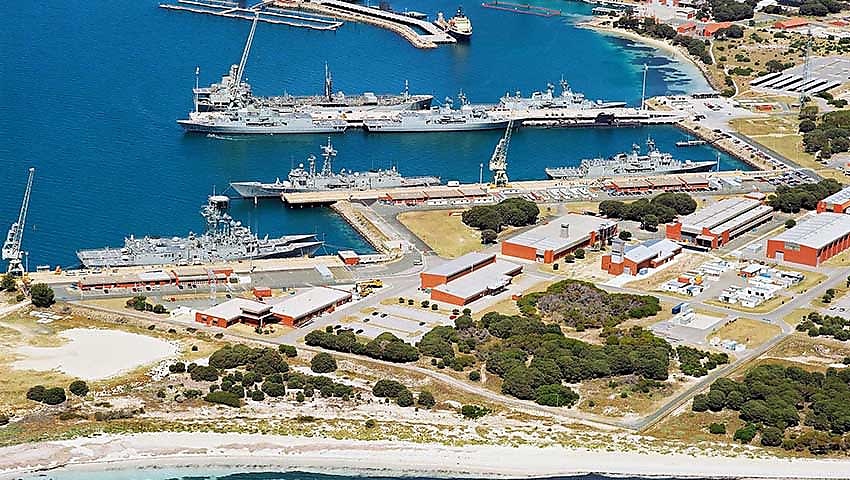
From 2027, HMAS Stirling will host Submarine Rotational Force - West. UK Astute Class. Up to four US Virginia class boats. British presence returns as a basing actor, embedded in design, workforce and operations. The US remains the system. The UK is structurally attached.
This is not symbolic. It is operational.
This was never a legal question. It is about the persistence of external military logic on sovereign ground.
Australia faces a widening gap between sovereignty and authorship.
The risk is not foreign bases in law. It is sovereign territory functioning as a node in someone else’s system, governed by external tempo and purpose.
None of this argues for unwinding ANZUS, Five Eyes or AUKUS. The US alliance is central. Five Eyes delivers capabilities Australia cannot replicate. Depth of alliance requires more authorship, not less.
Access is not control.
Interoperability is not primacy.
Even a friendly power sets the tempo when it defines the system.
If Canberra does not close this gap, it will not lose sovereignty in law. It will lose time in practice.
In the first fast-moving Indo-Pacific crisis, Australian territory will already be active inside allied air, intelligence, logistics and submarine systems.
By the time Canberra decides, the system will already be running.
Darwin and Tindal will not be neutral once they enable strike. Pine Gap will not be passive once it sits inside the intelligence chain. HMAS Stirling will not be symbolic once rotations and contingency planning are active.
Canberra may declare non-belligerence. An adversary will not. It will read enablement as participation.
Australia will remain sovereign in title and be treated as a participant before defining the terms of its participation.
The answer is primacy, not expulsion.
Cyprus and Greenland do not argue for ending allied access. They argue for ending external authorship of sovereign ground.
If activity occurs by invitation and with knowledge, that must become doctrine.
Australia needs defined decision thresholds for operations launched from, enabled by or sustained through its territory. Command arrangements that fix national authority in crisis. Industrial depth that delivers sovereign sustainment and sovereign judgement, not dependence masked as interoperability.
The National Defence Strategy already provides the language: denial, northern resilience, long-range strike, integrated force. Ministers speak of hardening bases, expanding infrastructure, scaling guided weapons and projecting power from the north.
One step remains.
Australian territory is not a platform.
It is sovereign operating ground.
Its logic is set in Canberra.
The old reassurance belongs to another era. This one runs on bomber rotations, submarine presence, prepositioned materiel, integrated logistics, intelligence fusion and space coordination across a geography central to allied resilience.
Cyprus shows what happens when utility outlives legitimacy. Greenland shows how sovereignty persists under external primacy. Australia does not need to repeat either.
It needs to break the pattern before it hardens.
Australia is sovereign in title. It must prove it in strategy.
The issue is no longer whether allies are present. They are.
The issue is who decides what Australia will be used for, and when.
Shay Gal works with governments and international institutions on strategy, risk and high-stakes security decision making.
Want to see more stories from trusted news sources?
Make Defence Connect a preferred news source on Google.
Click here to add Defence Connect as a preferred news source.