

 iscover
Opinion: Canada’s Type 212CD submarine selection reinforces that modern naval procurement is about more than capability, highlighting the strategic and industrial trade-offs that also underpin Australia’s AUKUS nuclear submarine program, explains Air Marshal (Ret’d) John Harvey AM.
When the original paper was published, Canada had not yet chosen a design for the Canadian Patrol Submarine Project. On 6 July 2026, it did.
This summary records what the decision settles, what it leaves open, what can reasonably be inferred, and what it means read against Australia’s AUKUS program.
What is now known
Canada has selected Germany’s TKMS and its German–Norwegian Type 212CD as preferred supplier, ahead of South Korea’s Hanwha Ocean and its KSS-III Batch II.
This is a preferred-supplier decision, not a signed contract: Canada is in exclusive negotiations with TKMS, aiming to conclude contracting by the end of 2027, with Hanwha retained as reserve supplier should those talks fail.
The number is “up to 12” – an upper bound, not a firm order – with delivery of the first four boats now targeted to begin in 2034, brought forward because Germany and Norway have agreed to cede early production slots.
It is Canada’s largest-ever defence procurement: the boats are costed at roughly CA$20–30 billion, with a whole-of-life figure commonly cited around CA$60–80 billion once some three decades of sustainment are counted.

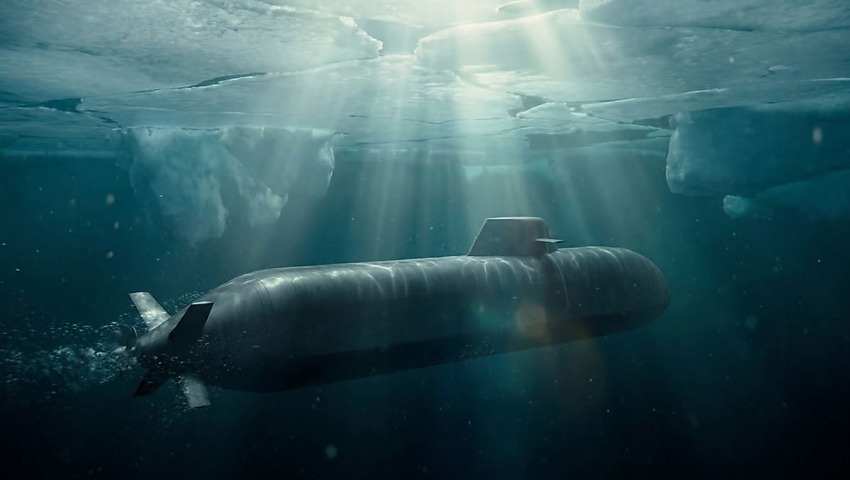
The 212CD is a conventional, air-independent design optimised for low acoustic and magnetic signature and for under-ice operation, without the vertical-launch land-attack capability the Korean boat offered.
The choice places Canada inside an existing German–Norwegian production line; a full buy would create a NATO operator community of up to 24 broadly identical submarines.
One known limit sits in this column: the 212CD is designed for first-year ice, not the deep, multi-year ice historically the preserve of nuclear boats – a tension Canada will manage in the deep Arctic for as long as the fleet serves, the same judgement it resolved the other way in 1987.
What remains open
Much of the program’s character is still unsettled. Price, delivery sequence, Canadian workshare, intellectual-property terms, weapons integration and the division of sustainment responsibility are all still to be negotiated.
- Weapons integration: The 212CD carries no vertical-launch system, firing from six 533mm torpedo tubes, so Canada must still settle which weapons the boats will employ – whether it carries across its Mk 48 heavyweight torpedo and combat-system interface and whether any tube-launched missile is funded. It took precisely this route with the Victoria Class, stripping out the original combat system on acquisition, so the question is live.
- Fleet size: “Up to 12” leaves room for fewer.
- Reversibility: The reserve-supplier arrangement means the design direction, though strongly signalled, is not yet irreversible.
- Industrial offsets: The most striking feature of the announcement is at this stage largely uncontracted commitments and memoranda – torpedo work with Magellan Aerospace, a combat-system centre of excellence with Kongsberg, sustainment teaming with firms such as EllisDon and Seaspan, simulators from CAE and AI tools from Cohere. They remain strategic intentions rather than contracted deliverables.
- Workforce: The original paper stressed Australia’s industrial workforce challenge at Osborne; Canada’s is a naval one. With only one of its four Victoria Class boats currently operational, Canada must regenerate its submarine crews and then expand them several-fold without a break in the training pipeline. Here the ecosystem choice cuts in its favour: a multi-navy operator community brings shared training, simulators and sustainment; a lone operator would build from scratch.
Decision factors – confirming the original paper
The outcome vindicates the original paper’s framing of submarine choice as the management of trade-offs rather than a search for the single best boat. Canadian officials have been candid that both finalists met the navy’s operational requirements, so the decision turned on economic and strategic terms rather than platform performance. The sequence explains how the ecosystem came to matter:
Canada judged both submarines operationally acceptable.
The one clear capability difference – the Korean boat’s vertical-launch strike system – was evidently not treated as essential, since the design without it was chosen.
With both platforms over the operational bar, the decision was free to turn on other factors; there the German boat’s ecosystem – NATO operator community, industrial partnership, allied alignment – offered the greater benefit.
Other factors reinforced this alignment rather than complicating it: risk pointed the same way, with the 212CD cited as a proven design and the in-production line lowering schedule and engineering risk.
One qualification: joining an established multinational program is not the same as buying a mature, in-service design. By the time Canada’s first boats arrive around 2034, the Norwegian and German lead vessels should have been in the water for some years, but Canada would still be first-of-class for its own customised variant and so carries the developmental and integration risk of adapting a young design.
The one respect in which events have outrun the original paper is the defence-industrial ecosystem, to which it gave comparatively little weight.
What is inferred
Beyond the confirmed facts sits a reading of motive that is plausible and widely shared but not officially stated, and should be treated as inference rather than fact:
- Much commentary frames the decision as Canada choosing a European, NATO-centred ecosystem over an Asian one – a step, at a moment of visible Canada–US friction and on the eve of a NATO summit, towards deeper integration with European defence and industry.
- Canada itself emphasises Arctic capability, interoperability, allied partnership, lower risk and industrial benefit, and stresses that the relationship with South Korea remains valued.
- A wider current is observable rather than inferred: since Russia’s invasion of Ukraine, Europe has been rebuilding its defence-industrial capacity, and Canada has tied part of its own into that effort – joining the EU’s SAFE rearmament instrument in late 2025 as the first non-European country to do so. The point is partnership, not identity: Canada is not folding itself into Europe, but a North Atlantic ally sourcing from, and integrating with, European industry rather than an Indo-Pacific alternative.
Observations in relation to Australia
Read against Australia’s program, the decision sharpens a point easily lost in the domestic nuclear-versus-conventional debate. Through AUKUS – of which the submarine program is only Pillar 1, with technological integration in Pillar 2 – Australia is joining a strategic, industrial and technological ecosystem centred on the US and the UK. In both cases, the hull and the ecosystem came as a package.
Canada chose between two acceptable boats and took the one that drew it further into the NATO and European ecosystem; for Australia, choosing nuclear propulsion was itself the choice of the US and UK ecosystem, since the reactor, combat system and industrial base came with the boat. Australia’s is thus the more deeply integrative undertaking – because for Australia, the ecosystem was inseparable from the decision to go nuclear, rather than being selected within it.
It is still not easy to compare potential economic benefits of the two programs.
TKMS put a headline figure of CA$167 billion in total economic activity on the Canadian bid, together with more than 650,000 job-years, which, if the projections hold, implies a substantial projected return even though much build spending flows abroad.
Australia has published no equivalent: its public numbers are the cost – $268–368 billion – and around 20,000 direct jobs, of which perhaps 8,500 are the peak industrial workforce. Whether Australia’s more expensive program yields a comparable net economic benefit is, at this stage, unclear.
The contrast the original paper drew nonetheless holds. Canada is joining an in-production conventional program alongside partners in similar waters, buying down risk; Australia is attempting a far more ambitious nuclear transition across three submarine classes at once, with deeper and more enduring dependence on allied technology and industry.
A full version of this paper is available here.
John Harvey is a former Air Marshal in the Royal Australian Air Force and has a PhD in computer science from UNSW Canberra. His postings have included Chief Capability Development Group, F-35 project manager, director Military Strategy and director Air Power Studies Centre.
Want to see more stories from trusted news sources?
Make Defence Connect a preferred news source on Google.
Click here to add Defence Connect as a preferred news source.