

 iscover
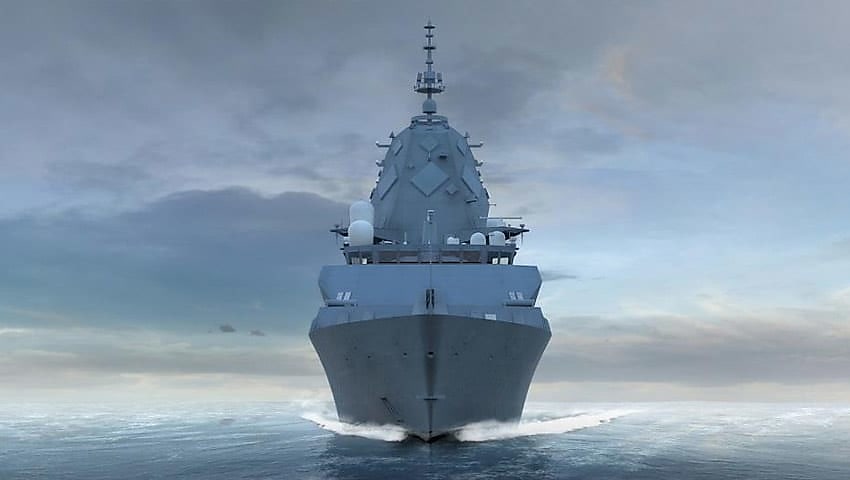
While many are still patting themselves on the back following the recent keel laying of NUSHIP Hunter, questions still remain about what is proving to be one of Australia’s most expensive naval programs, so what options do we have available to us should we choose to can it?
For many experts, Australia’s recent commitment to a dual-frigate architecture pairing the Hunter Class heavy frigates with Japanese Upgraded Mogami general purpose vessels under SEA 3000 has upended traditional frigate replacement thinking.
With the Hunter Class now scaled to six ships and first delivery delayed to 2032 and following the collapse of US Constellation Class availability, the Upgraded Mogami selection delivers earlier capability at substantially reduced per-unit cost.
However, examining the emerging European alternatives, particularly Babcock’s Type 31 or Navantia’s modernised F110 program, reveals strategic options that warrant closer strategic evaluation before final commitments.
The Australian naval shipbuilding environment has shifted dramatically in the 18 months since the original Defence Strategic Update of 2020. The Hunter Class frigate program, initially planned for nine vessels with first delivery in late 2027, has undergone substantial restructuring.
In August 2026, just days ago, Defence formally laid the keel for the first Hunter at Adelaide’s Osborne Naval Shipyard, marking the transition from design and productionisation into active construction.
However, this milestone is accompanied by continuing and sobering realities: the program has been scaled to six frigates at a total life cycle cost of $45 billion (up from the $35 billion originally estimated), with first delivery now projected for 2032, five years behind the original schedule and just over a decade from the original SEA 5000 decision.
Parallel to Hunter Class delays is the government and Defence-initiated Project SEA 3000 to acquire up to 11 general purpose frigates, designed as smaller, more numerous Tier 2 surface combatants to supplement the heavier Hunter Class capability.

In August 2025, with remarkable speed for Australian defence procurement, the government selected the Japanese Mitsubishi Heavy Industries Upgraded Mogami Class (known in Japan as the 06FFM or New FFM) as the preferred platform. This decision followed a rigorous evaluation against German MEKO A-200, Spanish ALFA 3000 and South Korean FFX Batch designs.
Contracts have since been signed for three Upgraded Mogami vessels to be built by MHI in Japan, with delivery scheduled to commence in 2029 three years ahead of the first Hunter Class frigate. The remaining eight vessels are planned for construction at Henderson Shipyard in Western Australia.
An admission of failure? Why SEA 3000 changed the acquisition calculus
Australia’s dual-track approach committed Hunter Class platforms, coupled with rapidly-deployed general purpose frigates, fundamentally rewrites the traditional frigate replacement proposition.
Where the original strategic thinking centred on a nine-ship all-Hunter fleet delivering maximum firepower density (with 32 Mk41 vertical launch systems, 16 less than our “Tier One” Hobart Class destroyers), the new architecture prioritises force structure flexibility, rapid capability delivery and hedging against extended timelines.
The Upgraded Mogami selection addressed what has been identified as a glaring capability gap in the Navy’s surface combatant force, appropriately defined as the “Anzac retirement crisis”, following the retirement of HMAS Anzac in 2024 and similar fates planned for the seven sister ships similarly ageing beyond their original 30-year design lives.
The Royal Australian Navy faces a genuine gap: the Anzac Class cannot be profitably maintained beyond the mid-2030s, yet Hunter Class delivery extends into the 2040s.
Accordingly, the general purpose frigate was designed precisely to bridge this gap with survivable numbers of capable-enough platforms.
The New FFM (Upgraded Mogami Class) displaces 6,200 tonnes full load, approximately 600 tonnes heavier than the baseline Mogami Class currently in service with Japan Maritime Self-Defence Force.
The additional weight accommodates a 32-cell vertical launch system (VLS) carrying a mix of air-defence missiles (Type 23 surface-to-air missiles), anti-ship missiles and vertical-launch anti-submarine rockets.
All 12 baseline Mogami Class vessels currently in service lack internal VLS; the upgrade represents a qualitative enhancement towards genuine frigate-level air-defence capability.
Range extends to 10,000 nautical miles on diesel propulsion, comparable to Hunter Class endurance. The platform utilises a combined diesel-and-gas propulsion arrangement with a single Rolls-Royce MT30 gas turbine coupled to two MAN diesel engines, delivering sustained speed exceeding 30 knots with peak performance above 30 knots.
Crew requirement of approximately 90 personnel represents a 50 per cent reduction relative to the Anzac Class, directly addressing Australia’s chronic naval manpower constraints.
Unit costs currently estimate approximately $850–900 million per vessel at Australian currency rates (roughly 104.9 billion yen per ship according to Japanese defence budget allocations). Critically, this represents half the per-unit cost of Hunter Class vessels (estimated at $7–9 billion each on a life cycle basis).
For Australia’s planned 11-ship SEA 3000 program, aggregate acquisition costs are projected at $9–10 billion across all 11 vessels, again just a fraction of the cost for the first three Hunter Class frigates.
The delivery schedule advantage is decisive, with the first Australian Upgraded Mogami contracted for 2029 delivery, meaning the Royal Australian Navy will gain access to fully capable general purpose frigate capability while awaiting Hunter Class IOC.
By 2032, when HMAS Hunter finally enters service, the RAN will have already commissioned up to four Upgraded Mogami vessels, establishing a continuous capability uplift curve across the 2030s.
European alternatives
Navantia’s F110 program, initially selected solely for Spanish Navy acquisition of five vessels, now provides a path that warrants serious consideration as a supplementary or alternative platform for Australian evaluation.
Recent progress milestones suggest the design has matured significantly beyond earlier Spanish acquisition timelines and the best part is we’re already familiar with both the base design, the builder and the combat systems.
The F110 (officially designated the Bonifaz Class frigate for Spanish service) displaces approximately 5,000–5,100 tonnes at full load. The design incorporates Aegis combat management system with integrated combat systems architecture, state-of-the-art AESA phased-array radar (a variant of the Lockheed Martin SPY-7 radar suite), with latest “Flight II” variants upgunning the modestly armed vessel to have 64-cell Mk 41 vertical launch systems carrying standard NATO air-defence and anti-ship missile suites, and advanced electronic warfare and decoy systems. Propulsion comprises a single Rolls-Royce MT30 gas turbine coupled to four diesel generators, delivering sustained 27-knot capability.
Critically, Navantia’s recent schedule acceleration demonstrates manufacturing maturity.
The lead ship Bonifaz, was launched in September 2025, a month ahead of program schedule with delivery scheduled for 2028. The second ship, Roger de Lauria, achieved keel-laying seven months ahead of schedule and is projected for launch in 2026 with delivery following in 2029.
Construction of the third ship, Menéndez de Avilés, commenced three months ahead of plan in April 2025. All five Spanish Navy hulls are currently under construction at different build stages, with the program demonstrating consistent schedule compression across the entire production run.
At approximately $600–750 million per unit on production (substantially less than Mogami acquisition costs), the F110 offers compelling value for money.
However, three constraints merit consideration: first, no international orders have been formalised beyond Spain’s five-ship program; second, potential capacity constraints at Navantia’s Ferrol shipyard may preclude rapid supplementary Australian construction; third, integration with Australian Aegis/combat management systems infrastructure would require incremental effort, though arguably less than non-Aegis platforms.
Strategically, an F110 acquisition of two to four vessels could provide an additional hedge against SEA 3000 delivery slippage, further diversify the frigate fleet architecture and provide allied interoperability with Spanish and UK naval forces.
However, any Australian F110 procurement would require formal government-to-government negotiation and would extend timelines Navantia could realistically deliver Australian F110s no earlier than 2030–31, only marginally ahead of the Hunter Class schedule.
The US and UK route – limited availability
The strategic environment for US frigate procurement has narrowed considerably. The Constellation Class frigate program was formally cancelled in November 2025, with only the first two hulls completed (USS Constellation and USS Congress), with the six additional vessels on order terminated.
The program, which provided the potential for Australian FMS availability at approximately US$1.3–1.4 billion per vessel, is clearly no longer an option for Australia. The United States has initiated a successor, the FFX (Future Frigate) program based on the National Security Cutter design, but no ships are under construction and FMS availability to Australia remains undefined, let alone Australia’s interest in a vessel with little to no offensive and defensive capabilities beyond traditional gun systems.
The Royal Navy’s Type 31 Inspiration Class program (built by Babcock International at Rosyth using the Arrowhead 140 design) has seen first two ships progress: HMS Venturer launched in June 2025 and HMS Active launched in March 2026. However, the Type 31 program is exclusively dedicated to Royal Navy requirements and no export orders have been negotiated.
Per the June 2026 UK Defence Investment Plan, even the Royal Navy’s five ships are now scheduled for completion by “the end of the 2020s” at best, with operational availability unlikely before the early 2030s. Type 31 export availability to Australia would require British government approval and capacity availability, neither of which is likely before 2031–32.
An optimal path forward?
Australia’s current procurement architecture, six Hunter Class Tier 1 heavy frigates delivering premium anti-submarine and air-defence capability, complemented by 11 Upgraded Mogami Tier 2 general purpose frigates represents the optimal path forward given current strategic constraints and delivery realities.
This dual-track approach:
- Delivers early capability: four Upgraded Mogami vessels will enter service before the first Hunter ship, closing the Anzac capability gap with combat-effective platforms from 2029.
- Provides force structure flexibility: 17 frigates across two capability tiers enable flexible task grouping for sustained Indo-Pacific operations, presence deployment and expeditionary response, far superior to the original nine-ship Hunter-only architecture
- Optimises cost-per-hull: at $850 million per Mogami versus $7–9 billion per Hunter, the aggregate cost-per-warship across the combined fleet is substantially lower than a nine-ship all-Hunter program would have been, extending purchasing power.
- Maintains allied interoperability: both Hunter and Upgraded Mogami (when “Australianised”) platforms incorporate Aegis combat systems and NATO-standard missiles, ensuring seamless integration with US, UK and Japanese naval operations.
- Hedges technical and industrial risk: diversifying production between BAE (Hunter), Mitsubishi Heavy Industries (Mogami) and Western Australia’s Henderson Shipyard reduces dependence on any single supplier.
A supplementary acquisition of two to four F110 vessels (of the latest “Flight II” configuration) to complement our existing Hobart Class destroyers could further strengthen force structure resilience but is not operationally essential given the committed Mogami order.
However, any F110 supplementary procurement should be contingent on demonstrated capacity availability at Navantia and formal government-to-government negotiation.
The strategic imperative is resolute: Defence should maintain commitment to the contracted Upgraded Mogami program while pursuing modest Hunter Class schedule acceleration through targeted capital investment (approximately $1–2 billion across 10 years) to compress first-ship delivery from 2032 to 2030–2031.
This combination, early Mogami availability coupled with accelerated Hunter delivery, delivers the force structure the Indo-Pacific strategic environment demands.
But is it enough?
Get involved with the discussion and let us know your thoughts on Australia’s future role and position in the Indo-Pacific region and what you would like to see from Australia’s political leaders in terms of partisan and bipartisan agenda setting in the comments section below or get in touch at

Want to see more stories from trusted news sources?
Make Defence Connect a preferred news source on Google.
Click here to add Defence Connect as a preferred news source.