iscover
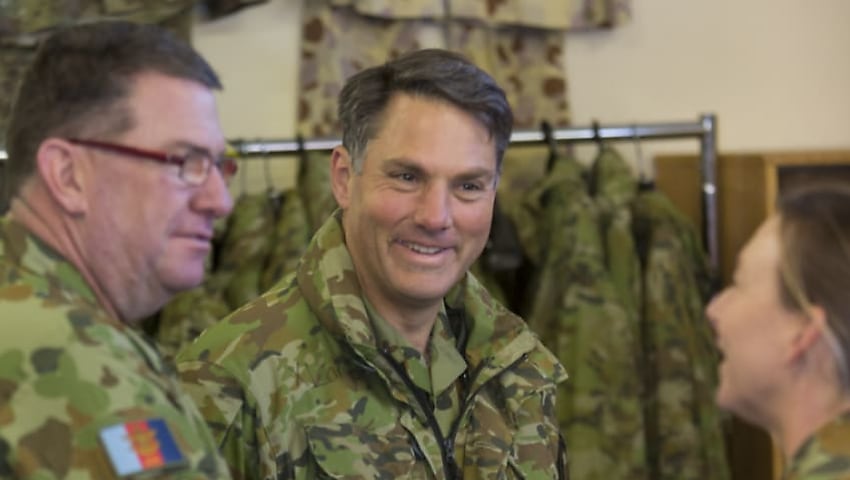
The 2026 National Defence Strategy has been welcomed with mixed reviews from industry leaders and defence strategists, with both critiques and praises coming through.
The release of the 2026 National Defence Strategy (NDS) by Defence Minister Richard Marles last week had a key focus on increasing self-reliance and strengthening defence capabilities, with projections of $53 billion to be spent on defence over the next decade.
The strategy also includes the 2026 Integrated Investment Program, which will “support the efforts” of the NDS though investing in new defence technology and Australia’s sovereign capacity.
Industry and academic responses:
Major industry leaders have supported the NDS, with Raytheon making a statement saying it welcomes the plan and is “well positioned” to assist in delivering on it.
“Raytheon Australia is proud to support Australia’s defence mission, with a strategy aligned to the Commonwealth’s long-term priorities for national security,” the company said in a statement.
Rory Medcalf, who leads the National Security College at ANU, has a “better now than never” view on the strategy, highlighting that the plan has solid ideas, but is overdue in its aims.
Medcalf said the plan recognises a broader “whole-of-nation” approach, not just military forces, an important note for the changing, integrated nature of defence and national security strategies.

The NDS relies heavily on the US alliance, but the long-term reliability and dynamics of this alliance is something Medcalf raised as a key concern.
“What are the real foundations for continued assurance in the military alliance with the United States … which allows the government to draw a distinction between its aspiration of ‘self-reliance’ within the alliance and the impossibility of ‘self-sufficiency’,” he writes for The Sydney Morning Herald.
This critique is shared by Michael Shoebridge, directory of Strategic Analysis Australia, who said the lack of acknowledgement to the “changed America” is a major standout.
Shoebridge pointed out that despite the devoted page to the Australia–US alliance, no mention of the “America First, unilateralist approach of the Trump administration” seems almost inauthentic and “inaccurate”.
“In reality, America is now dismissive of the value of its alliances and openly critical of its longstanding allies, including Australia, Japan and South Korea … But you don’t get an inkling of any of this in the 215 pages or in Mr Marles’ presentation to the National Press Club today,” he wrote.
Other defence industry leaders were welcoming of the NDS, with renewed focus on long-range strike capabilities, missile defence, autonomous and uncrewed systems being a point of praise.
“Today’s announcement is another endorsement of a future made in Australia and continues to deliver on the government’s commitment to providing the Australian Defence Force with the capabilities it needs to safeguard our national interests while contributing to global security,” said Robert Nioa, CEO of NIOA.
“Establishing domestic production of solid rocket motors and critical missile components will be vital to ensuring that readiness while providing industry with the confidence and opportunity to move forward.”
Innes Willox, chief executive of the national employer association at Australian Industry Group, said the themes and primary goals of the plan are solid, yet questions remain on where the resourcing is coming from.
“We understand the IIP includes reprioritisation of capabilities alongside the new funding, and industry will need clarity on what has been cut or deferred and what that means for the programs that underpin sovereign capability.”
“The impact of inflation, as well as increasing AUKUS, estate and support costs must also be considered.”
The Families of Veterans Guild also expressed concern over the NDS, highlighting how behind all these plans and initiatives, veterans and their families have been minimally included in the conversation.
“You cannot build a high-tech force on the backs of families who are quietly breaking,” said Renee Wilson, CEO of the Families of Veterans Guild.
Final thoughts:
With critics arguing that the strategy is overdue and has heavy reliance on the United States alliance despite the changing US foreign policy dynamics, concerns are seemingly valid.
It is rightful that industry groups want more clarity on how resources will be allocated, what projects may be cut or delayed and how rising costs will be managed.
However, focusing on Australian-made infrastructure and regional issues is a solid signifier of a step in the right direction for Australia’s defence industry.
Get involved with the discussion and let us know your thoughts on what you would like to see from Australia’s political leaders in the comments section below or get in touch at
Want to see more stories from trusted news sources?
Make Defence Connect a preferred news source on Google.
Click here to add Defence Connect as a preferred news source.