

 iscover
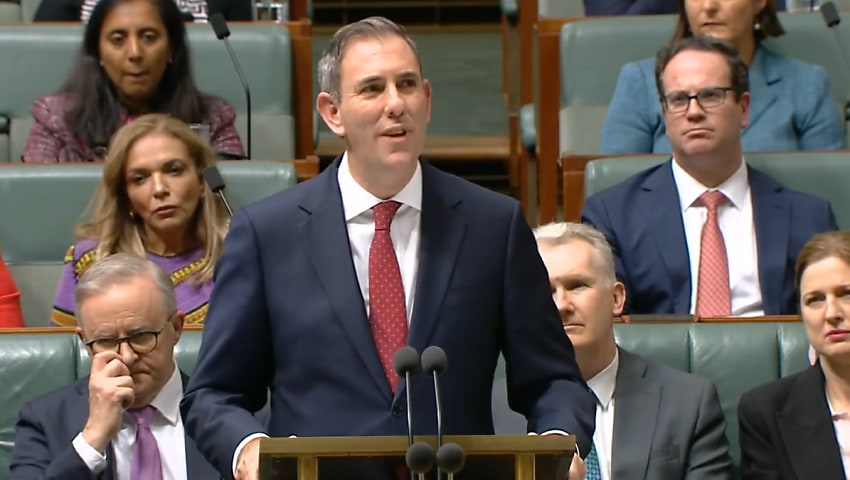
The release of the 2026 federal budget has been dubbed the most “important and ambitious budget in decades”, according to Treasurer Jim Chalmers.
The release of the National Defence Strategy in April gave industry the major guide as to how national funds will be poured into defence, with the headline number of $53 billion being invested over the next decade.
Industry and government representatives are already gathering for the Defence Connect Budget 2026: National Defence Outlook later this week on May 15 at Parliament House in Canberra to discuss the 2026 Budget and crucial implications for defence industry.
With more fleshed out explanations in Tuesday’s budget announcement, defence industry leaders have told Defence Connect their thoughts.
This is what they think.
Christopher Rule, general manager at GME Defence, said this will strengthen commitments to building a sovereign industrial defence base in Australia, a key component of the National Defence Strategy.
“The 2026 federal budget’s bigger-than-expected investment in defence is a strong acknowledgement of the need to lift Australia’s sovereign defence industrial base at a time of heightened global uncertainty.
“Support for defence capability, local industry participation and more resilient supply chains will be critical as Australia works to build defence self-sufficiency, reduce exposure to overseas disruption and strengthen long-term preparedness.”

Measures like these are reflected in allocations of $12 billion to establish the Henderson Defence Precinct in Western Australia, and $130 billion to develop independent enhanced undersea warfare capabilities.
“The expansion of venture capital tax incentives and the increased expenditure cap for core R&D send a clear signal that Australia is serious about backing its most ambitious companies,” said Liza Noonan, CEO of Cicada Innovations.
“The continued support for the CSIRO and Medical Research Future Fund (MRFF) confirms that the Albanese government understands the role world-leading research plays in producing the discoveries that tomorrow’s deep tech companies will be built on.
“These measures reflect a government that recognises the role innovation plays in building long-term economic resilience and delivering better outcomes for all Australians.”
Steve Baxter, founder and CEO of Beaten Zone Venture Partners, questioned the capital gains tax changes replacing the flat 50 per cent discount, saying: “The decision to replace the 50 per cent CGT discount with an inflation-indexed model, while framed as restoring fairness, risks a significant disincentive effect on private capital formation.
“The indexation model also exposes a fundamental misunderstanding of how early-stage companies are built.
“When a founder or investor backs a start-up, the capital base at inception is effectively zero.
“These companies begin with little to no hard assets, no revenue and no balance sheet to speak of. The entire value creation journey happens over years, sometimes a decade or more, before any liquidity event.”
The budget also revealed strengthened investment into growing digital technologies, something that impacts all facets of national security and defence. Nearly $2.4 billion is being directly spent on technology, cyber security and digital infrastructure measures.
Jason Duerden, SentinelOne area vice president, Australia and New Zealand, recognised this, saying: “Defence spending is essential, but modern national security is also being tested through the digital systems that support government services, defence supply chains, critical infrastructure and the small businesses that keep the economy moving.
“Nation state actors are targeting consistent vulnerabilities in the core software operating system supply chain – agencies that show complacency by putting all their eggs in one basket is not an effective defensive strategy.”
Veterans organisations have shared disappointment in the budget, saying that “inefficient government bureaucracy” towards the veterans portfolio risks widening gaps for veterans accessing physical and mental health services.
“While the government touts a record $53 billion Defence package, the limited funding flowing into the veteran portfolio is being funnelled into the most inefficient part of the ecosystem: government bureaucracy,” said Renee Wilson, CEO of the Families of Veterans Guild.
“With the Minister for Veterans’ Affairs also being notably absent from the cabinet table, this budget – where veterans and their families are barely mentioned – reflects how low down the priority list we are.
“Our modest $5.17 million we requested for trauma-informed crisis support, career development for partners, and our vital War Widows Program was ignored.
“You cannot ask families to sacrifice their stability for national security and then offer nothing in return. We will not stop advocating until every veteran family member is thriving.”
Final thoughts
The budget’s major boost to defence spending, accelerating AUKUS, long-range strike missiles, autonomous systems, counter-drone technology and other emerging defence advancements is a key indicator of a growing industry.
While more needs to be done for the people who have served our nation and defended our interests, the measures the government is investing in to continue supporting Australia’s economic growth, defensive capabilities and national security is a win in my books.
Want to see more stories from trusted news sources?
Make Defence Connect a preferred news source on Google.
Click here to add Defence Connect as a preferred news source.