

 iscover
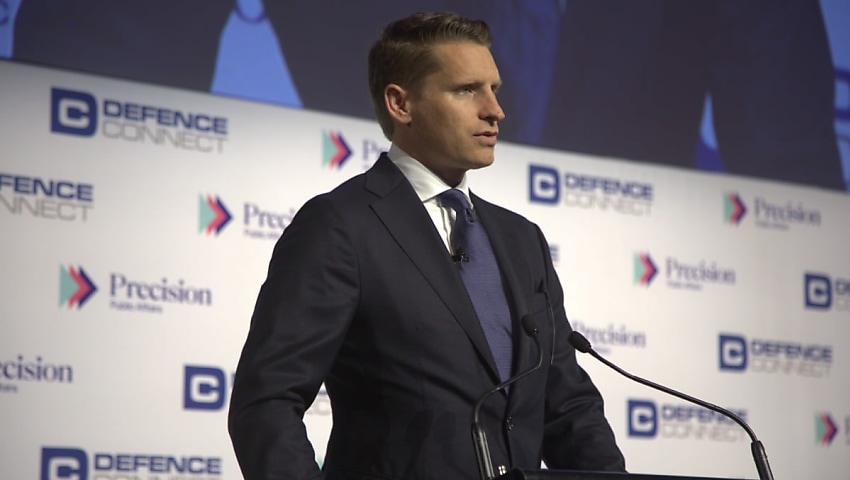
Many critics often describe Australia’s glaring lack of industrial and economic complexity as a major national security challenge, while others see it as a glass jaw impacting our ability to sustain ourselves in a fight or crisis. So, what is needed?
This glaring gap in our national resilience and survivability has increasingly figured in commentary and analysis as the Indo-Pacific emerges as the epicentre of the 21st century’s great game between great powers.
Increasingly, this issue has also figured strongly in our broader conversations with allies, most notably the United States, which is demanding that allies lift their defence spending to 5 per cent of GDP. Of that total, 3.5 per cent should be spent on military capabilities and the remaining 1.5 per cent on “enabling capabilities”, including industrial capacity and infrastructure.
With Australia’s defence spending in the crosshairs in more ways than one, shadow minister for industry and sovereign capability Andrew Hastie has ramped up his advocacy for Australia to reindustrialise to better enhance its national resilience and long-term economic and industrial capability and competitiveness.
Following his recent Anzac oration address to the University of Melbourne’s Robert Menzies Institute, Hastie spoke with host Steve Kuper. The pair unpack the unique and intimate relationship between the US and Australia from the perspective of a special forces operator and how that relates to what the United States is now asking of us.
As part of this conversation, they discuss the need for a more considered industrial policy, unpacking the key hurdles that are limiting our industrial and economic competitiveness on the global stage and the pressures being faced by the allied industrial base.
The pair also unpack the economic and political opportunities that come from being a nation that, as Hastie describes, “makes things again” and how successive Australian governments have failed to capitalise on these opportunities to boost productivity, competitiveness and industrial capacity.
Additionally, they examine models of success, what Australia can learn from friends and foes alike, and embracing serious, considered and agile economic reform, including building and rewarding a more risk-accepting culture as a means of propelling the nation forward and finally breaking the shackles of the cultural dominance of tall poppy syndrome.

Finally, they also discuss an important and often overlooked question, with Hastie asking: “What sort of country do we want to be?”
Enjoy the podcast,
The Defence Connect team

Want to see more stories from trusted news sources?
Make Defence Connect a preferred news source on Google.
Click here to add Defence Connect as a preferred news source.