

 iscover
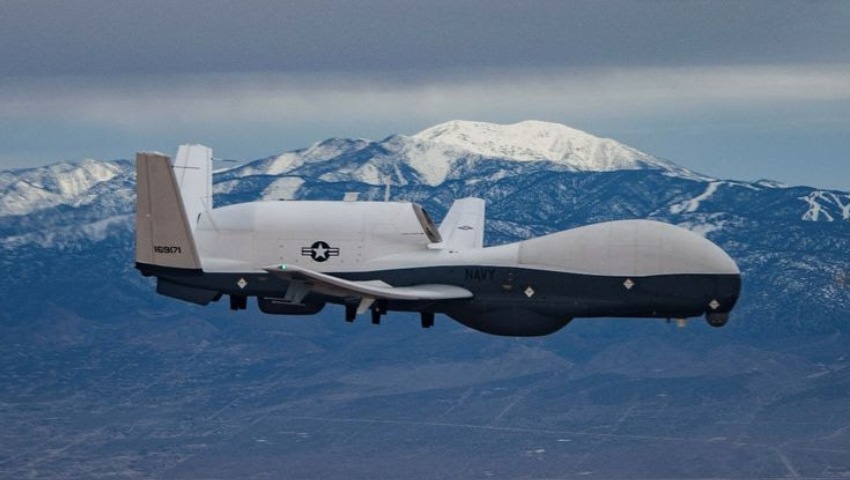
Northrop Grumman has delivered the first MQ-4C Triton upgraded to the multi-intelligence configuration.
The first production integrated functional capability four (IFC-4) Triton has been delivered to the US Navy, arriving at Naval Air Station Patuxent River in Maryland on 1 February.
The platform, referred to as B8, has been upgraded to the multi-intelligence configuration in line with the US Navy’s ISRT requirements.
This follows a successful flight test of the IFC-4 Triton last July.
The IFC-4 feature is designed to better inform real-time decision making at tactical to strategic levels.
The platform is expected to enable the US Navy to retire the Lockheed Martin-built EP-3E Aries fleet, by assuming intelligence collection missions.
The US Navy is currently operating two Tritons in the Pacific as part of an early operational capability deployment, with the program expected to achieve initial operational capability (IOC) in 2023.
The Navy has committed to maintaining five 24/7 operational orbits with a planned 68-aircraft program of record.

Meanwhile, Australia is expected to receive the first of six to seven Triton air vehicles in 2023, with Northrop Grumman expected to begin building the airframe later this year.
The Tritons are expected to be capable of monitoring 5.2 million square kilometres in a 24-hour mission and flying a round trip for sustained surveillance and in support of allied freedom of navigation operations in the South China Sea from the Northern Territory.
[Related: Triton takes flight in ‘highly upgraded’ multi-intelligence mode]

Want to see more stories from trusted news sources?
Make Defence Connect a preferred news source on Google.
Click here to add Defence Connect as a preferred news source.