

 iscover
The prime has demonstrated its ability to integrate technology across domains for joint operations.
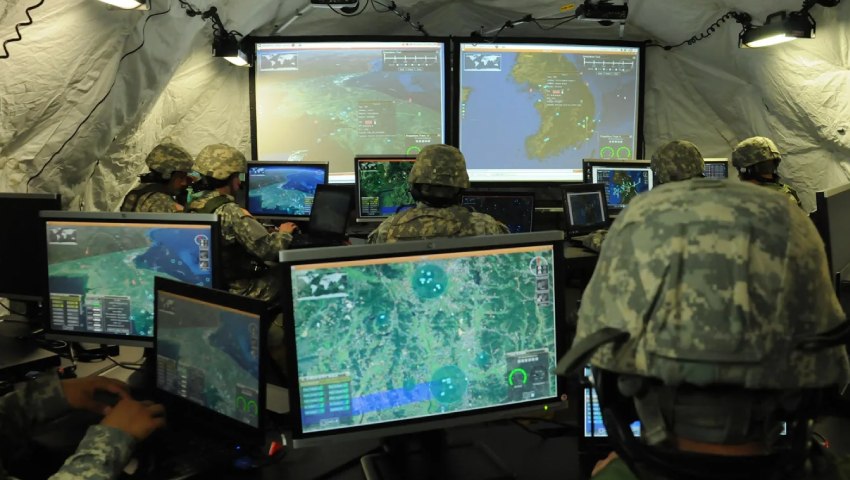
Northrop Grumman has completed successful testing and demonstrations as part of the US Army’s Project Convergence, integrating networks, sensors and effectors across domains for joint operations.
Systems involved in the demonstrations included the Army’s Integrated Air and Missile Defense Battle Command System (IBCS), Joint Tactical Ground Station (JTAGS) and the Marine Corps AN/TPS-80 Ground/Air Task-Oriented Radar (G/ATOR).
Tactical ballistic missile surrogates were launched during live-fire exercises at White Sands Missile Range, New Mexico.
Ground, airborne and space-based sensors sent tracking data via satellite communications to an Engagement Operations Center at Fort Bliss, Texas.
Soldier operators then remotely tracked the targets and initiated the launch of missiles to engage the targets.
As part of Project Convergence, the Army also conducted a series of complex network and communication exercises in which IBCS supported the execution of precision strike missions, in addition to conducting an integrated air and missile defence mission.
Data from an F-35 sensor was fused to identify and track a ground target, providing the data to Army Field Artillery Tactical Data System (AFATDS) and AFATDS engaged the target.

“Project Convergence provided us another opportunity to demonstrate our architecture’s ability to deliver joint connectivity across the services,” Christine Harbison, vice-president and general manager of combat systems and mission readiness at Northrop Grumman, said.
“That open architecture allows utilisation of satellite communications to conduct remote engagements of target missiles, demonstrating our ability to connect the battlespace for all-domain operations.”
Project Convergence aims to aggressively pursue an artificial intelligence and machine learning-enabled battlefield management system, serving as the US Army’s contribution to the military-wide Joint All Domain Command and Control (JADC2).
[Related: Northrop Grumman Australia to host local SMEs for tech showcase ]

Want to see more stories from trusted news sources?
Make Defence Connect a preferred news source on Google.
Click here to add Defence Connect as a preferred news source.